Title is so meta?
OK Londoners, and Olympics visitors, and anatomy (or just science/biology) buffs, and those not lucky enough to see other versions of the animal Body Worlds show. You have a mission. And that mission is to go see “Animal Inside Out”, a special (£9 for adults is well worth it!) exhbit at the Natural History Museum, open until September 16. This blog will self destruct, very messily, by turning itself inside out in 5 seconds… Boom.
Anatomy to me is beautiful even when it’s “ugly” (messy, wet, mucosal, intestinal, asymmetrical, unlike human, whatever), and that’s a major theme of this blog. Hence I am embarrassed that I hadn’t yet gone to see this Body Worlds spinoff exhibit until now, but can begin to shake off that shame by means of an almost exclusively effusive gushing of blood love for said exhibit. Wow, wow, wow! I went in with no particular expectations, having seen some pictures and knowing some of what to expect, and having other things on my mind. I came out very pleased; the NHM exhibits folks and von Hagens’s crew have created an inspirational spectacle that could do wonders for anatomical sciences and natural history. More about that at the end.
(Warning: possibility of spoilers, but the exhibit is so visual that I don’t think my descriptions can spoil it)

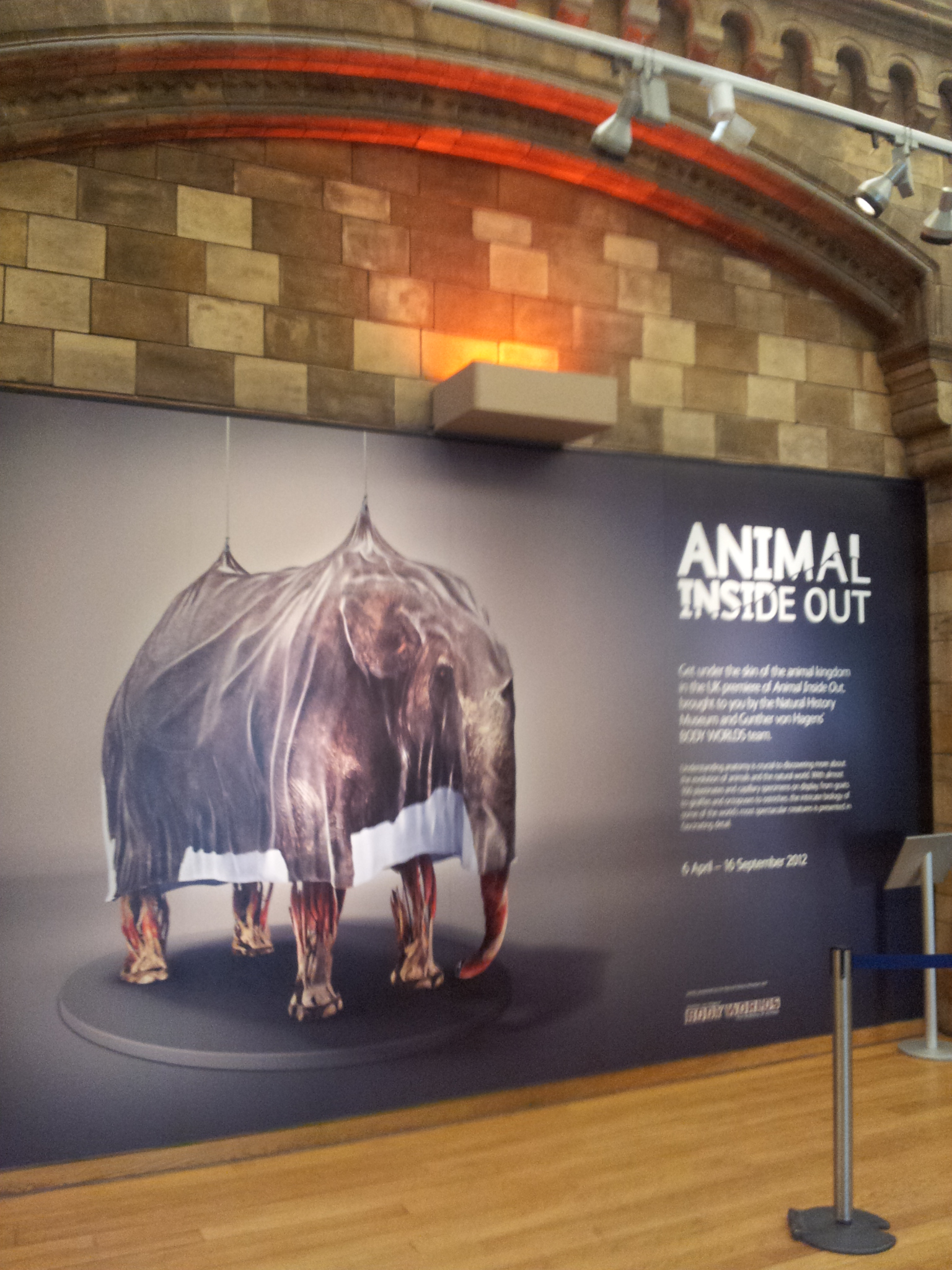
The entrance
No photos are allowed as usual, so all I have to show you is the entrance and some anatomy pics I’ve interspersed from my team’s research to lighten up the text. I suppose I could have asked for special permission to take photos for review usage but this was a very impromptu visit, and with ~4 months of showing left I may well be back again.

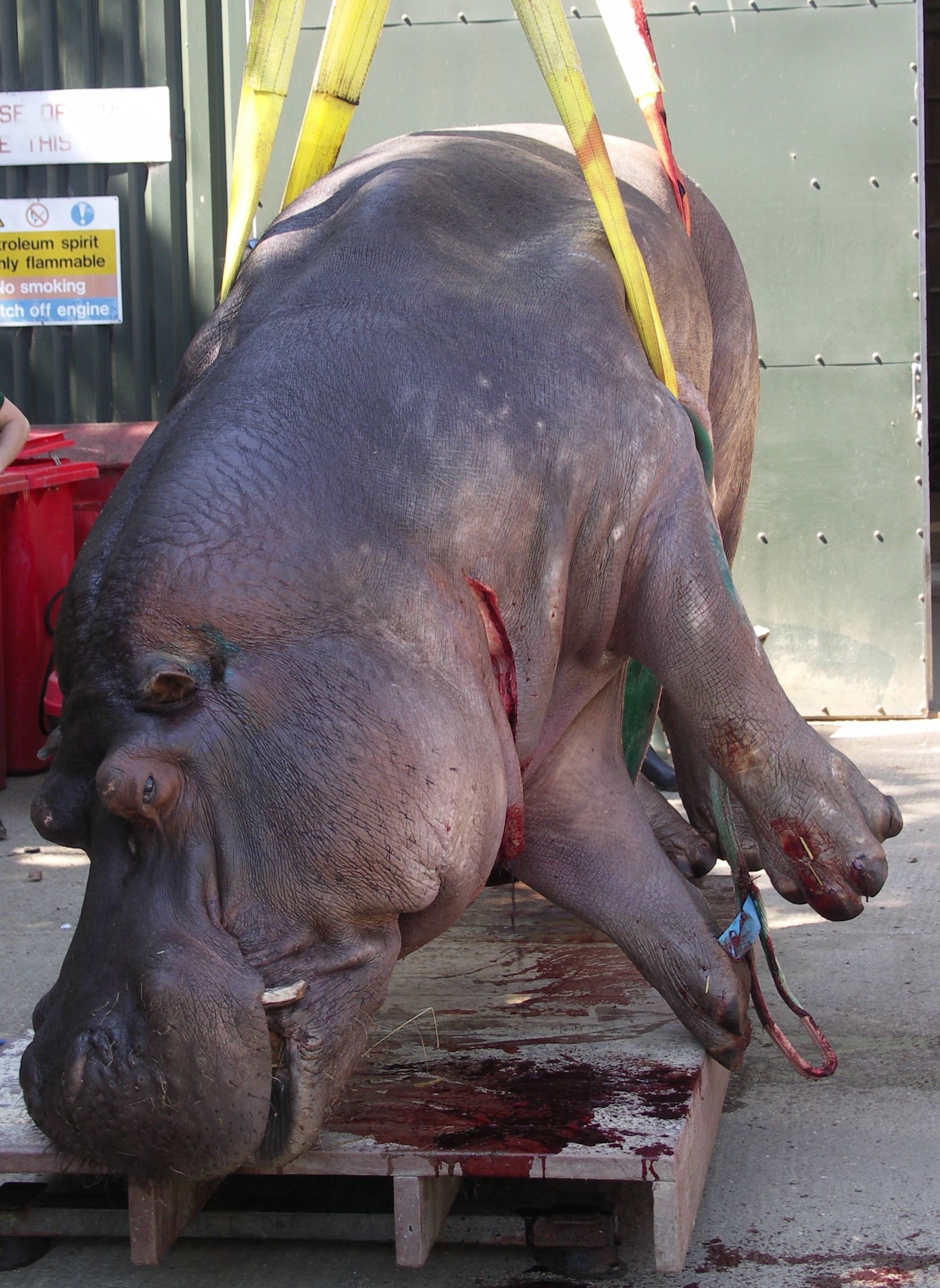
Weighing a hippo; spot on at 1600 kg!
There is a brief panel on homology and why it is the major concept underlying comparative anatomy (and a key part of evolution, co-opted from the not-so-evolutionary ideas of Sir Richard Owen, whom the NHM rightly mentions here). Another panel rightly brings up the issue of ethics, which has plagued Body Worlds before. It comforts the visitors that animals were not slaughtered just for this display and that the NHM applied its strict collections criteria to them. Convincing enough for me, and absolutely necessary to bring up early on.
The entry hall then presents you with about five cephalopods (labelled “squid” and “octopus”—a gripe is that species names/details are not given for most specimens on show) prominently occupying the view. The cephalopods, like basically everything else, are plastinated (by a now US-patented set of procedures, I learned from the exhibit book detailed later). They are stunningly frozen in lifelike poses or with gaping cuts to show their interior anatomy, although there was very little explanation here about cephalopod biology and anatomy (about 1 smallish panel). No mention of Cthulhu. Damn. He’d approve of the Grand Guignol scenery.
Toward the back of the first corridor of specimens and cases, there is a stunning scarlet haze outlining the body of a “shark” (species not given) with its huge liver lying below it. The haze, a technique used repeatedly throughout the exhibit, is some kind of corrosion cast of the circulatory system, I gather. A bunch of cross/longitudinal sections of cephalopods, crocodiles, fish, horse hooves and other animals decorate blank spaces on the walls, some with labels showing basic features and some just hung like paintings. Fair enough, but a missed opportunity for a bit more educational content here.
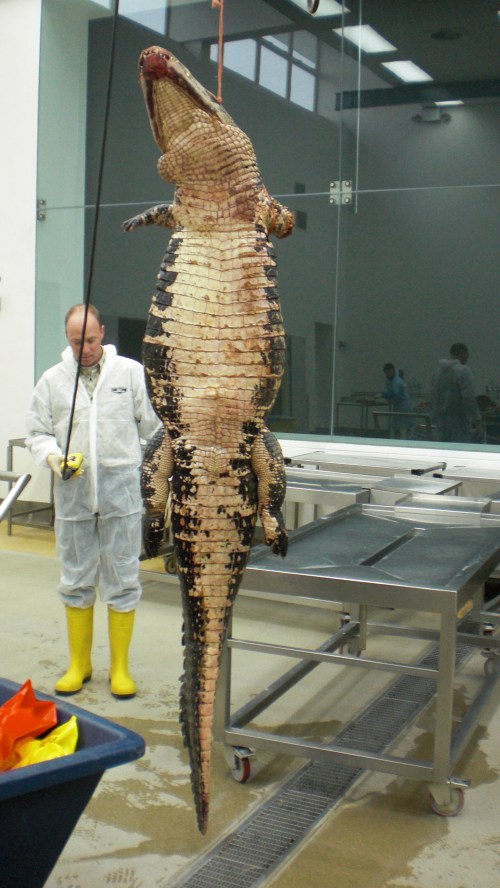
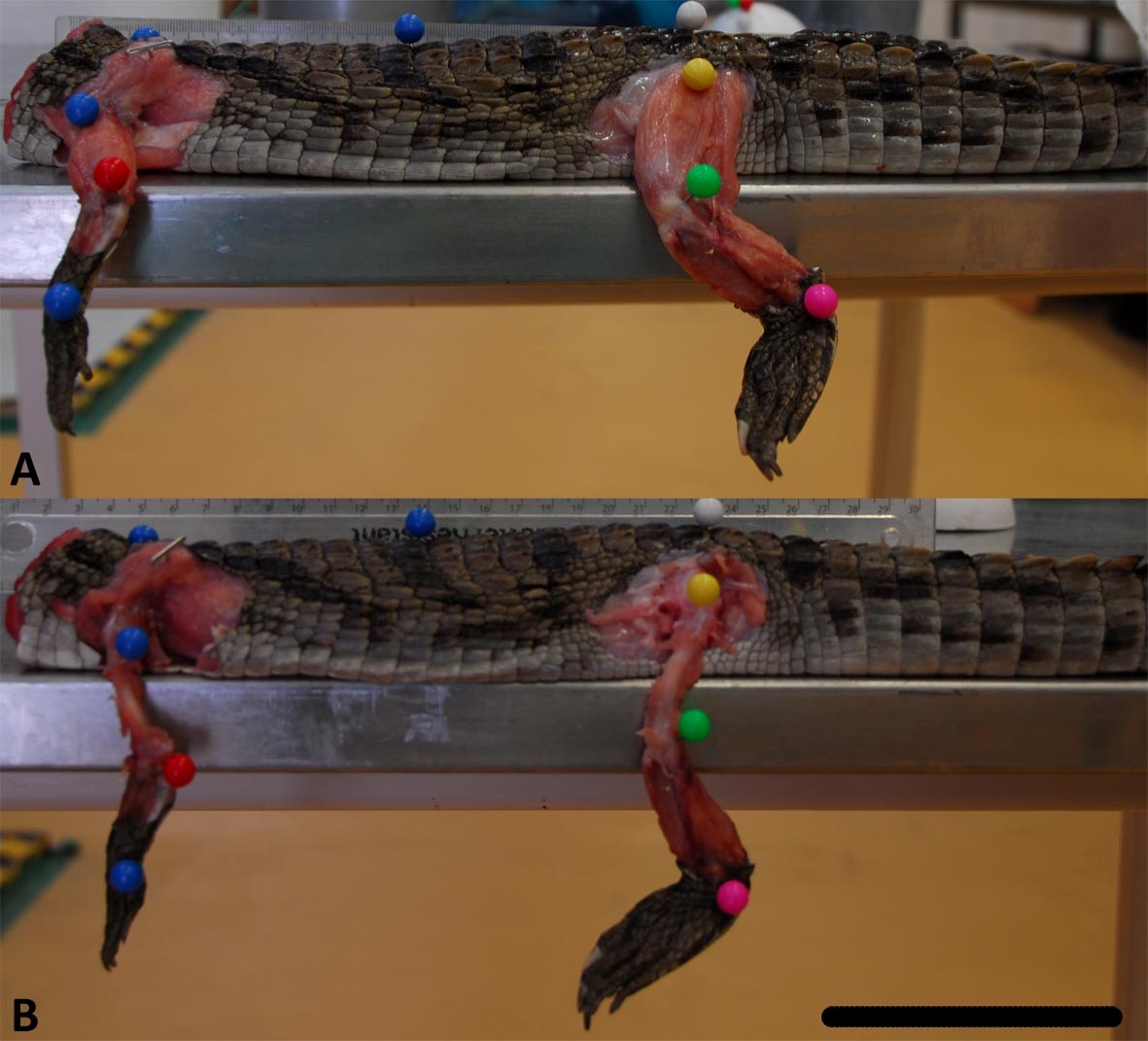
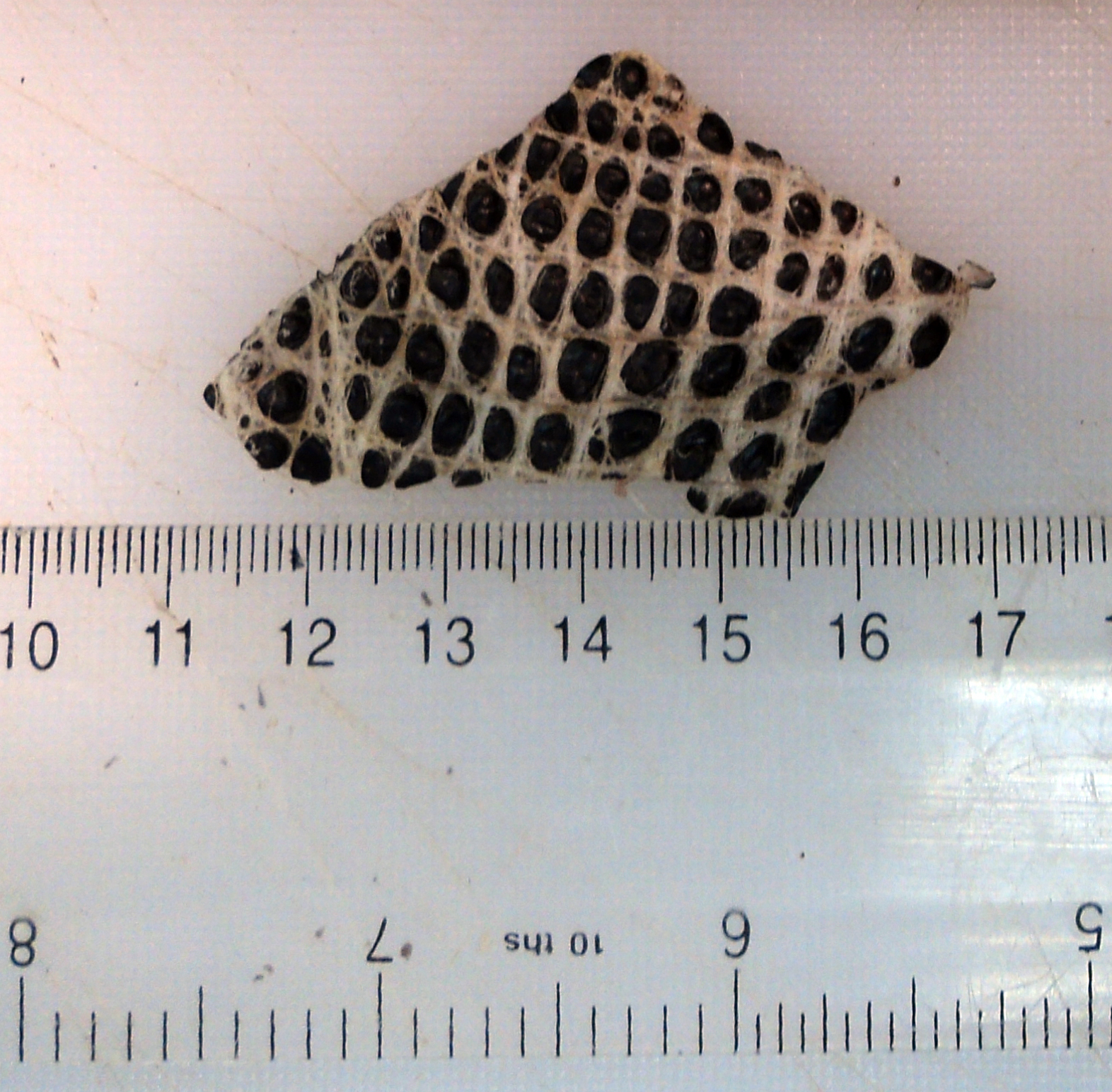
Gratuitious Melanosuchus (black caiman) shot.
A smallish whole shark confronts you as you turn the corner from the crimson chondrichthyan; again of unknown classification. One would think a museum exhibit would care about classification beyond “shark,” but oh well, I am banging the same drum here too much and missing the point, that the exhibit is really a visual, visceral expose rather than a deep prose-driven intellectual dissection. On one of the shark panels it is noted that sharks have red and white kinds of muscle used for slower and faster swimming, but not clarified that this is a very widespread vertebrate (chordate?) feature. This forms my second gripe, that a truly evolutionary approach, such as that taken by dozens of the museum’s research staff as their major paradigm of phylogenetic systematics, could have helped the public grasp the evolutionary, hierarchical nature of homology and depart with accurate information about what features characterize groups at which levels. I’m not asking for cladograms laid out on the floor as at the American Museum of Natural History, although maybe that could work, but the exhibit tended to fall back on an outmoded “this animal has this feature, and that animal has that feature, and these are cool adaptations” shopping list approach rather than a modern comparative approach. Granted, almost all museum exhibits fall into this trap, for various reasons and some of them justified. But with a spare word or phrase here or there, this could have been done better without drowning the visitors in that dreaded sea of bloodprose.
Passing the sharks, we come to one of several thematic sections about body systems, this first one on the skeleton (later, brain/nerves, circulation, muscles, etc.). A few small skeletal specimens of the type that are seen throughout the museum are presented, with a scallop reminding us that skeletons can come in many types among multicellular organisms. There is a horse skull and a stark white whole skeleton of a young-ish ostrich, which was very nicely mounted. However, I was caught off guard by the pelvis, which lacked the curved, ventral “boot” like connection of the pubic bones that ostriches have—presumably explained by its juvenile status although I wasn’t 100% sure it was even an ostrich pelvis. OK, I am having a serious pelvis-nerd moment here; forgive me as my PhD was on this stuff.
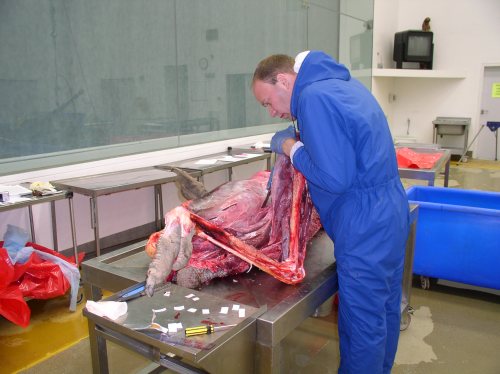
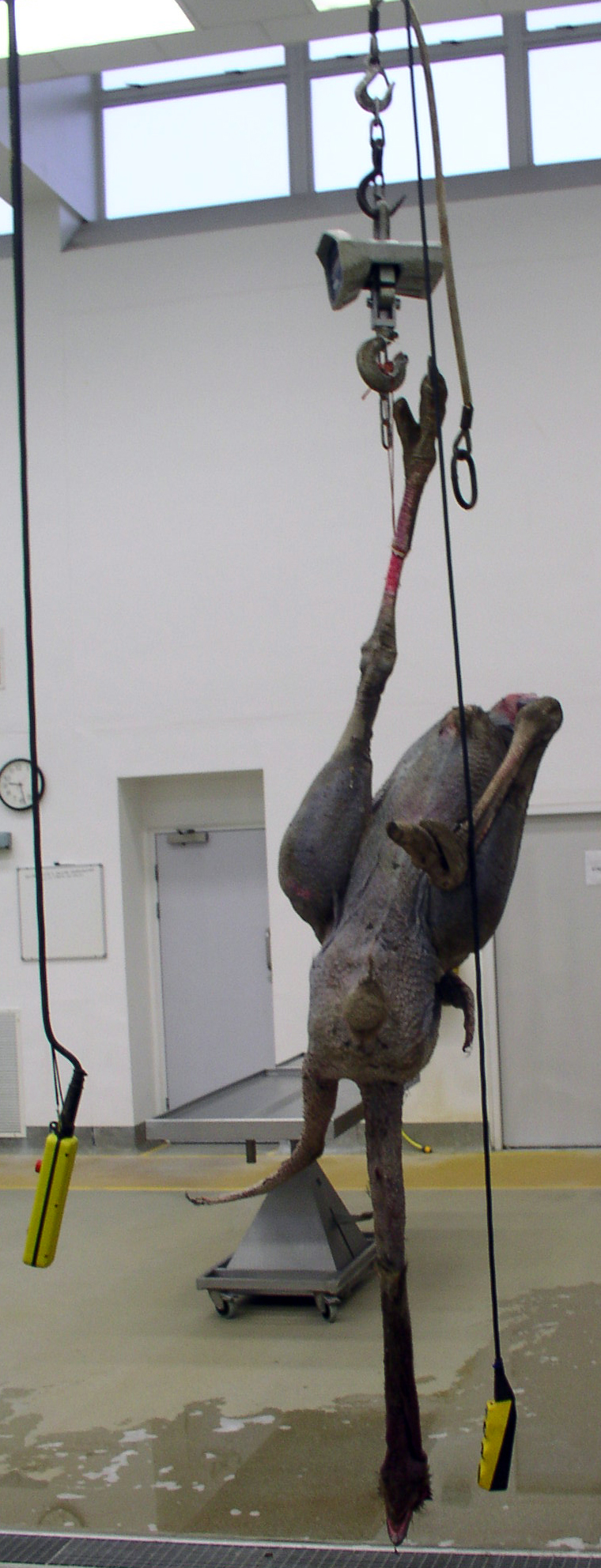
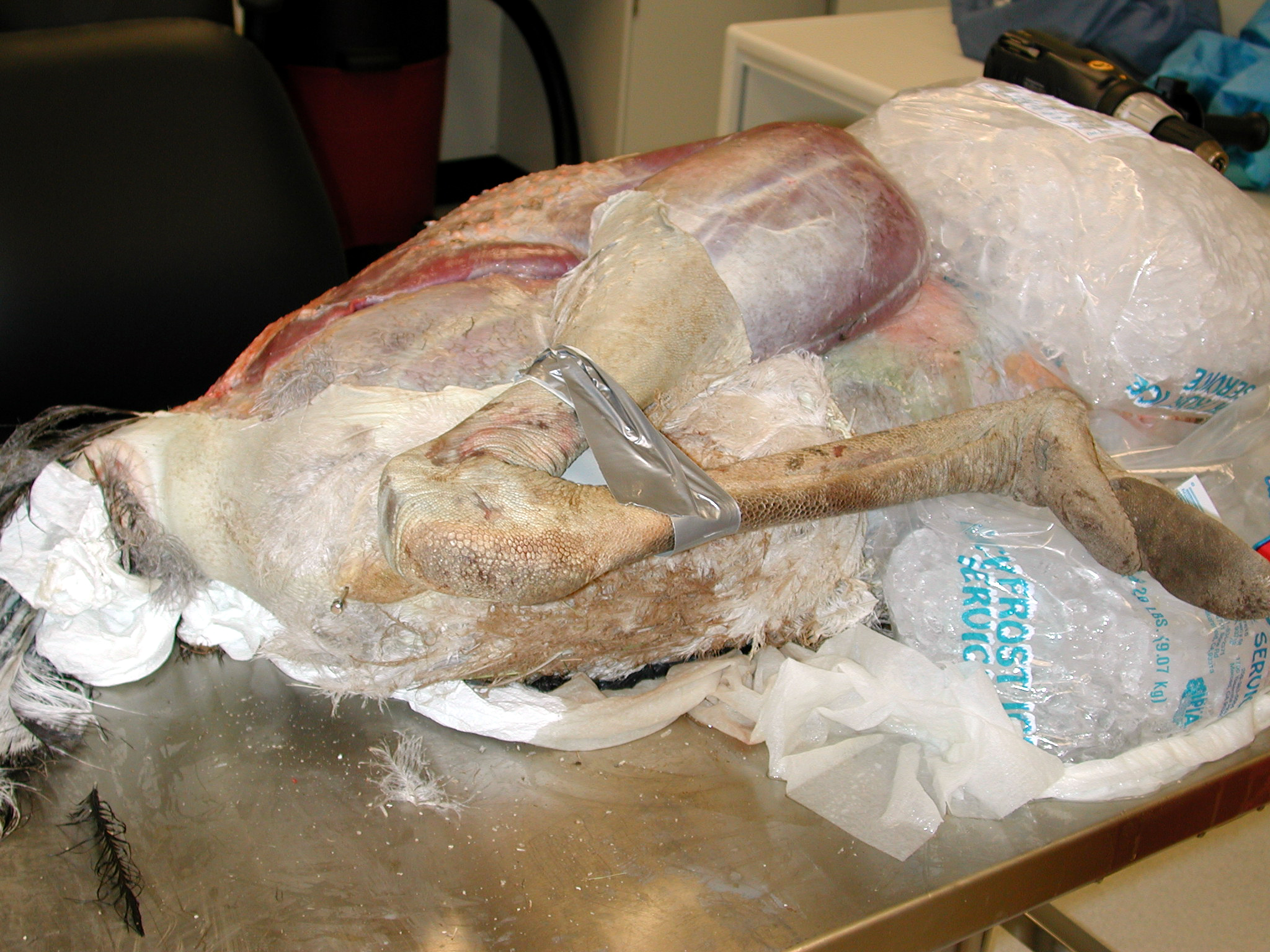
Ostrich in the midst of disassembling.
BUT, once again the small interpretive panel had a moment of Fail. The ostrich was explained to have two toes, in contrast to normal birds which have “five”. HUH? Birds have three main toes and variably also a fourth, inner (first) toe called the hallux, used for perching and other activities including walking. None have a fifth toe; indeed their dinosaurian forebears lost that feature some 230ish million years ago. Just an embryonic vestige of the base of the fifth toe is visible in bird embryos today. Furthermore, the panel said that two toes in ostriches can grip the ground more strongly than more toes in other birds. I know of no evidence that shows this, and suspect that the contrary might be true. The standard explanation for toe reduction in ostriches is that it is a lightening feature characteristic of “cursorial” (long-legged, sometimes fleet/efficient) animals, to make swinging the long legs easier. These errors really should have been caught by involving experts in polishing the scientific content of the exhibit.
But I don’t want this post to grumble too much; wrong message. There was so much to celebrate in this exhibit, which was felt impressively spacious and full of cool specimens! Visitors pass some plastinated whole sheep and goats, with panels nicely explaining that goats and sheep look quite similar on the inside and are evolutionary relatives. Having “four stomachs” (technically, a four-chambered stomach; not four distinct organs that were duplicated) is attributed as a sheep trait, then being a ruminant is said to be a goat trait; this might get a little confusing for non—anatomists (both are ruminants and have similar stomachs).
I learned that goats have an extra tail muscle that allows them to swing up/down as well as side-to-side. Hey, I teach veterinary anatomy and I don’t know that!? I must tuck my tail between my legs in shame, but I am no goat so I do not think I can (do satyrs count?). But I wasn’t so sure that goats, as described, were the first animals to be domesticated—I thought that was dogs? Ahh, Wikipedia says dogs, then sheep, then pigs, then goats? I’m outside my expertise here, I admit, and resorting to Wikipedia out of ignorant desperation. Anyway, here, another instance of coulda-been-more-phylogenetically-specific presented itself: the forelimb of goats was said to be connected to the thorax by muscles and ligaments, not a joint, but this is a feature common to most Mammalia. Although audience attentions might be wandering at this point, waiting for the next big spectacle (goats and sheep are not a big crowd draw, even plastinated), some more care as to what was written would be good. Some reindeer and horses and other animals join in the fun later on. Good, but mostly ‘filler’ (wise to put these in the middle of the exhibit, after sharks/cephalopods and before climax) unless you’re a big fan of fairly familiar ungulates with fairly homogeneous postcrania. OK, my bias is showing…
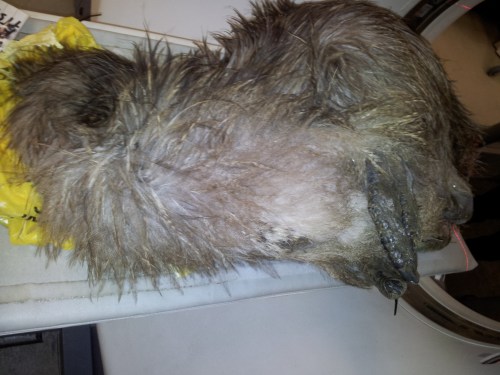
Gratuitious image of emu curled up for CT scan.
Next along the path, a longitudinal section of a whole ostrich caught my attention. Wow again! I had no idea that one could make a section like this of such a large animal, all in one plastic sheet like a giant microscope slide! I stared at this for a while, wondering how both legs could be fit in a ~1cm thick panel, and gave up trying to understand the technology. Von Hagens, you got me there; I’m stumped. Were multiple sections glued together somehow to produce a pseudo-2D slice from many thin 3D sections? I could not tell, and felt humbled and deeply impressed by the technical skill shown in the exhibits so far…
And then the punches kept coming, one-two-three! The exhibit approaches its climax with a crescendo of great specimens in the final hall. First, another maroon marvel. A whole ostrich, standing with wings askew, showing off its entire circulatory system (plus a few wing plumes for aesthetics) from head to toes! Gorgeous, technically brilliant, and well worth at least a 5 minute walk around (you can stroll around many of the displays in 360 degrees- very good move!). A plastinated whole ostrich stands next to it, and for a muscular anatomy geek like me, it was nirvana. However, in a churlish moment I had to look away from a panel explaining that an ostrich is “too heavy to fly” (I admit some younger visitors may need reminding of this). But then I looked into the big open space of this main hall, and the climax was before me. I think I’d had my climax a few times since this, but wow this was enormous in so many ways. All the ways. Mind-blowingly, vastly, geektastically kewl.

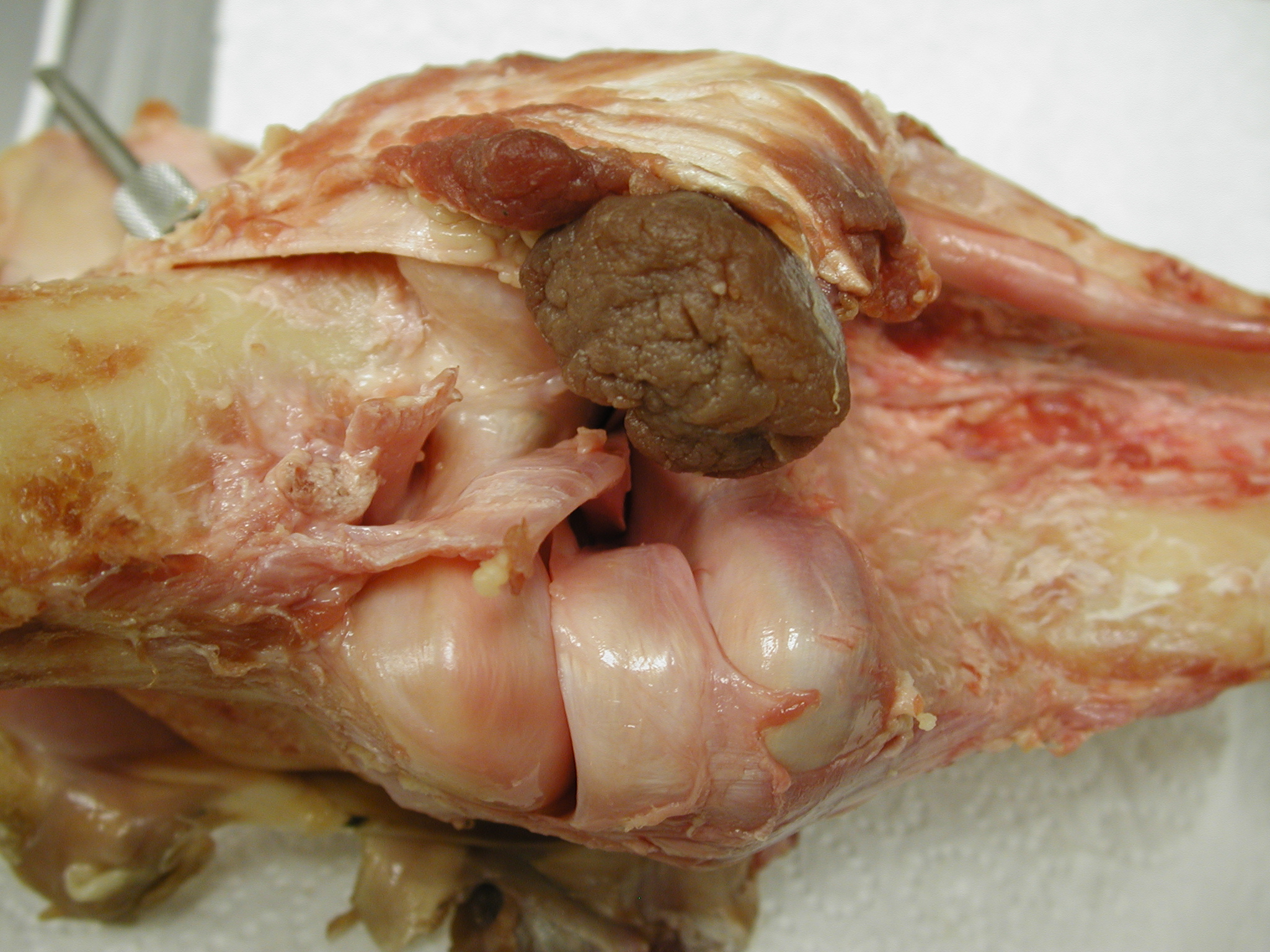
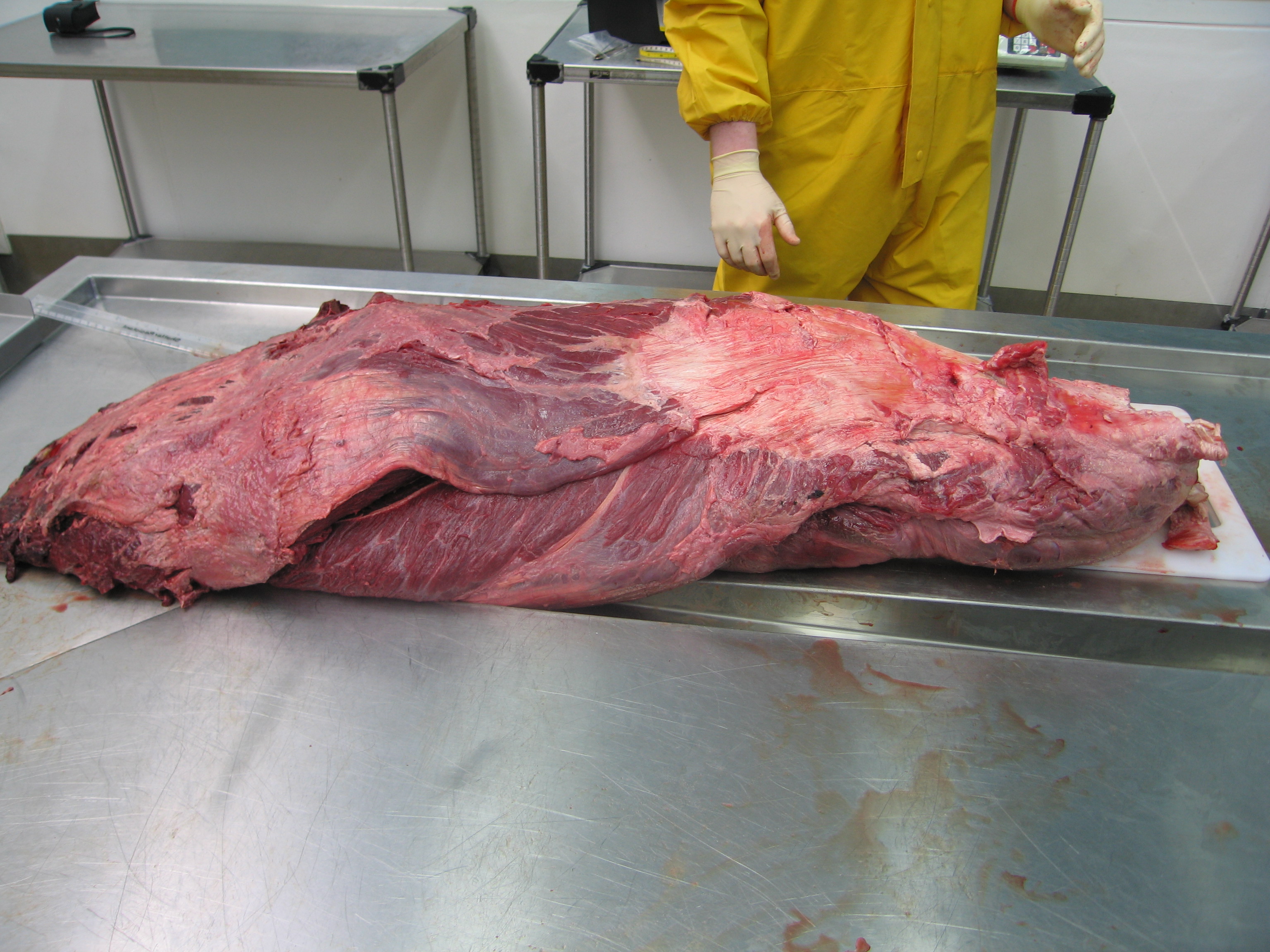
Gratuitious rhinoceros leg.
Across from the two posed ostriches and flanked by numerous smaller specimens, the elephant and giraffe stand frozen in vigil. There is also a lovingly detailed dissection of a huge male gorilla by the back wall and exit, with a panel reminding us that gorillas are (among) “our closest relatives.” The giraffe is precariously poised on one front toe-tip, in mid-gallop. What a great pose! There is the requisite explanation of how they solve the blood pressure problem in their neck (e.g. arterial valves), but also the statement, news to me, that they are the only animals able to ruminate while running. Who figured that out and how? I really want to know! Must be hard to check. (or was walking intended? Are my notes wrong?) Across from the full-fleshed plastinated giraffe (which I could see with my eyes closed after all our dissections from a month ago), there was another visually arresting and technically monumental giraffe on exhibit: one represented completely by small, reddish cross-sectional slices, from head to toes in a standing pose. That took me a while to absorb, it was so lovely, almost like a hanging mobile of morphological splendour.
There is a panel about genes and variation and inheritance. It is brief. (and it belongs there) Thank you. Let’s celebrate anatomy for anatomy’s sake for once!
“But John,” you might say, “What about the elephant? No love for the elephant? The star of the show?”
Zoinks! I want one! Stoic and triumphant (except against death and plastination), the Asian elephant is the centrepiece of the collection. (The book explains it was “Samba” from Neunkirchen Zoo, Germany, dead of some circulatory problem in 2005 and the first one plastinated, plus the inspiration for the animal show). I was speechless and paralyzed for a moment. I didn’t even know how to start looking at the partly-exploded-to-show-its-insides elephant. I actually avoided it for a while, looking closely at the other specimens, and building up anticipation, before stepping up and taking a long, intense look at this tall drink of water.
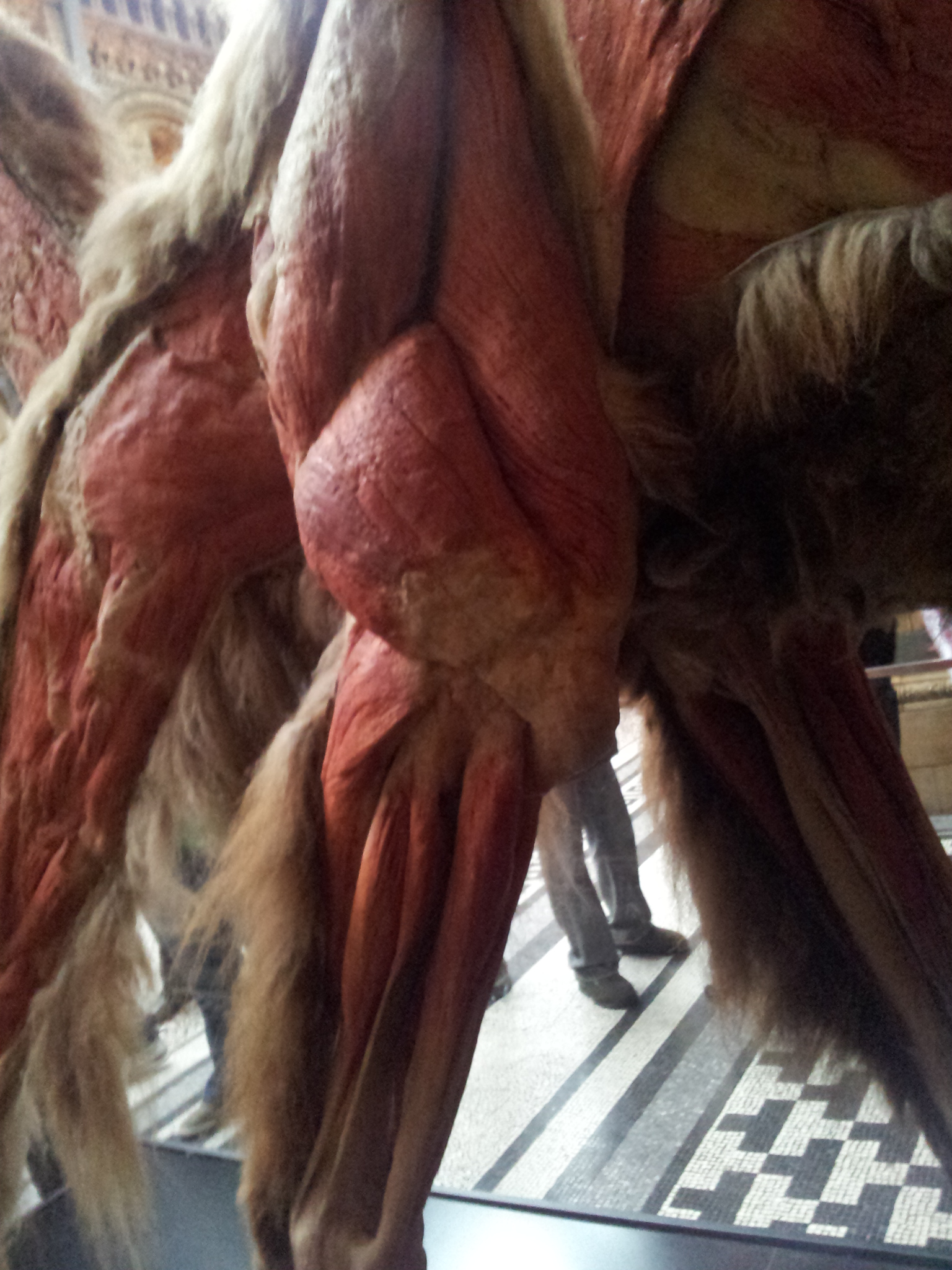
Go see the elephant. If you know basic anatomy, look at its leg muscles. Check out the huge triceps, still attached to the elbow; I like to say it is the size of a graduate student. Same for the analogous superficial gluteal and somewhat-fused biceps femoris muscles on the rear end, around the thigh/knee joint. Huge! I’ve never been able to view a standing dissected elephant, so this really impressed me more than a table full of giant muscle slabs like I normally deal with. And best of all, for me, the “false sixth toes”; the prepollex and prehallux; are visible in all four feet (but not noted anywhere, even in the book; too bad, these things were widely known by anatomists before my work on them). So much to marvel at here. It is an anatomical treasure. I wish I had a 3D image of it to use for anatomical studies- it was so easy to identify every single muscle group (except for a few missing around the shoulder/neck), even in the distal limbs. Hmm, photogrammetry might be possible (nugget of idea begins to crawl around John’s brain like a Zimmerian parasite)…

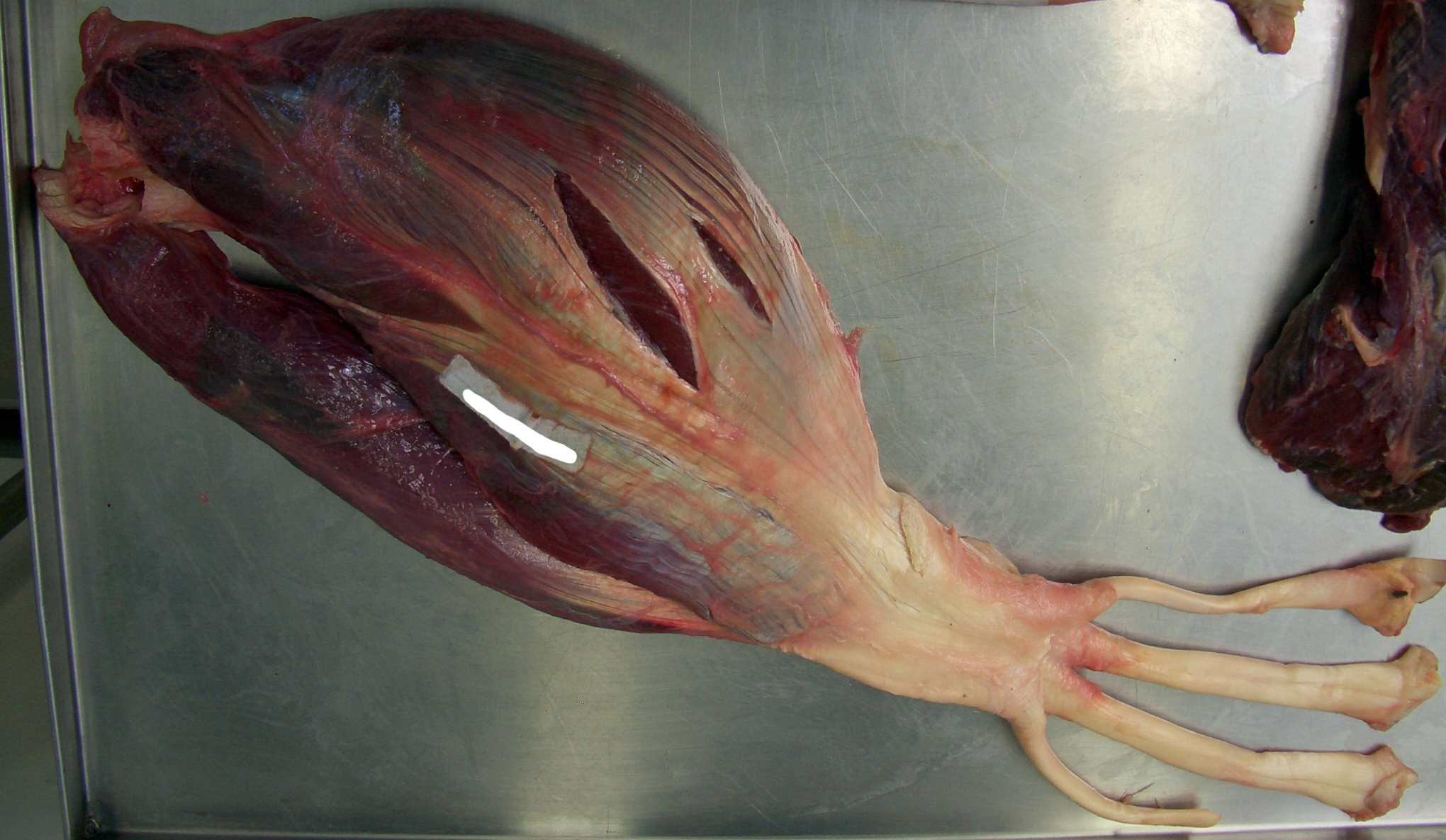
Behold, the triceps muscle of an elephant!
Behind that gorgeous elephant, don’t miss the wall mountings of two cross-sectional slices: through the head/neck of a moderate-sized elephant (How!?!?) and distal leg (no predigits but good features). And definitely don’t miss the stool (non-fecal, furniture form). I almost did. A wooden stool is shaped like a newborn elephant and a cross-section of the body is adhered on top of it. I assume you cannot sit there, and I am very glad that it was not, as I first imagined, an actual plastinated baby elephant turned into a stool. That would be bad taste.
The exhibit is in very good taste, without exception, and although I am gore-desensitized to say the least, it is not gory in my view. The plastination process preserves the reality and even some of the colour faithfully, but renders it just unreal enough (past uncanny valley territory?) that it should not be very disturbing to most viewers.
You can’t leave with your own photographs, but you can be schnookered into buying the exhibit book (£12.99) and a couple of packages of nice colour postcards (£4 for six; excellent quality images and cardstock IMO). The book and postcards show many of the exhibit specimens but not all, and include some others that are not on exhibit. I was saddened that the bear was left out—very cool image of that in the book. I’ve only skimmed the book a bit. I was annoyed by a few mistruths about elephants (25mph running speed, “have no ankle joints, which is one of the reasons why elephants cannot jump”, the bones “do not contain any marrow”—wrong, 15mph and there are ankles, they just are not very flexible (but not immobile either); also the bones do contain marrow (how could a large vertebrate survive entirely without it???) but just not as much of it per unit volume, due to lots of spongy bone). But I am still very happy with the 139 pages chock fulla pretty images, which is all I really wanted. Indeed, the book is a great pictorial anatomical reference- some of the species such as elephants and giraffe lack a really good anatomical resource in the modern, or any, literature! The exhibit shop also sells some good anatomy texts, mostly on humans but I recommend “Animal Anatomy for Artists” very strongly; I use that regularly in my own work.
So, £29.99 of schnookering later (haha, poor victimized me!), I emerged and reflected more on what I’d seen. I’m still a bit giddy about it all. I like the minimalism in most aspects- black backgrounds, minimal signage (but just enough to make it educational—when they got the facts right), focus kept on the specimens. Well done there. The spectacle of the specimens I’ve raved plenty about- it is not at all disappointing. It is AWESOME in every sense. I feel I easily got £9 of value from the ticket, and would (probably will!) pay it again. It is a profound experience to see the rich anatomical detail exposed, and be able to circumnavigate the specimens to absorb multiple perspectives. If you know some anatomy, you’ll be doubly rewarded at least, and if you bring your own phylogenetic perspective that can be trebled.

Baby white rhinoceros. Sad infant mortality.
What makes me happiest after my visit is realizing that we are in an anatomical renaissance for science and public interest therein. Exhibits like this and documentaries like “Inside Nature’s Giants” have tapped a public interest and curiosity in the wonders of basic anatomy. Anatomy is at the core of so many biological sciences and is so immediately accessible to people, because we all have anatomy. Anatomy is at the crossroads of art and science; it is visual, variable and complex, yet concrete, objective and easy to relate to. “Animal Inside Out” is a spectacular blend of art and science. They nail the artistic aspect, and the science is done reasonably well (despite my few gripes)—the exhibit’s science speaks for itself, in a way, although many visitors will need a nudge to grasp that.
I’d like to make a call for a permanent exhibit of the likes of “Animal Inside Out” in the UK. We deserve this! Museum exhibits could use something new, other than lame, quickly broken digital pushbuttons and bland skeletons devoid of soft tissue context (although the latter can be sufficient, e.g. at the Paris NMNH). That’s what makes “Animal Inside Out” (and Body Worlds) such a hit- as Hagens is quoted on the book dustcover, animal anatomy that goes beyond digitized abstractions and dusty bones is able “to sharpen our sense of the extraordinary by looking at the self-evident.” I could not say it better myself. This exhibit is extraordinary; that is self-evident after even a peek. It is a loving tribute to how fantastic the totality of animal structure is. Go! Enjoy. Absorb. Gape. Stare. Thrill. Revel. Think. Question. IT’S BEAUTIFUL.
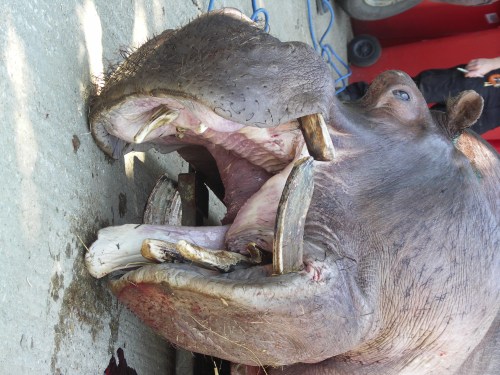
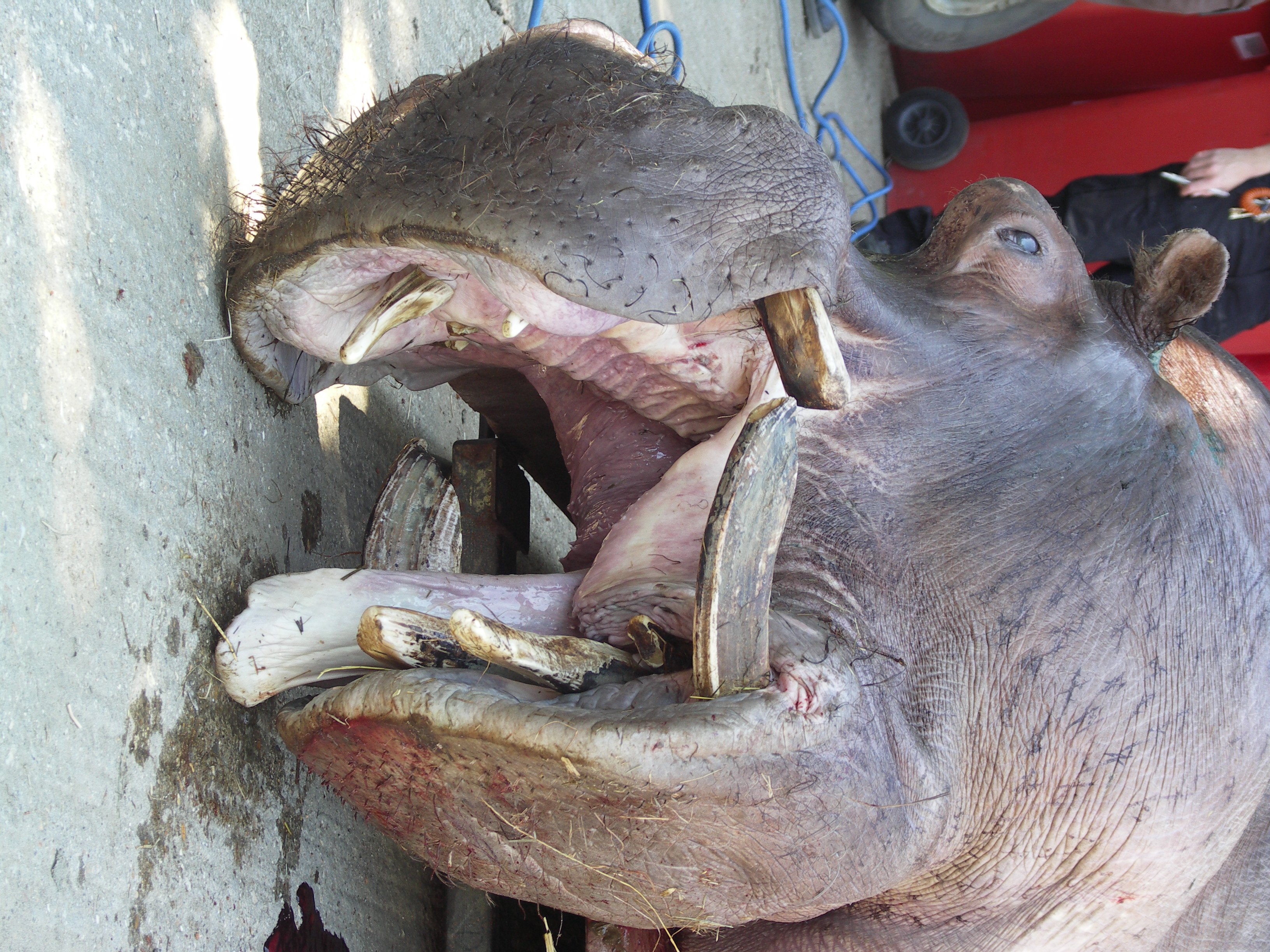
Impressive hippo mouth says “Farewell for now.”
Edit: @samjamespearson on Twitter has kindly posted some photos (for free NHM/AIO publicity) of the exhibits and here are the links, now that they’re out there– SPOILERS! And thanks, Sam! I don’t think these really spoil the intense visual experience of actually being there and walking around the specimens, not at all.
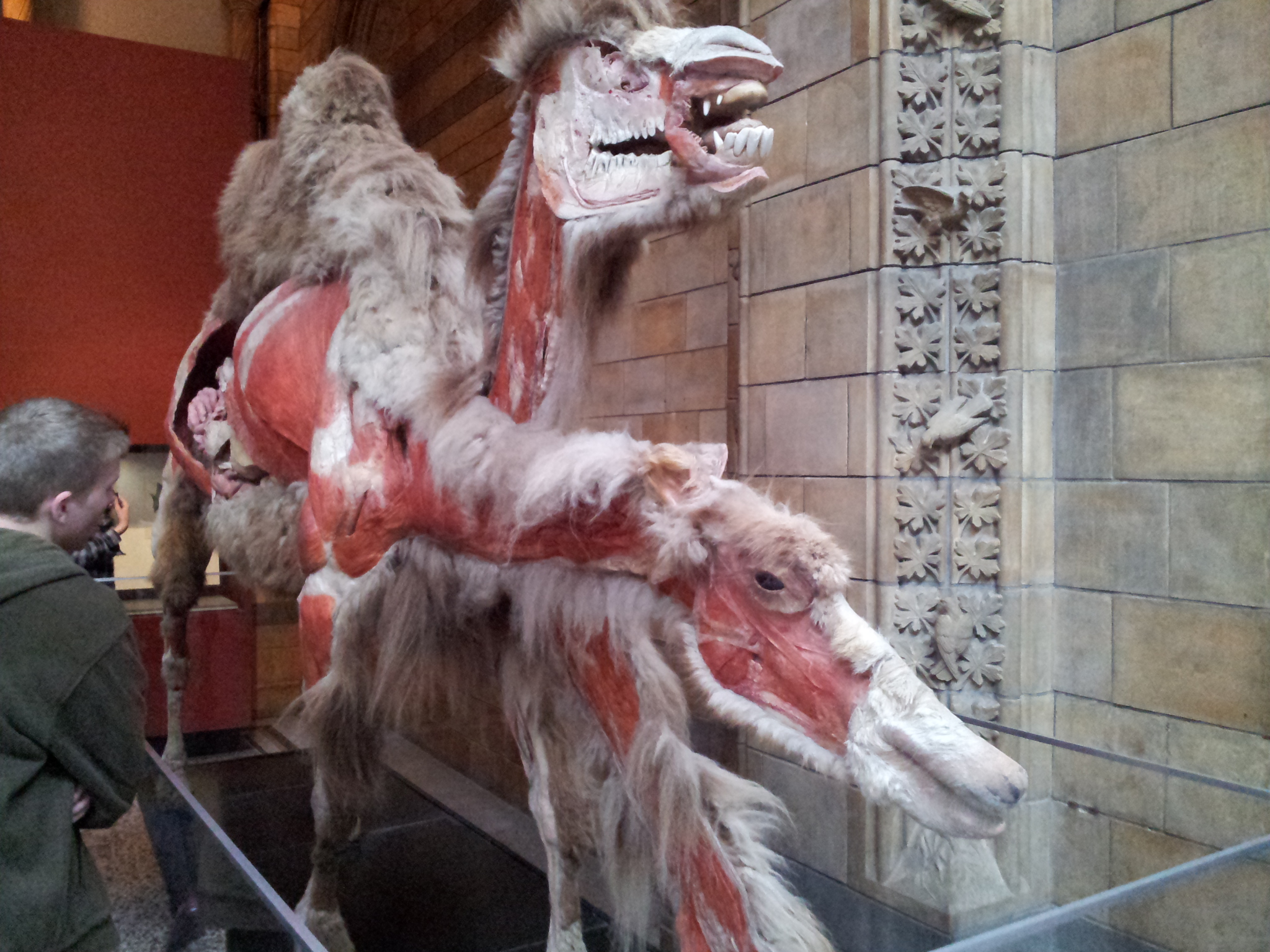
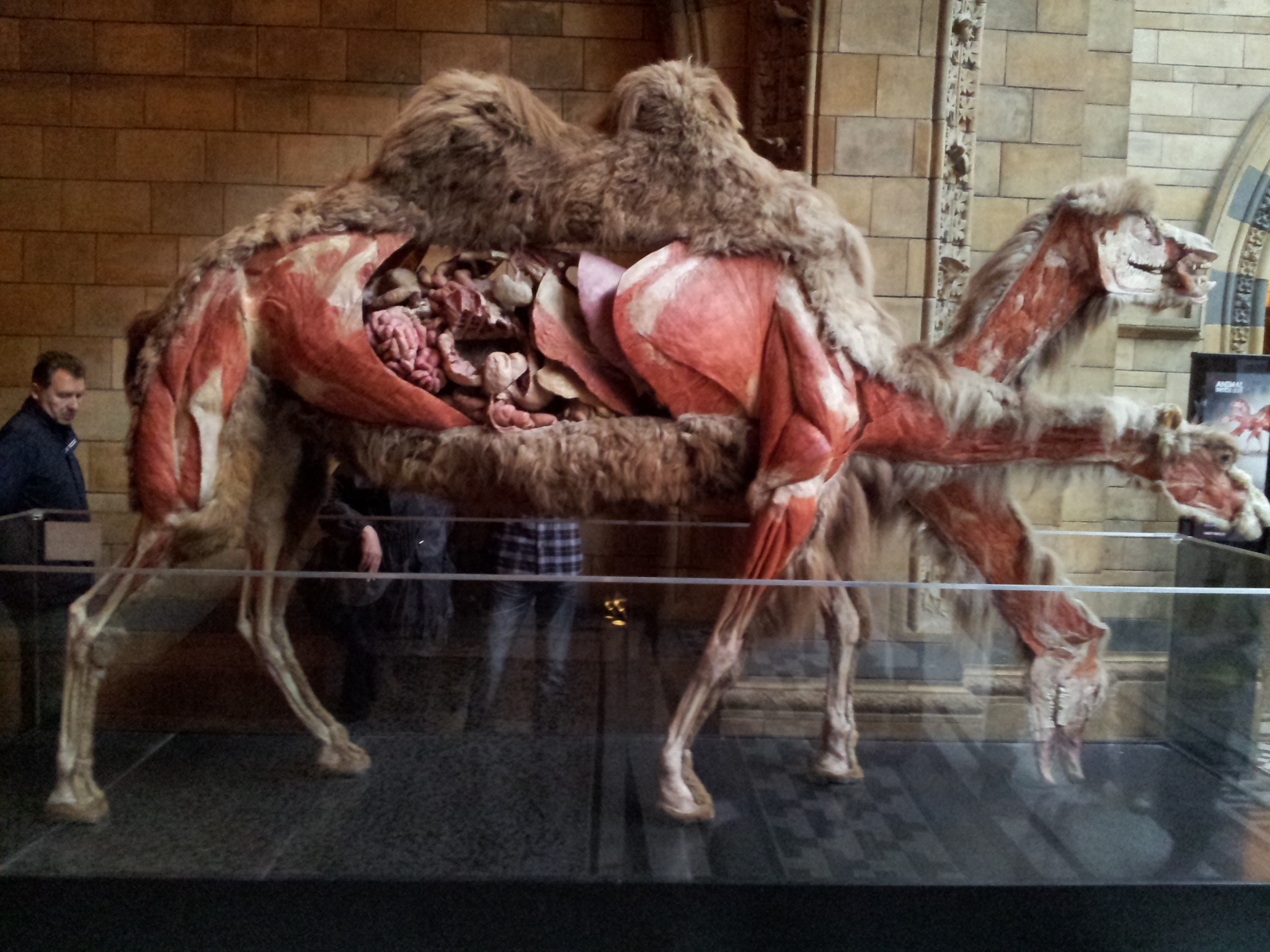
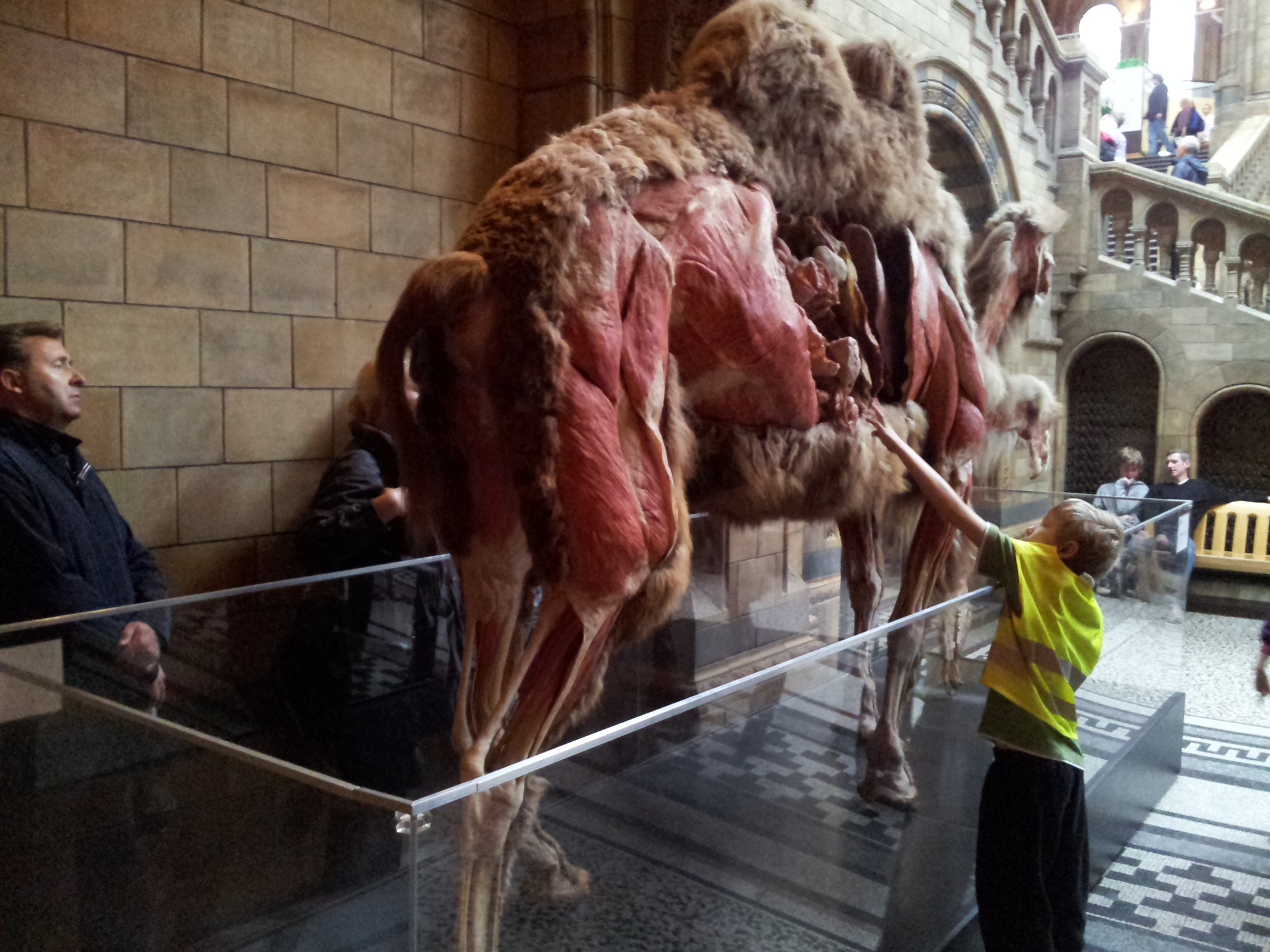
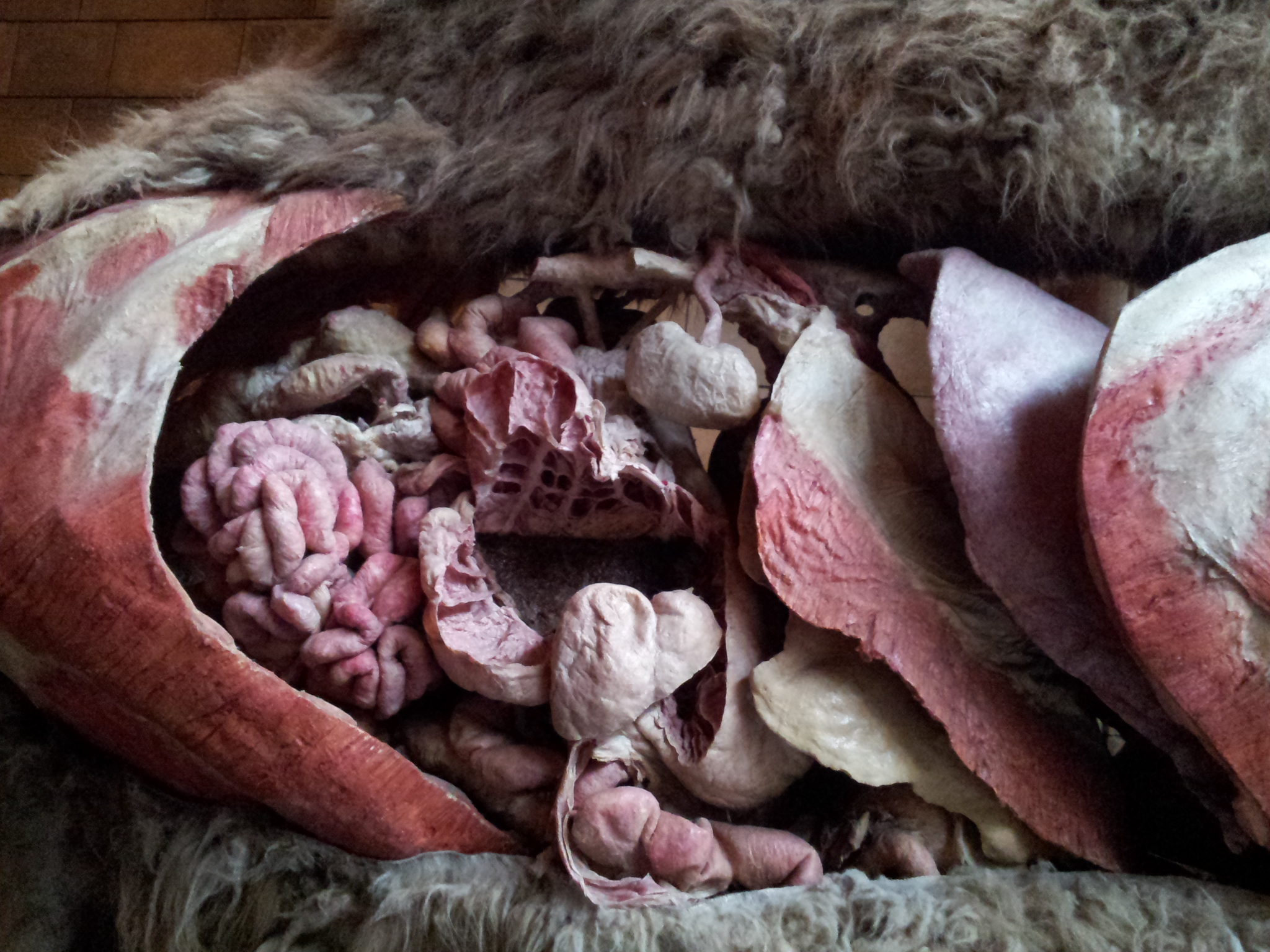
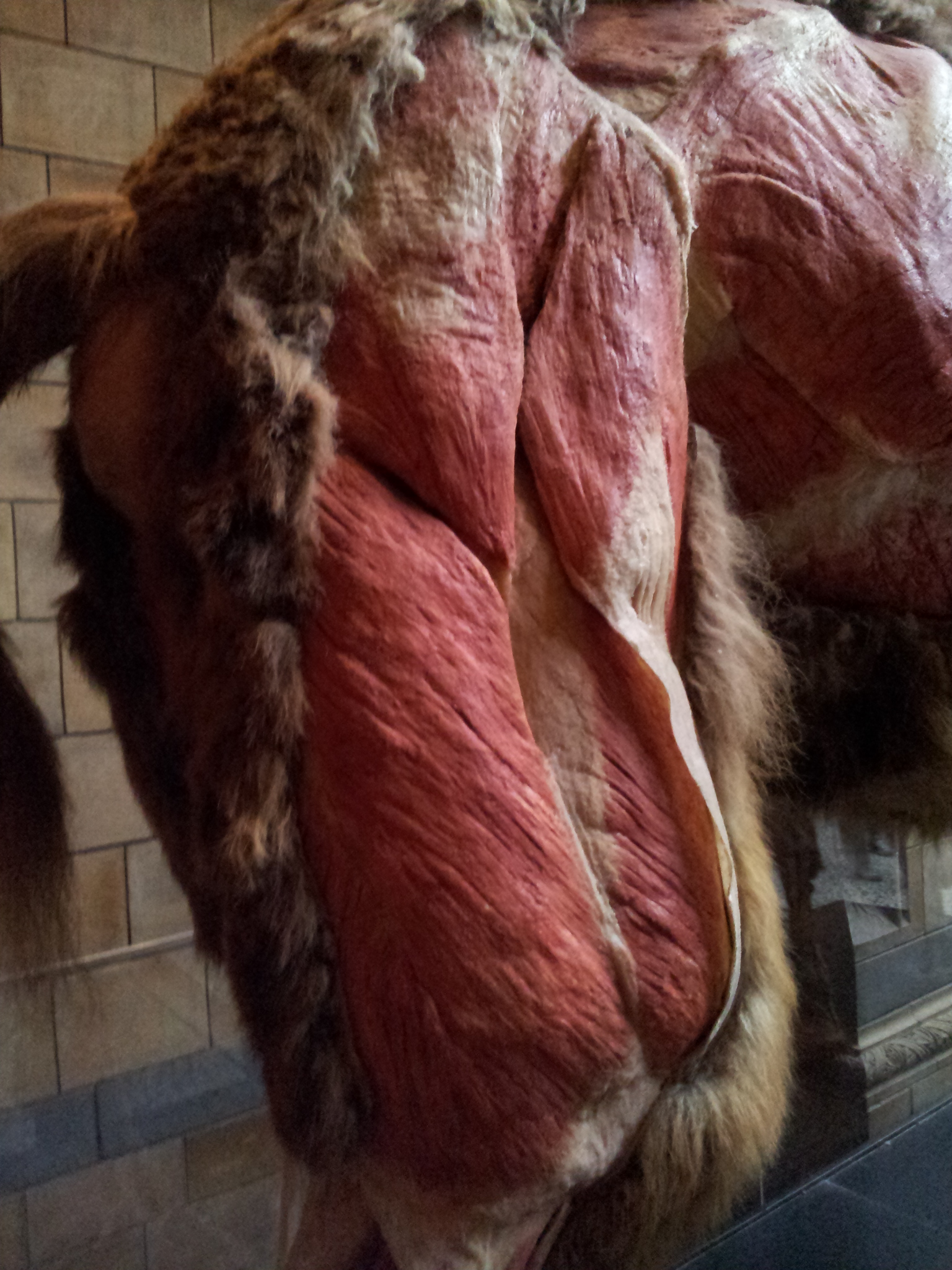
octopus, whelk, squid, needlefish, scarlet haze of shark, hare brain, cat nerves, bactrian camel, another camel, bull (I forgot to mention it; this one was pretty great!)
Read Full Post »




























 What's In John's Freezer?
