Feeds:
Posts
Comments

Posts Tagged ‘museum’

A photo blog post for ya here! I went to Dublin on a ~28 hour tour, for a PhD viva (now-Dr Xia Wang; bird feather/flight evolution thesis) earlier this month. And I made a beeline for the local natural history museum (National Museum of Ireland, Natural History building) when I had free time. So here are the results!

Stomach-Churning Rating: Tame; about a 1/10 for most, but I am going to break my rule about showing human bodies near the end. Just a warning. The bog bodies were too awesome not to share. So that might be 4/10-8/10 depending on your proclivities. They are dry and not juicy or bloody, and don’t look as human as you’d expect.

Simple Natural History museum entrance area.

Simple Natural History museum entrance area.

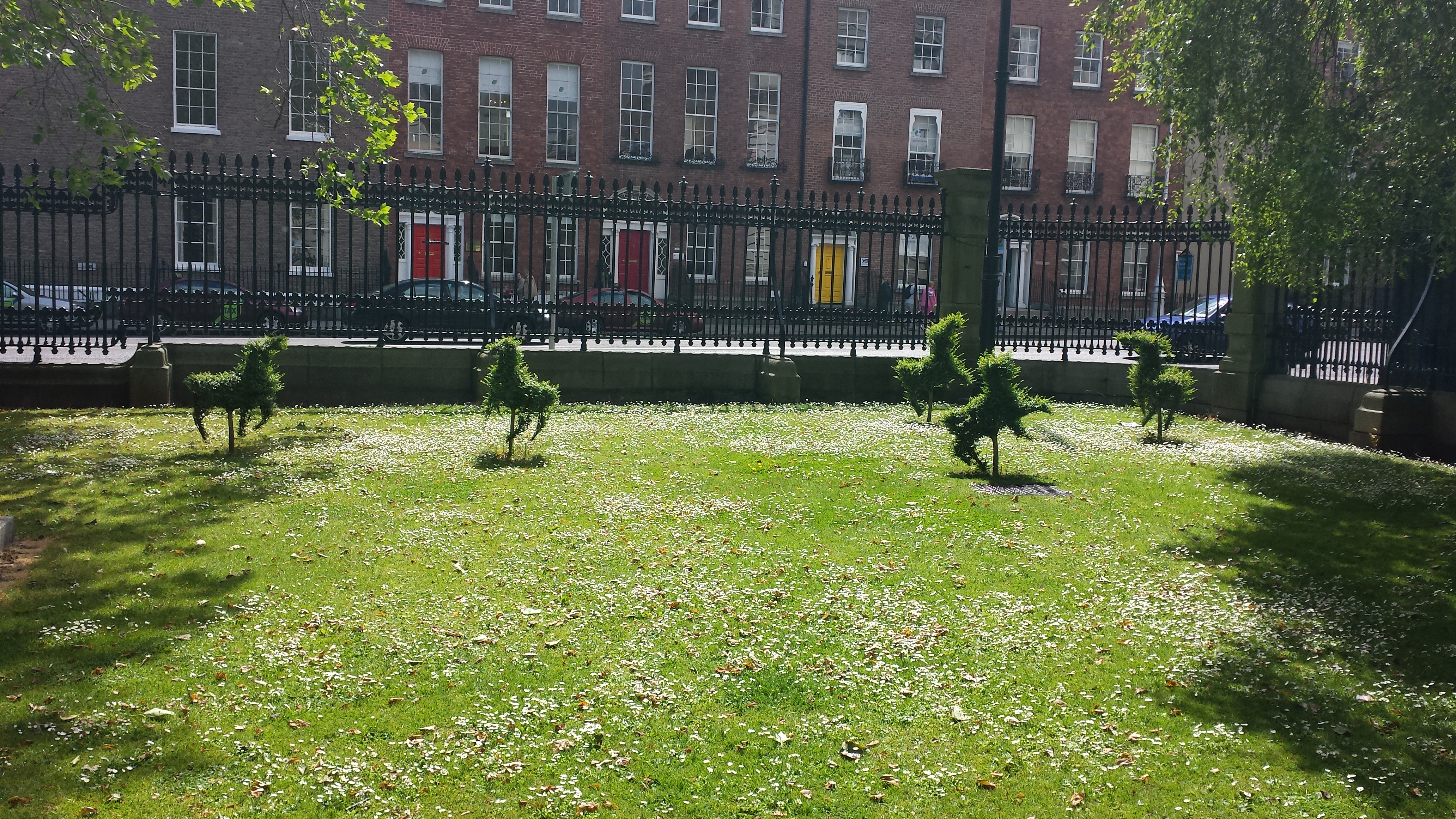
Adorable frolicking topiaries outside the NHM.

Adorable frolicking topiaries outside the NHM.

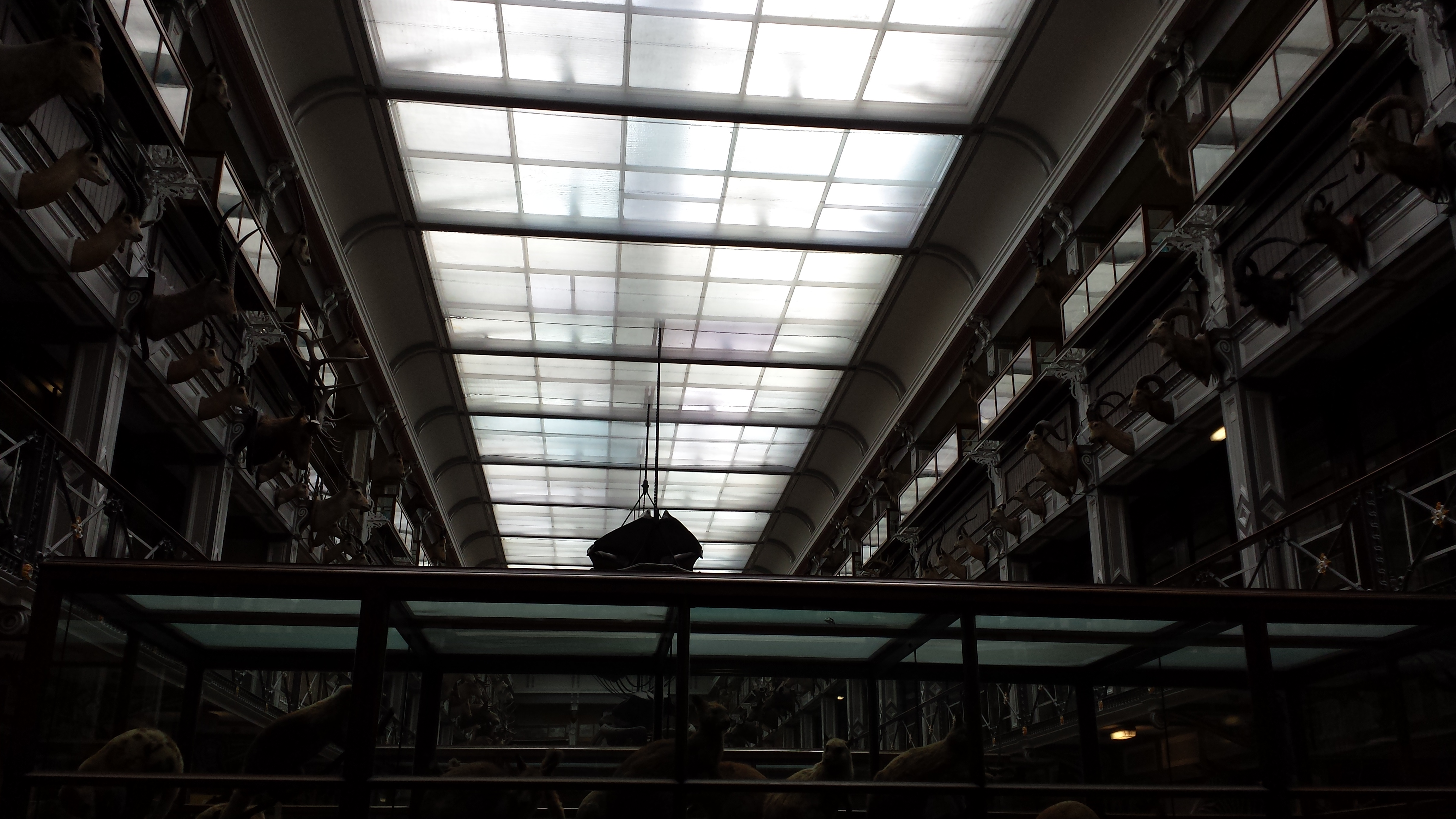
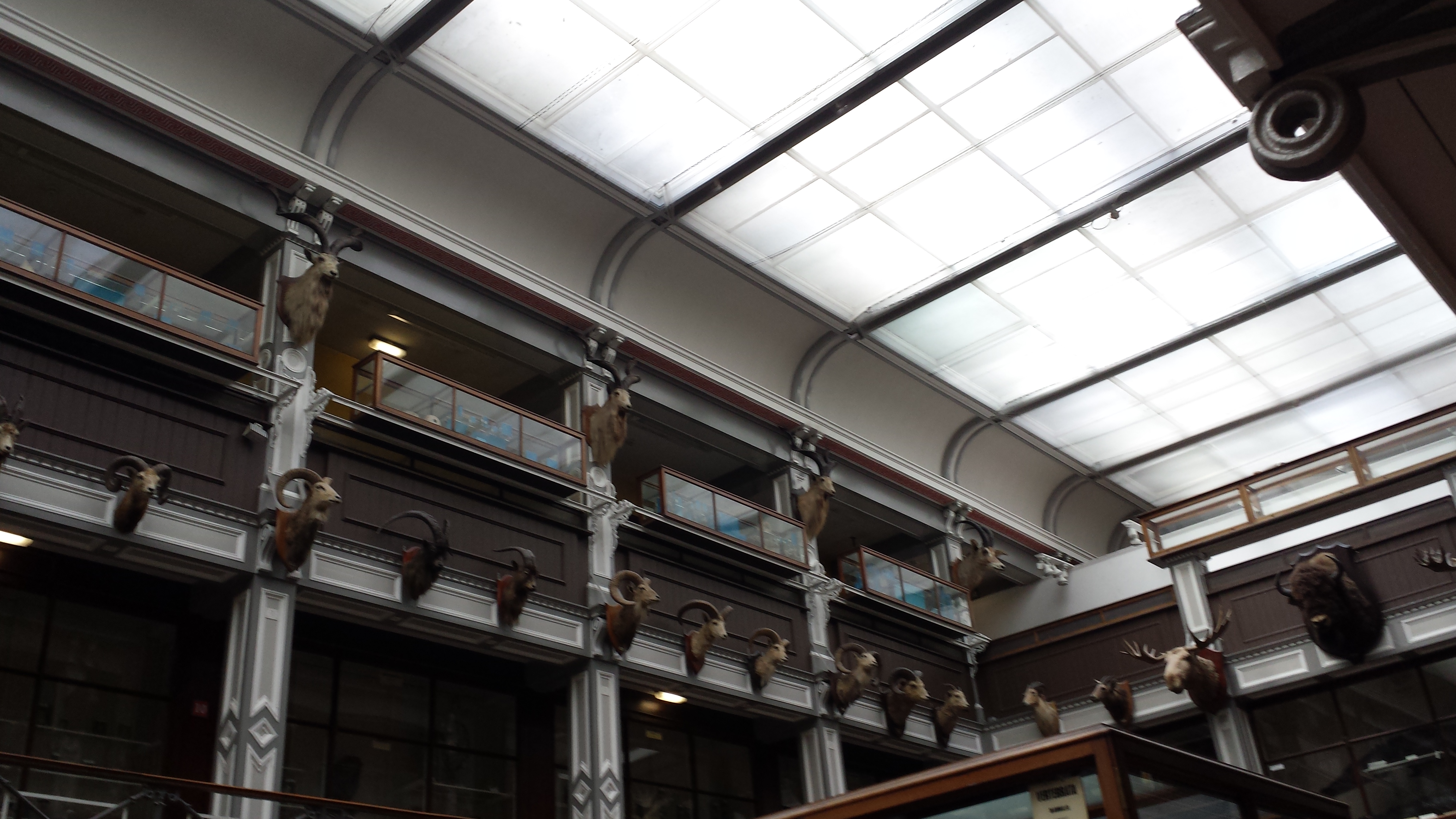
Inside, it was a classical Victorian-style, dark wood-panelled museum stuffed with stuffed specimens. It could use major refurbishment, but I do love old-fashioned exhibits. Get on with it and show us the animals; minimize interpretive signage and NO FUCKING INTERACTIVE COMPUTER PANELS! So by those criteria, I liked it. Some shots of the halls: hall2 hall1 hall3 hall4 hall5 hall6 And on to the specimens!

Giant European deer ("Irish elk"). I looked at these and thought, "why don't we see female deer without antlers ever? then noticed one standing next to these; photo was crappy though. :(

Giant European deer (“Irish elk”). I looked at these and thought, “why don’t we see female deer without antlers ever? then noticed one standing next to these (you can barely see it in back); too bad my photo is crappy.

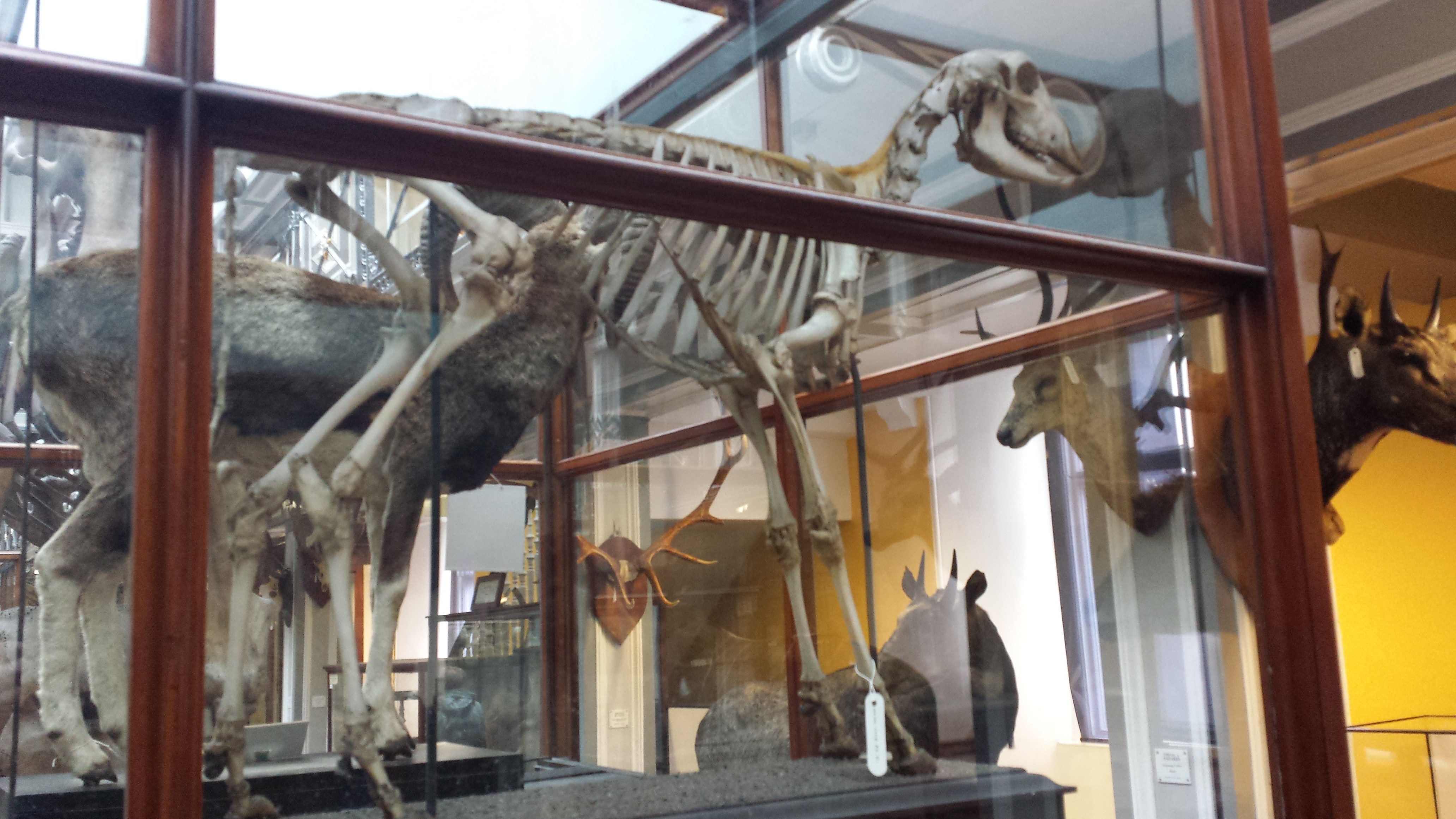
Superb mounted skeleton of giraffe (stuffed skin was standing near it).

Superb mounted skeleton of giraffe (stuffed skin was standing near it).

A sheep or a goat-y thingy; I dunno but it shows off a nice example of the nuchal ligament (supports the head/neck).

A sheep-y or a goat-y beastie; I dunno but it shows off a nice example of the nuchal ligament (supports the head/neck).

Yarr, narwhals be internet gold!

Yarr, narwhals be internet gold!

Giant blown glass models of lice!

Giant blown glass models of lice!

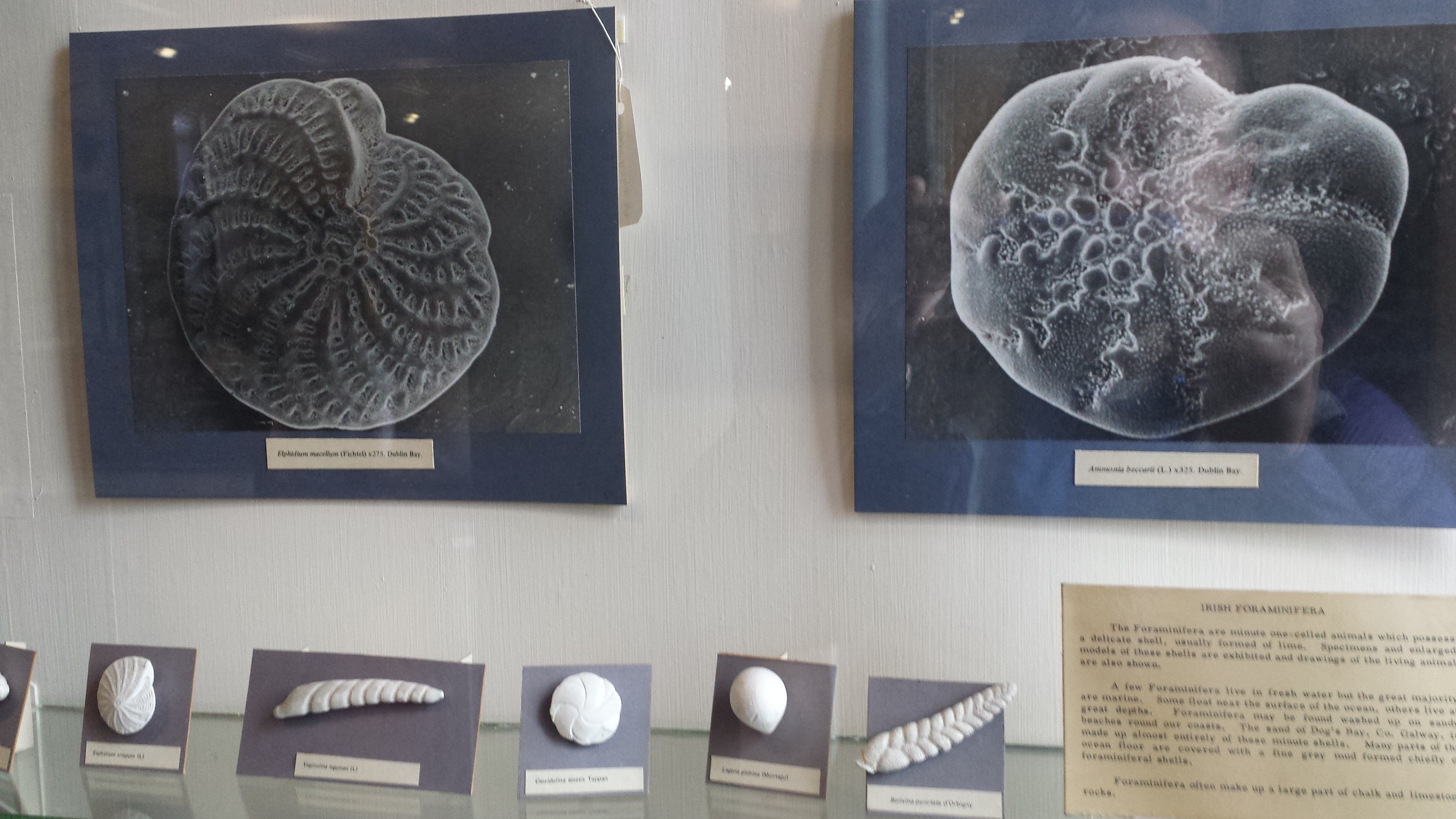
Who doesn't like a good giant foramanifera image/models? Not me.

Who doesn’t like a good giant foramanifera image/model?

"That's one bigass skate," I murmured to myself.

“That’s one bigass skate,” I murmured to myself.

"That's one bigass halibut," I quipped.

“That’s one bigass halibut,” I quipped.

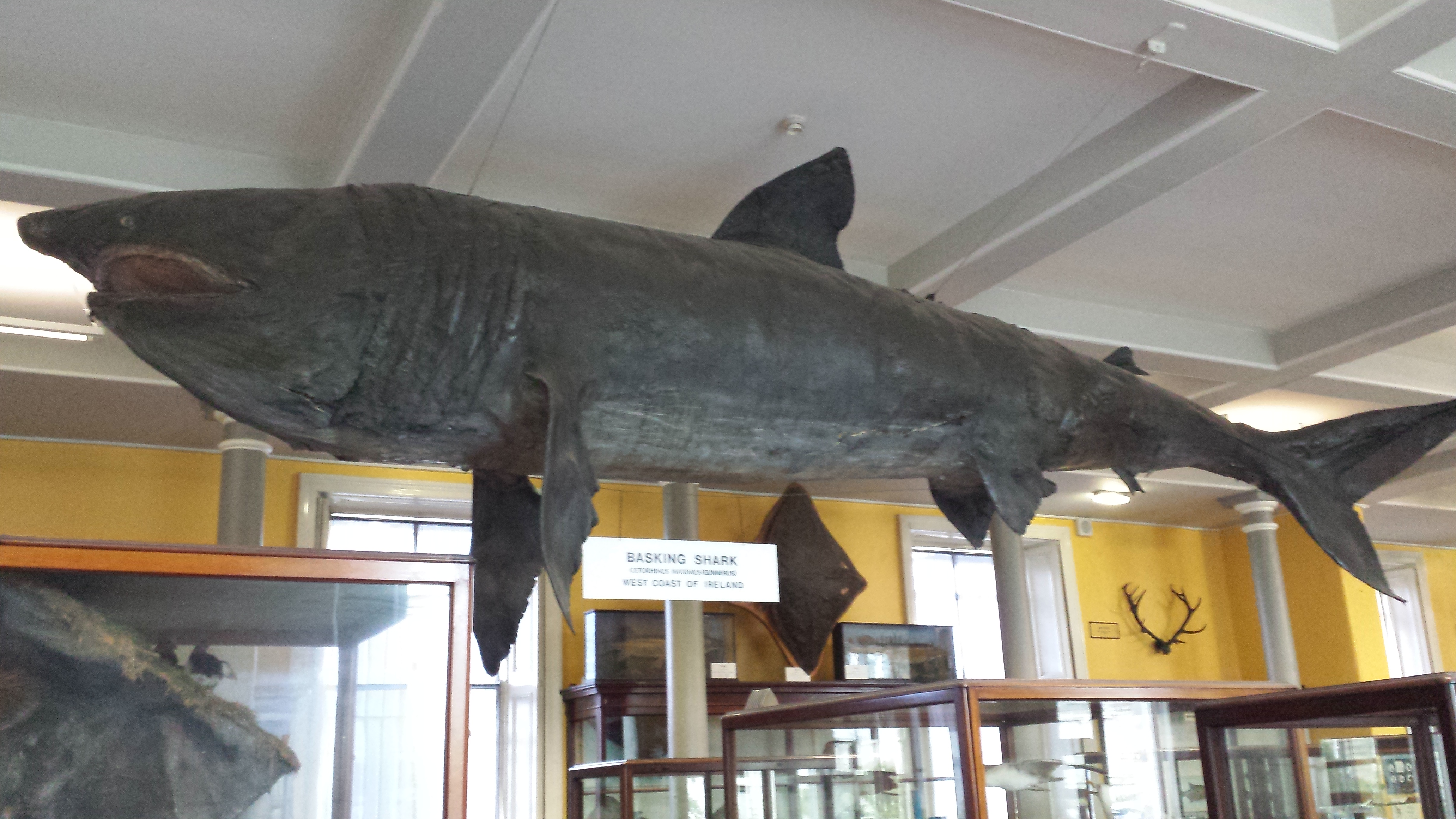
Tatty basking shark in entry hall.

Tatty basking shark in entry hall.

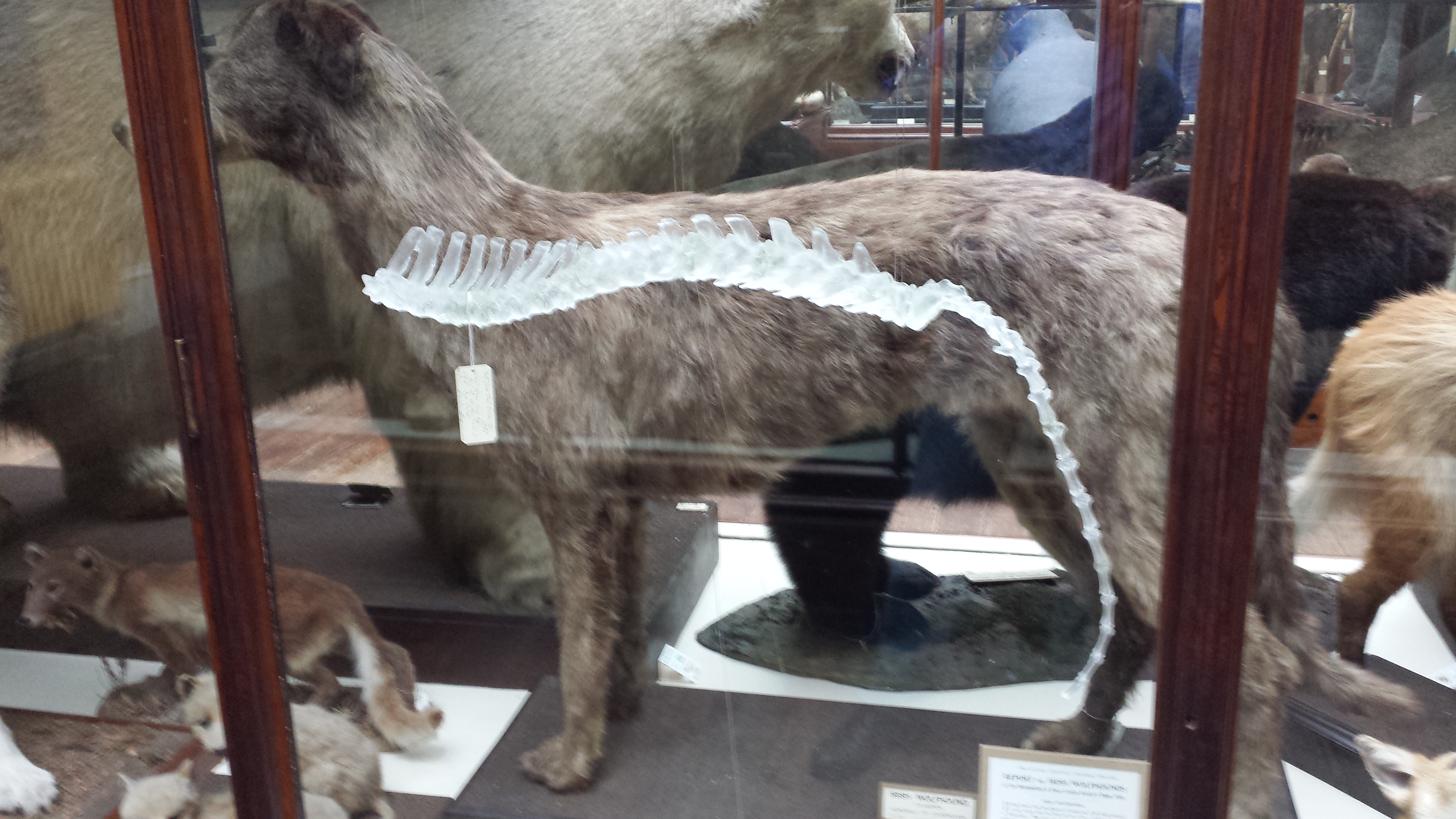
Irish wolfhound, with a glass sculpture of its spine hanging near it, for some reason.

Irish wolfhound, with a glass sculpture of its spine hanging near it, for some reason.

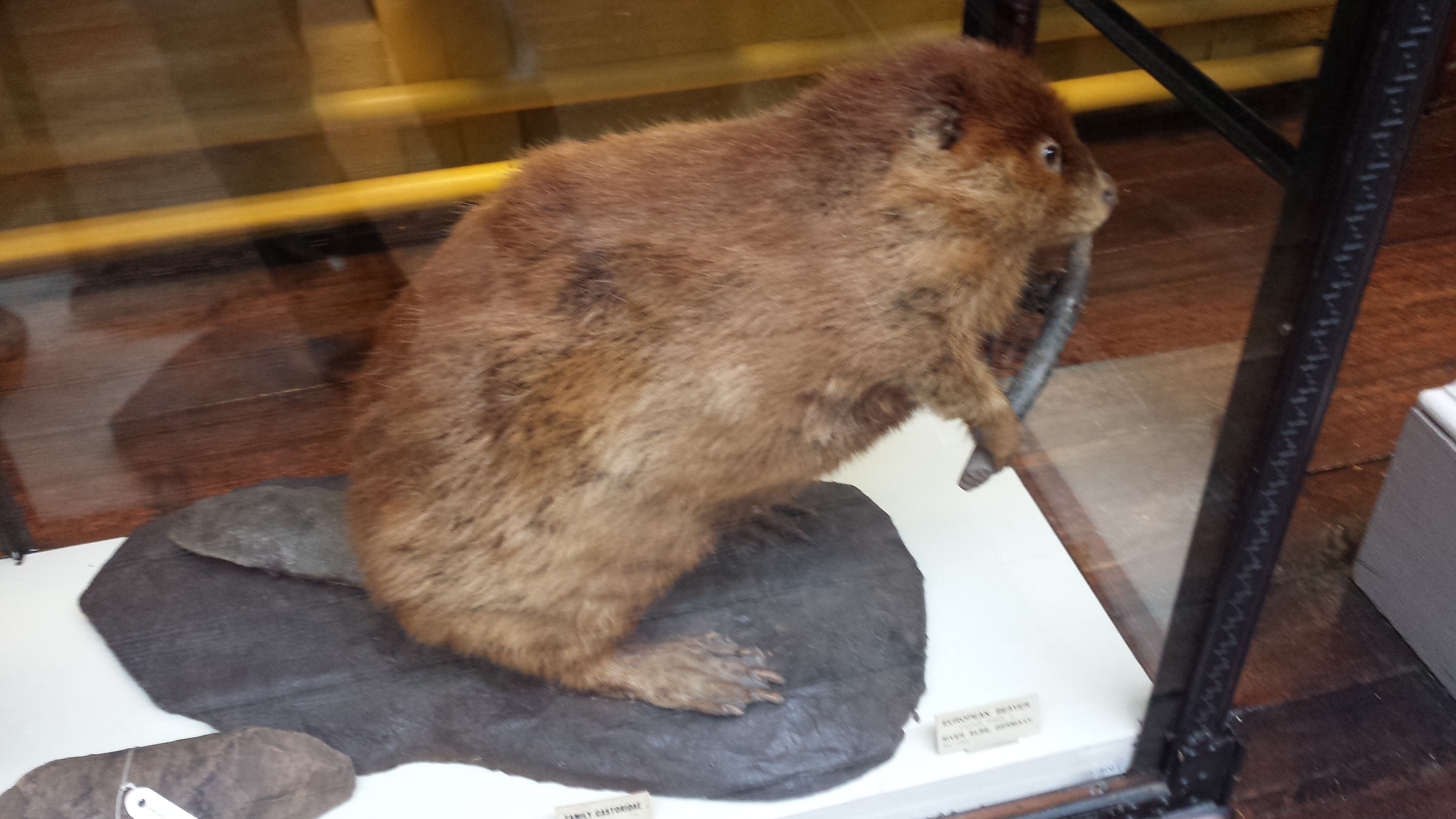
Stand back folks! The beaver has a club!

Stand back everyone! That beaver has a club!

Skull of a pilot whale/dolphin.

Skull of a pilot whale/dolphin.

Nice anteater skeleton and skin.

Nice anteater skeleton and skin.

Nice anteater skeleton and skin.

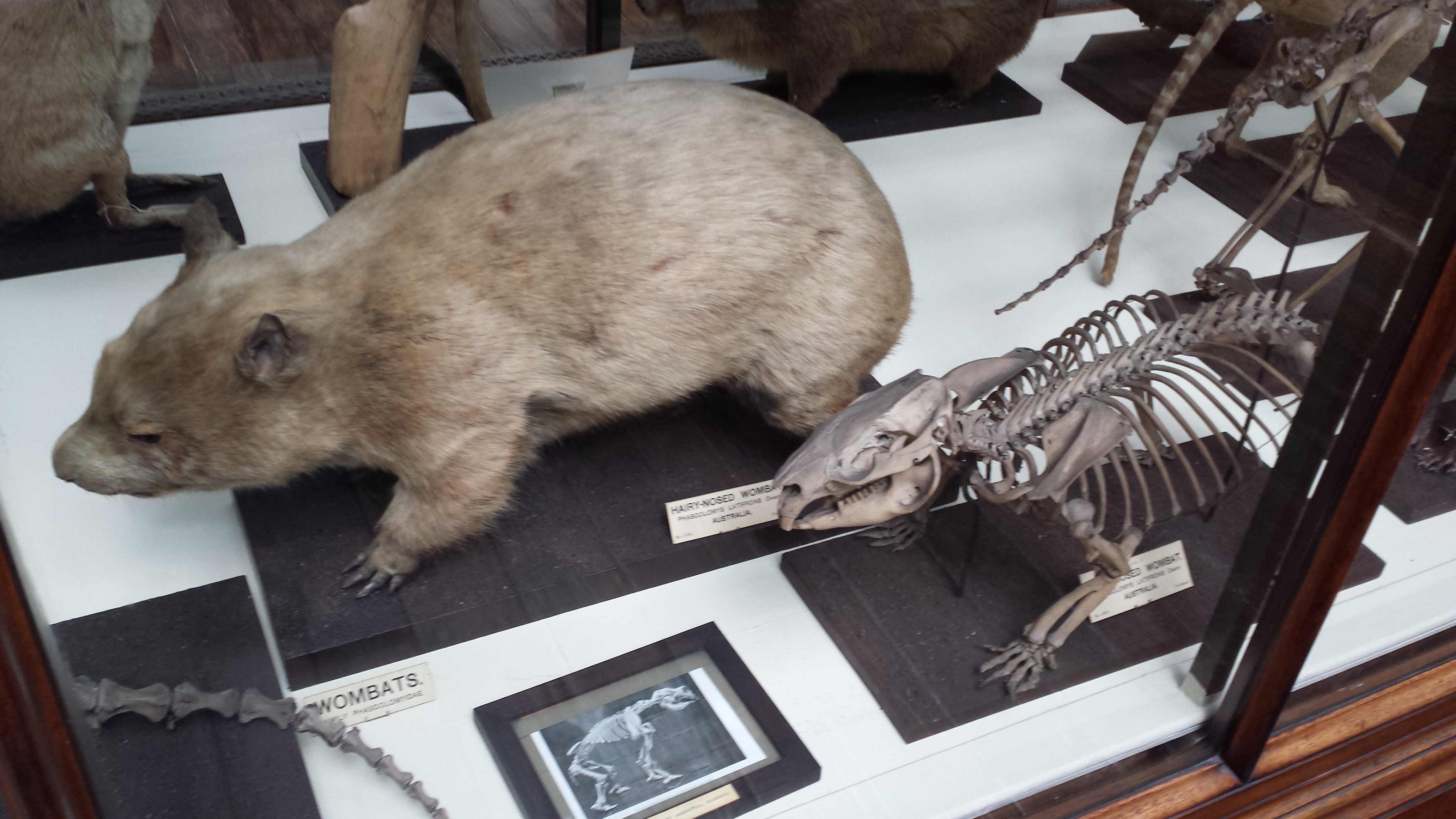
Nice wombat skeleton and skin.

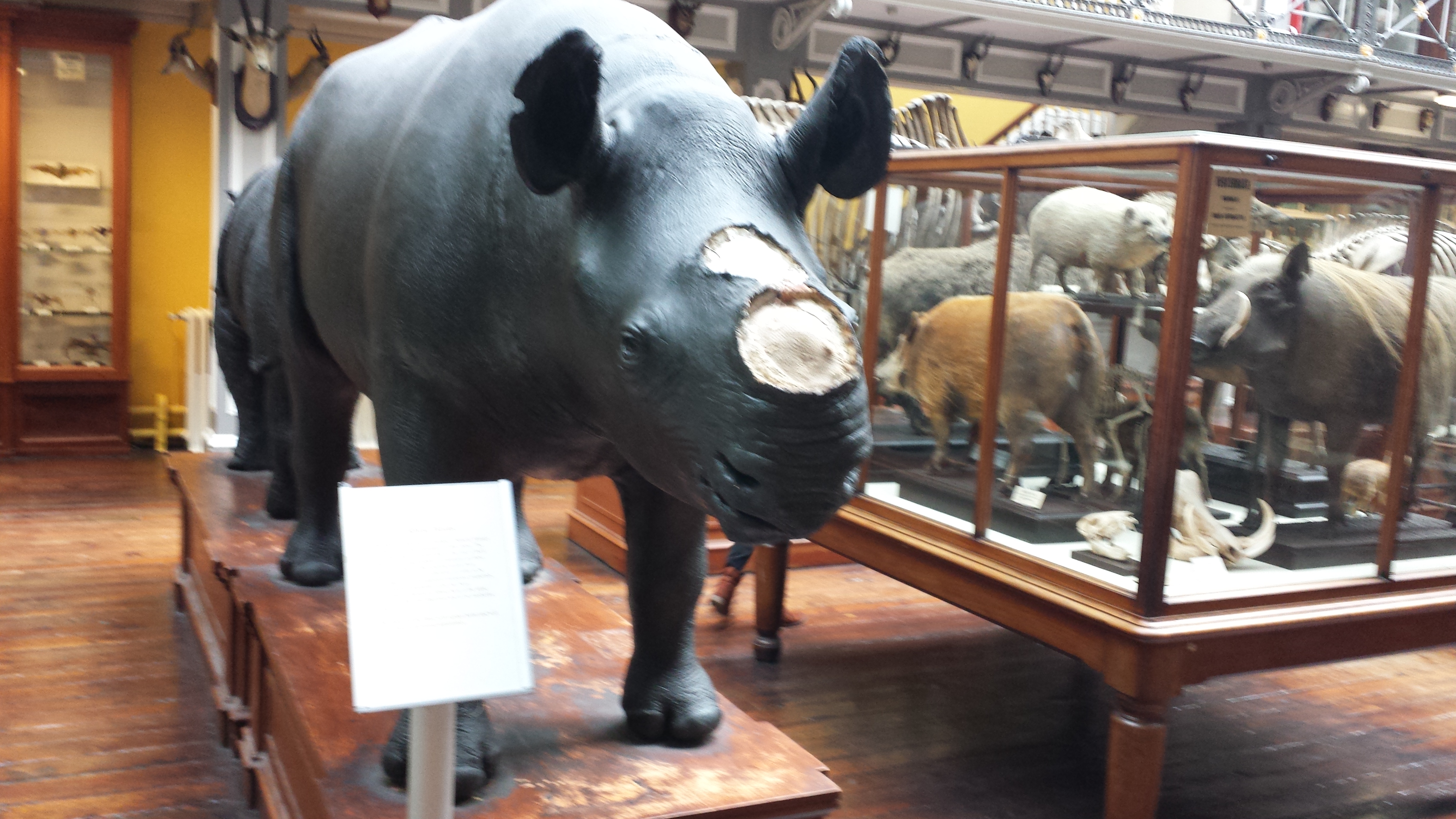
Sad display of a stuffed rhino with the horn removed, and signage explaining the problem of thefts of those horns from museum specimens of rhinos worldwide.

Sad display of a stuffed rhino with the horn removed, and signage explaining the problem of thefts of those horns from museum specimens of rhinos worldwide.

But then the stuffed animals started to get to me. Or maybe it was the hangover. Anyway, I saw this…
creepy proboscis (1) creepy proboscis (2)

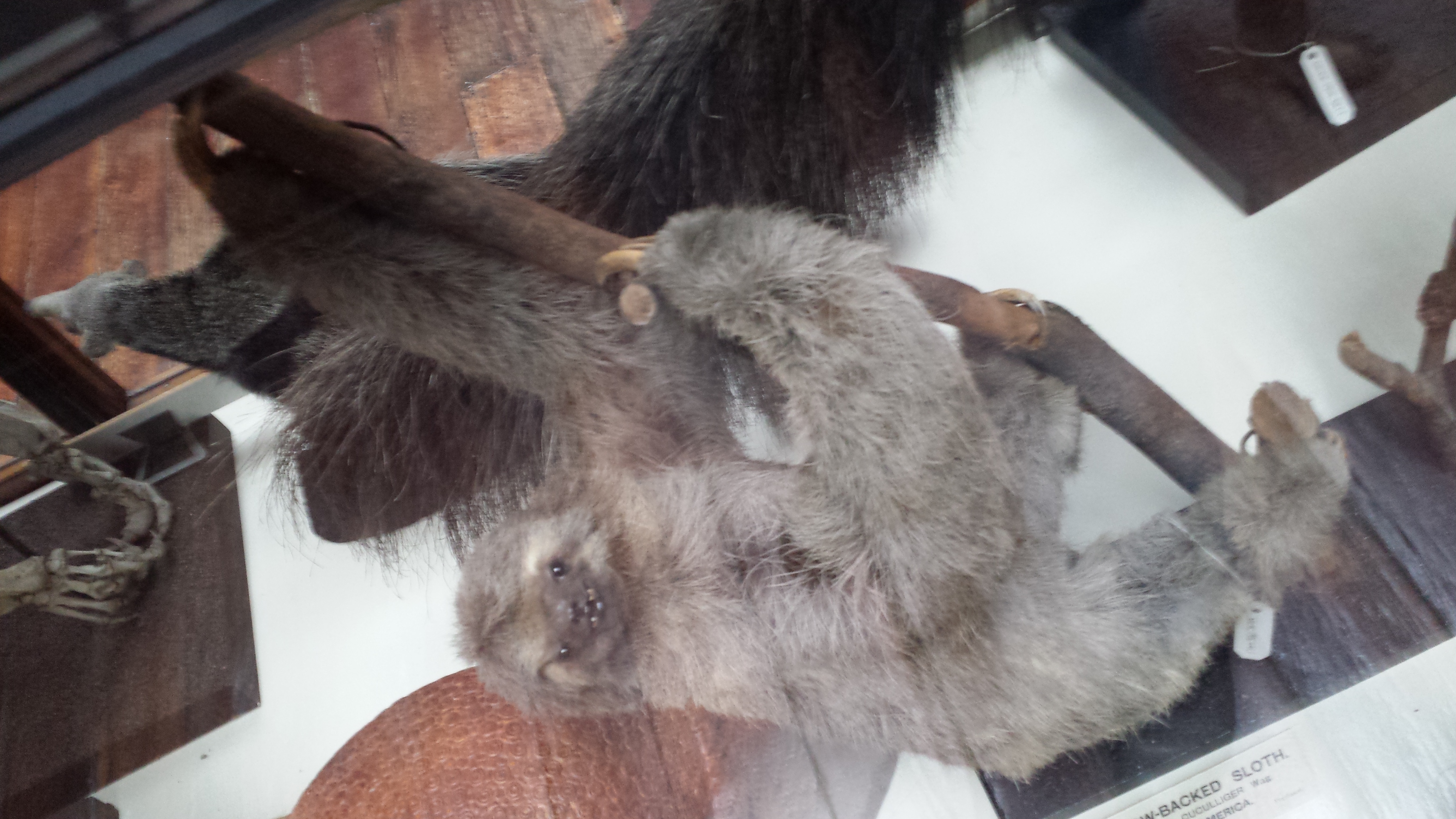
A proboscis monkey mother who seemed to be saying “Hey kid, you want this yummy fruit? Tough shit. I’m going to hold it over here, out of reach.” with a disturbing grimace. That got me thinking about facial expressions in stuffed museum specimens of mammals more, and I couldn’t help but anthropomorphize as I toured the rest of the collection, journeying deeper into surreality as I progressed. What follows could thus be employed as a study of the Tim-Burton-eseque grimaces of stuffed sloths. Click to emslothen.

sloths (1) sloths (5)sloths (4) sloths (3) sloths (2)

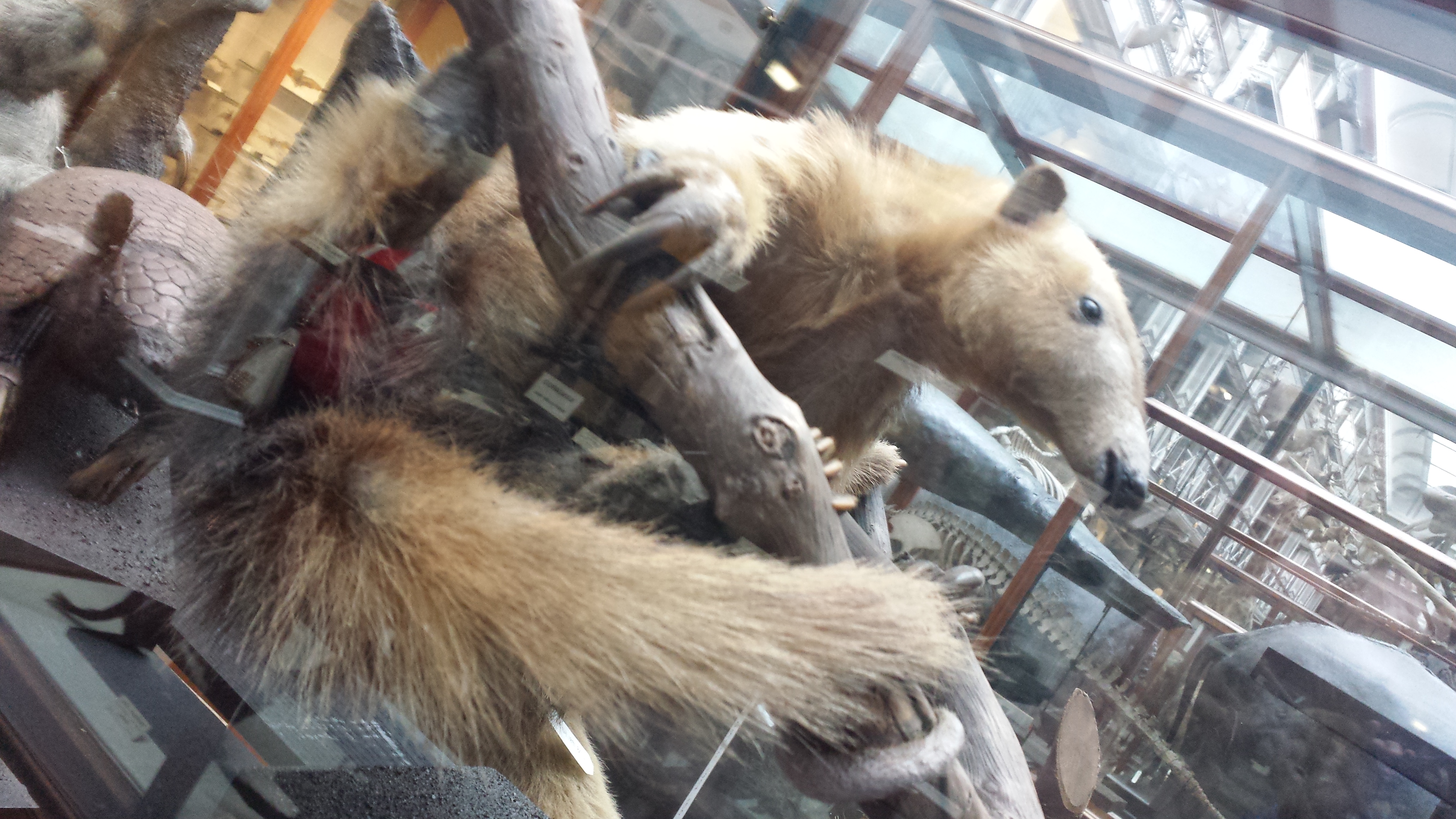
Tree anteater has a go at the awkward expression game.

Tree anteater has a go at the awkward expression game.


This completed my tour of the museum; there were 2 more floors of specimens but they were closed for, sigh, say it with me… health and safety reasons. Balconies from which toddlers or pensioners or drunken undergrads could accidentally catapult themselves to their messy demise upon the throngs of zoological specimens below. But the National Museum’s Archaeology collection was just around the block, so off I went, following whispered tales of bog bodies. There will be a nice, calm, pretty photo, then the bodies, so if peaty ~300 BCE cadavers are not your cup of boggy tea, you can depart this tour now and lose no respect.

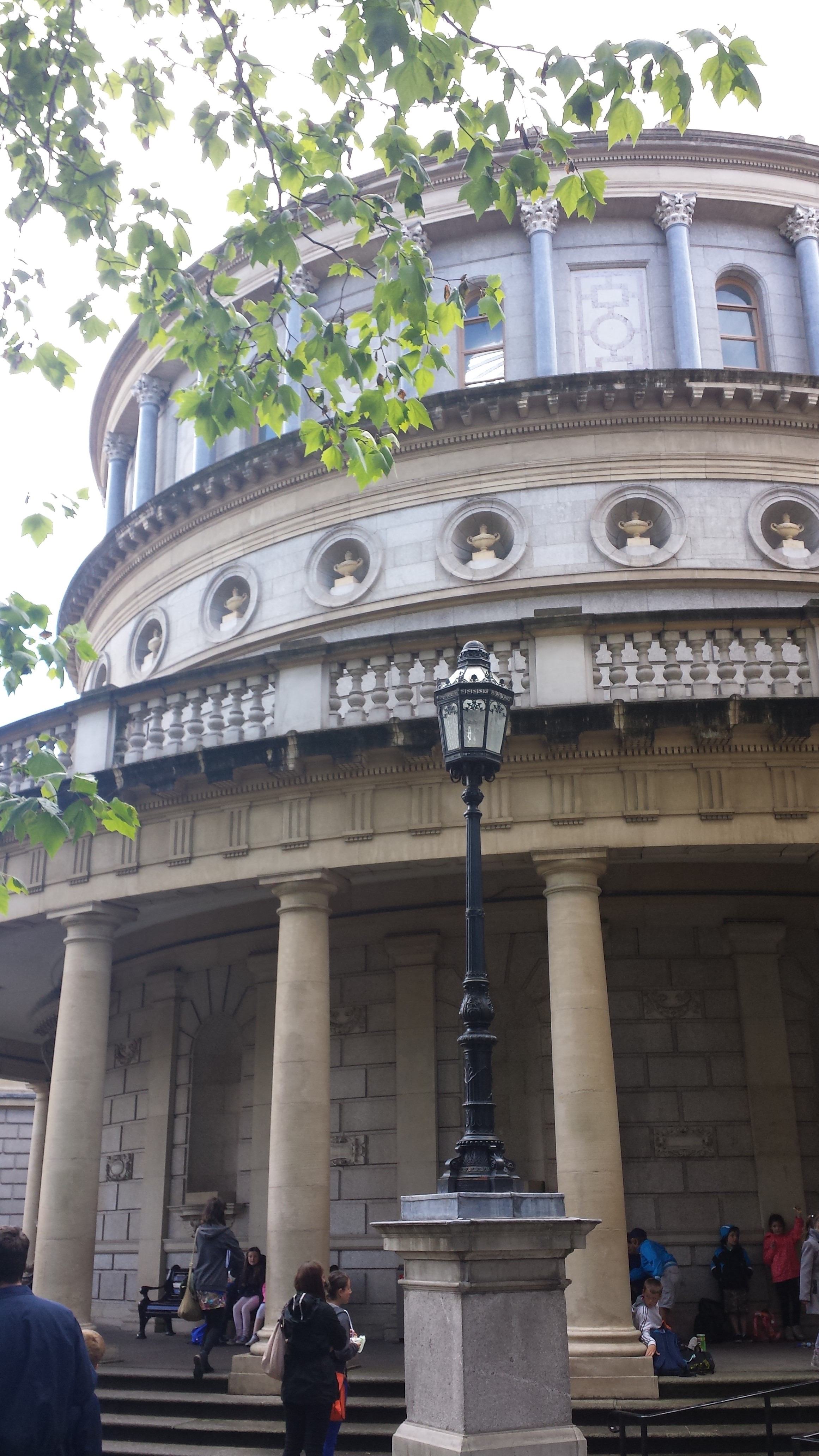
Impressive entrance to the National Museum's Archaeology building.

Impressive entrance to the National Museum’s Archaeology building.

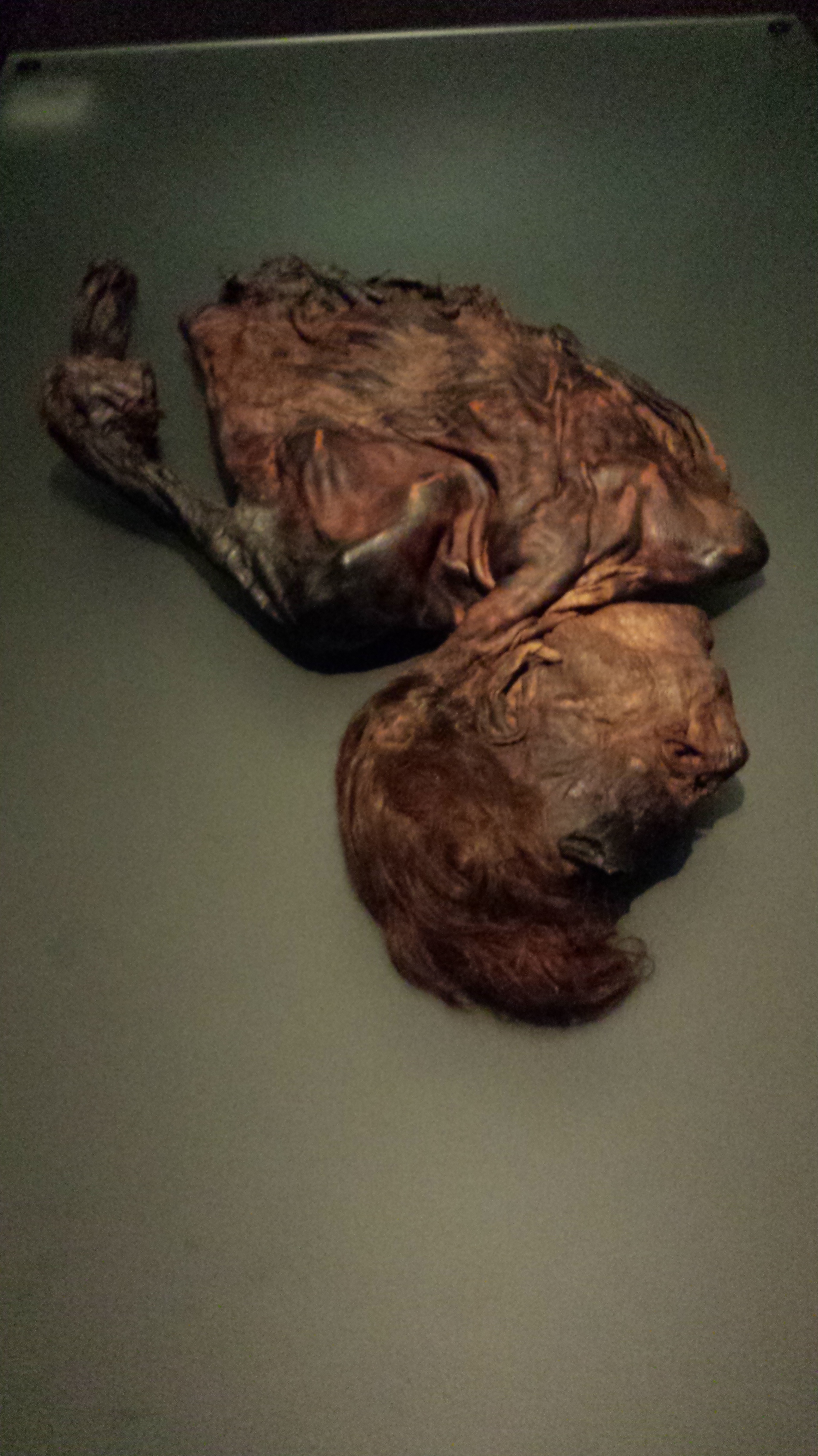
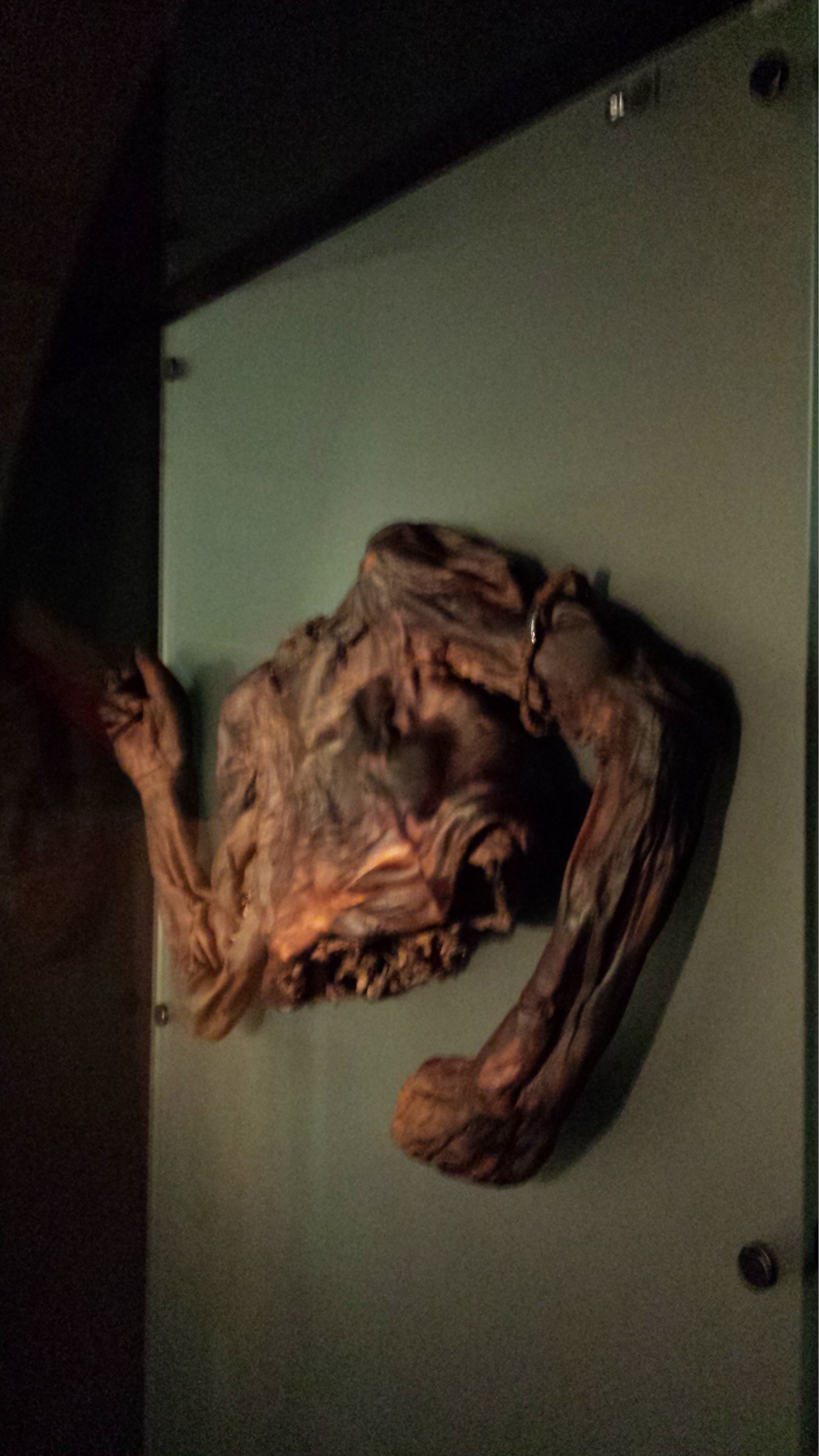
The bog bodies exhibit is called “Kingship and Sacrifice“. It is packed with cylindrical chambers that conceal, and present in a tomb-like enclosed setting, the partial bodies of people that were killed and then tossed in peat bogs as honoraria for the ascension of a new king. The peaty chemistry has preserved them for ~2300 years, but in a dessicated, contorted state. The preservation has imparted a mottled colouration and wrinkled texture not far off from a Twix chocolate bar’s. Researchers have studied the bejesus out of these bodies (including 3D medical imaging techniques) and found remarkable details including not just wounds and likely causes of death (axes, strangling, slit throats etc) but also clothing, diet, health and more.

Here they are; click to (wait for it)… emboggen:

BogBodies (1) BogBodies (2) BogBodies (3) BogBodies (4) BogBodies (5) BogBodies (6)

Did you find the Celtic armband on one of them?

Finally (actually this happened first; my post is going back in time), I visited UCD’s zoology building for the PhD viva and saw a few cool specimens there, as follows:

Giant deer in UCD zoology building foyer.

Giant deer in UCD zoology building foyer, with a lovely Pleistocene landscape painted on the wall behind it.

Sika deer in awkward posture in Univ Coll Dublin zoology building's foyer.

Sika deer in an awkward posture (what is it supposed to be doing?) in Univ Coll Dublin zoology building’s foyer.

The pose of this ?baboon? struck me as very peculiar, and menacing- reminiscent of a vampire bat's pose, to me.

The pose of this ?baboon?mandrill struck me as very peculiar and menacing- reminiscent of a vampire bat’s pose.

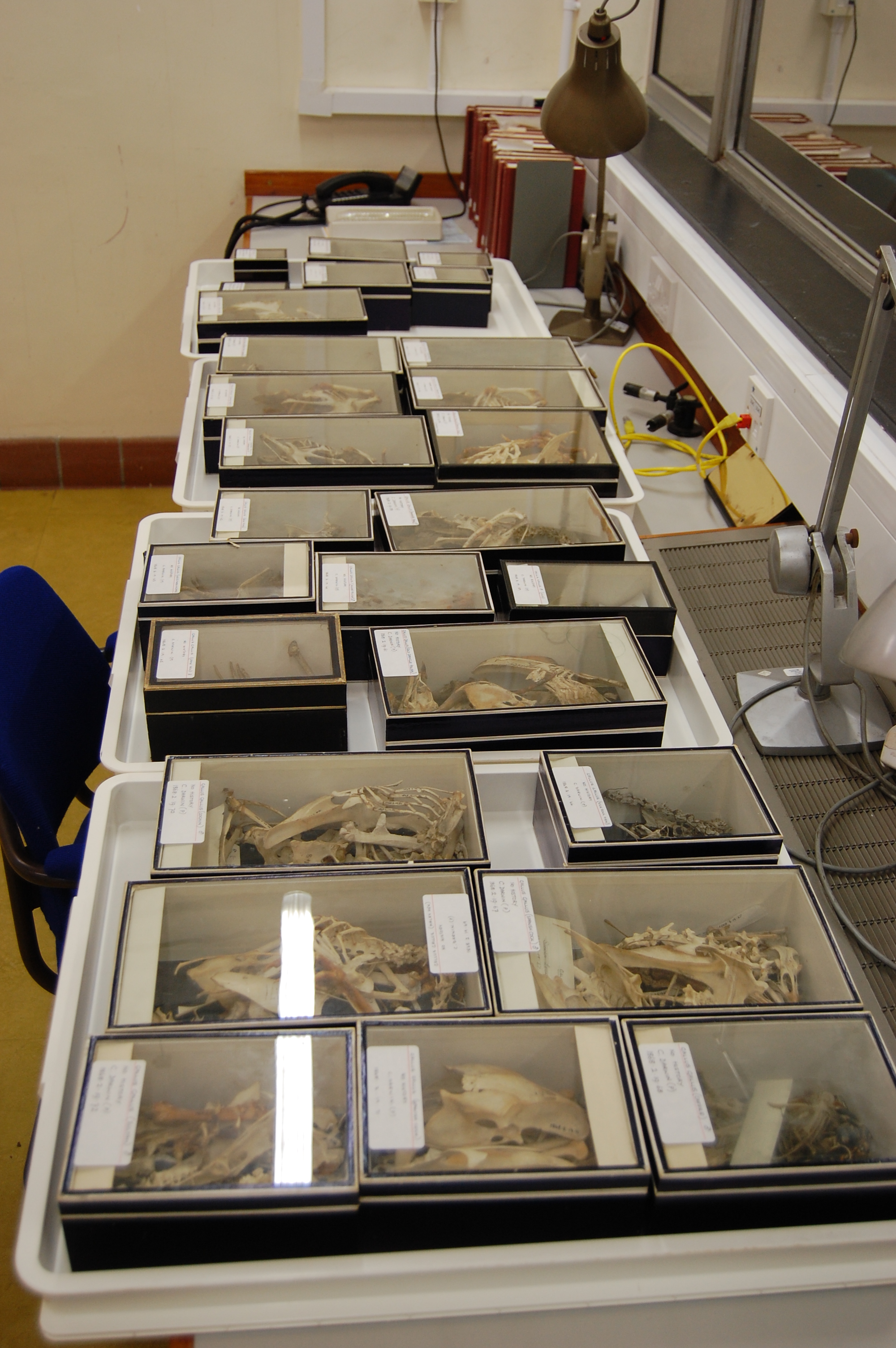
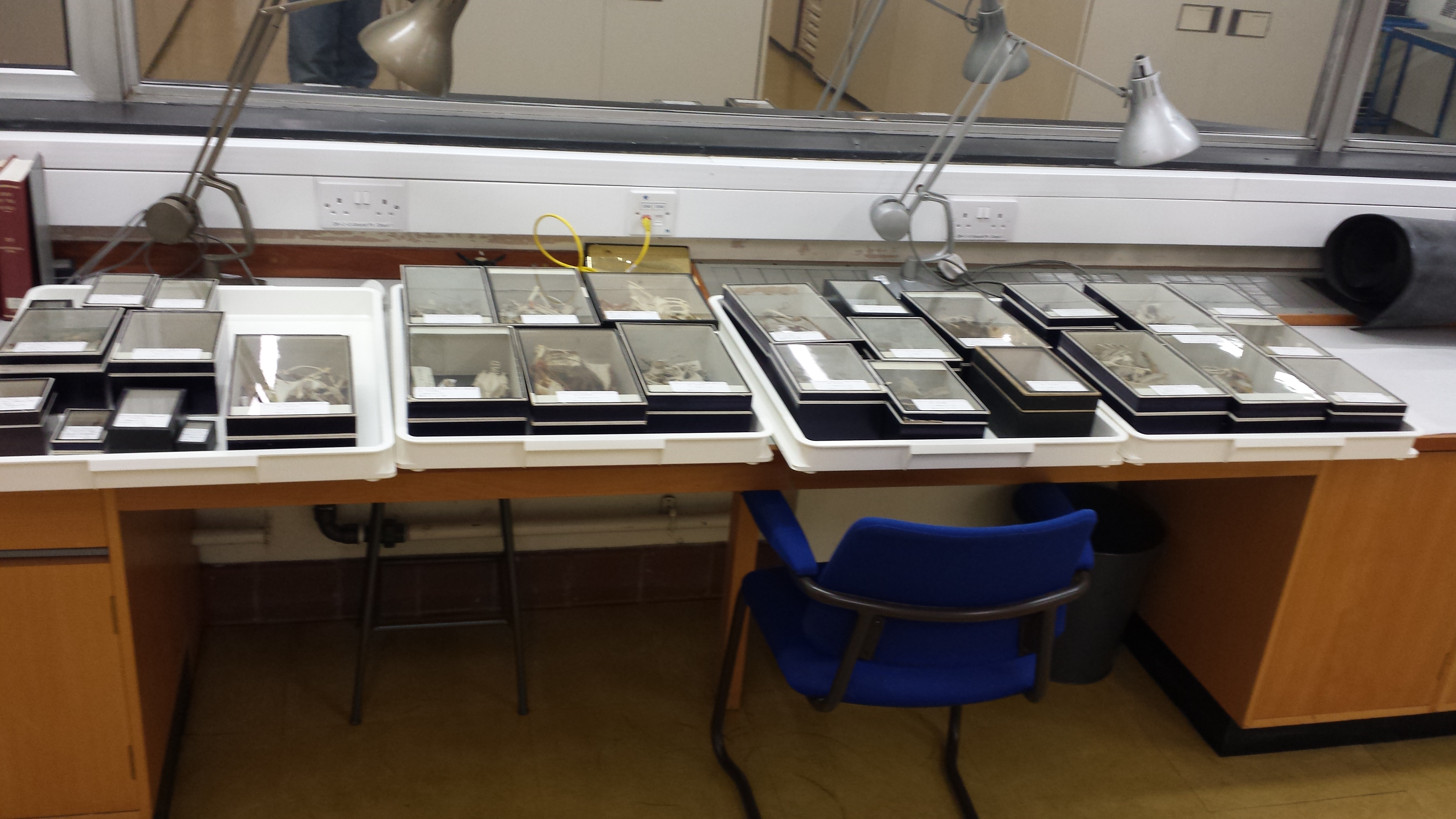
A whole lotta chicken skeletons in a UCD teaching lab.

A whole lotta chicken skeletons in a UCD teaching lab.

After the viva we went out for some nice Chinese food and passed some Dublin landmarks like this:

Trinity College entrance, I think.

Trinity College entrance, I think.Former Irish Parliament; now the Bank of Ireland.

And we wandered into a very posh Irish pub called the Bank (on College Green), which displayed this interesting specimen, as well as some other features shown below:

Replica of illuminated old Gaelic manuscript.

Replica of illuminated 9th Century gospel manuscript “The Book of Kells”, with gorgeous Celtic art.

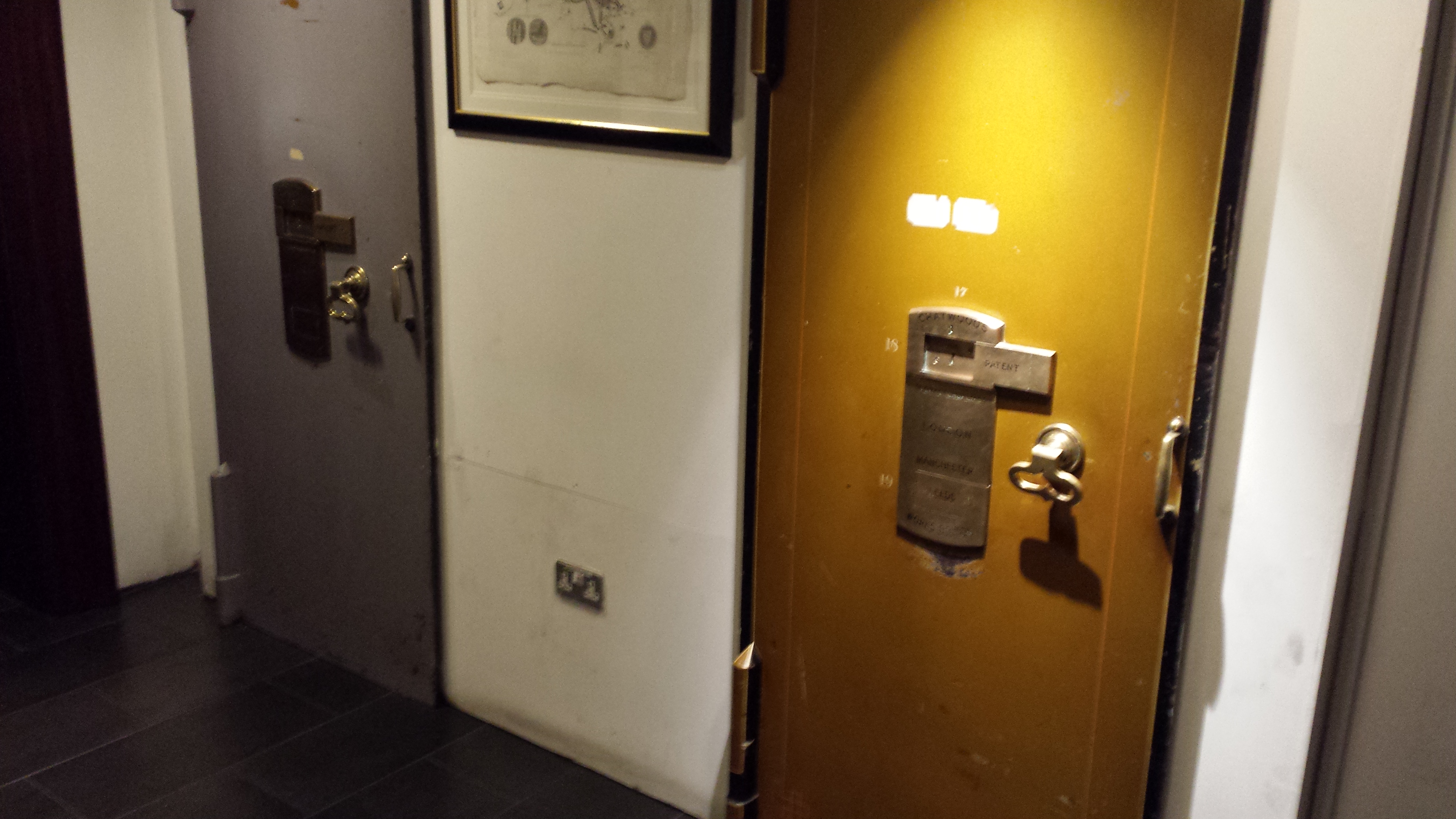
Vaults near toilets in the Bank pub.

Vaults near toilets in the Bank pub. Almost as cool as having giant freezers down there.

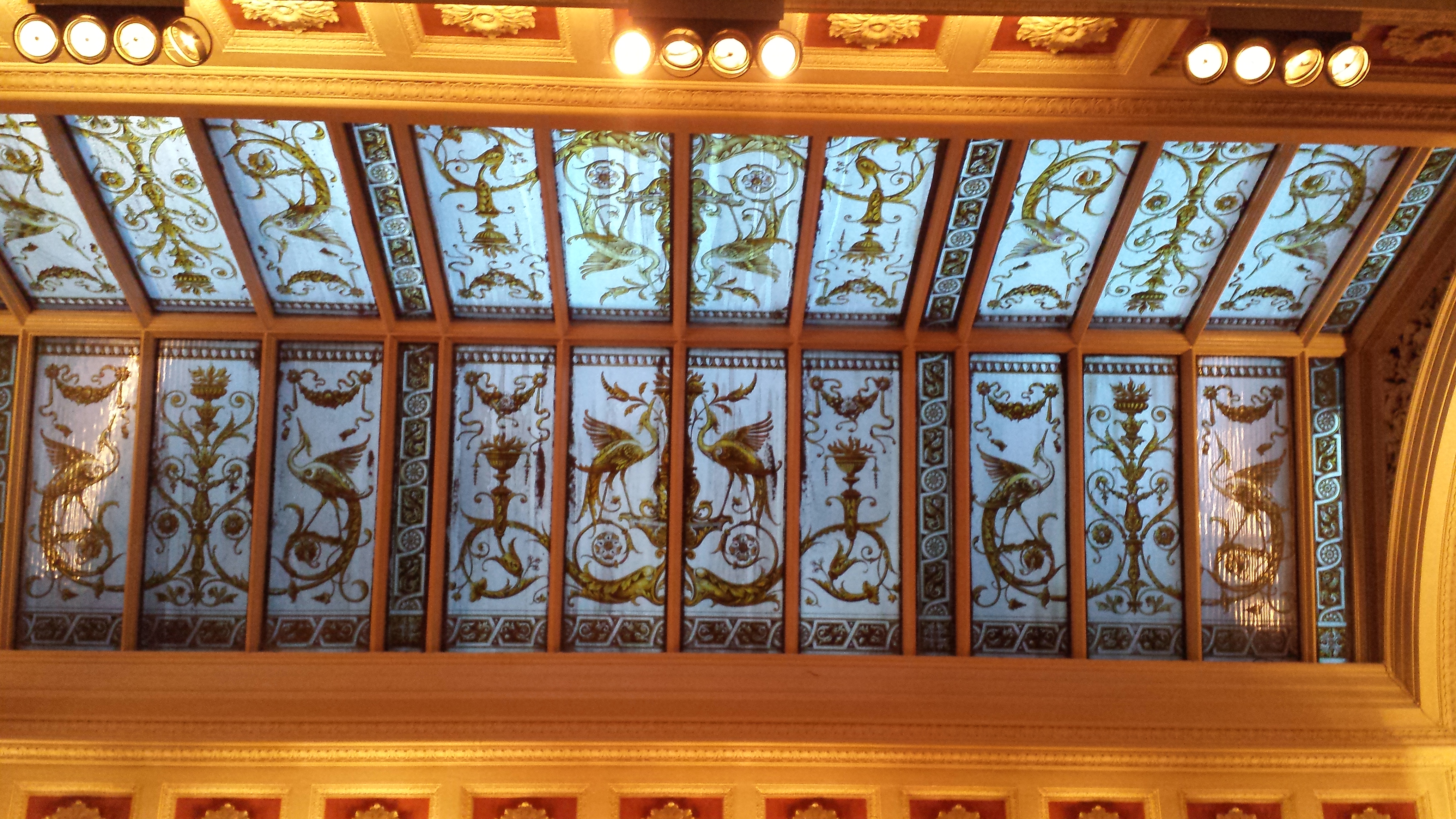
Nice glass ceiling of the Bank pub.

Nice glass ceiling of the Bank pub.

And Irish pub means one big, delicious thing to me, which I will finish with here– much as I finished that night off:

Ahhh...

Ahhh… ice cold.

Read Full Post »

Less words, more pictures in this post, and I’ll get the one lame cake joke out of the way early. I’ve nearly finished my research blitz through the postcranial material of the NHM-Tring’s osteological collection and have made some pit-stops for cake skulls now and then when I see one that pleases me. Now I shall present a survey of some of the species I’ve examined. I’ll proceed up from the base of the crown clade of living birds (Neornithes/Aves; the most recent common ancestor of living birds and all its descendants) and first take a tour of Palaeognathae; the ratites and kin; then move another step up into the Neognathae, first featuring the lineage featuring the ground fowl (Galliformes) and then the waterfowl (Anseriformes). If all this taxonomy and phylogeny is a bit much, check out this page for a brush-up on the bushy branches of bird biodiversity.

First, lots of bones of our cast of currasows, chachalacas, cassowaries and other kooky characters. And then, perhaps, a stop to the excessive alliteration. Finally, I will finish with some examples of species oddity (hat tip to Chris Hadfield).

Stomach-Churning Rating: 2/10- some bony pathologies but still just dry bones. Minimal cake jokes, and no filthy swearing this time.


BRING ON THE BONES:

My photographs are shown with kind permission from the Natural History Museum, London.

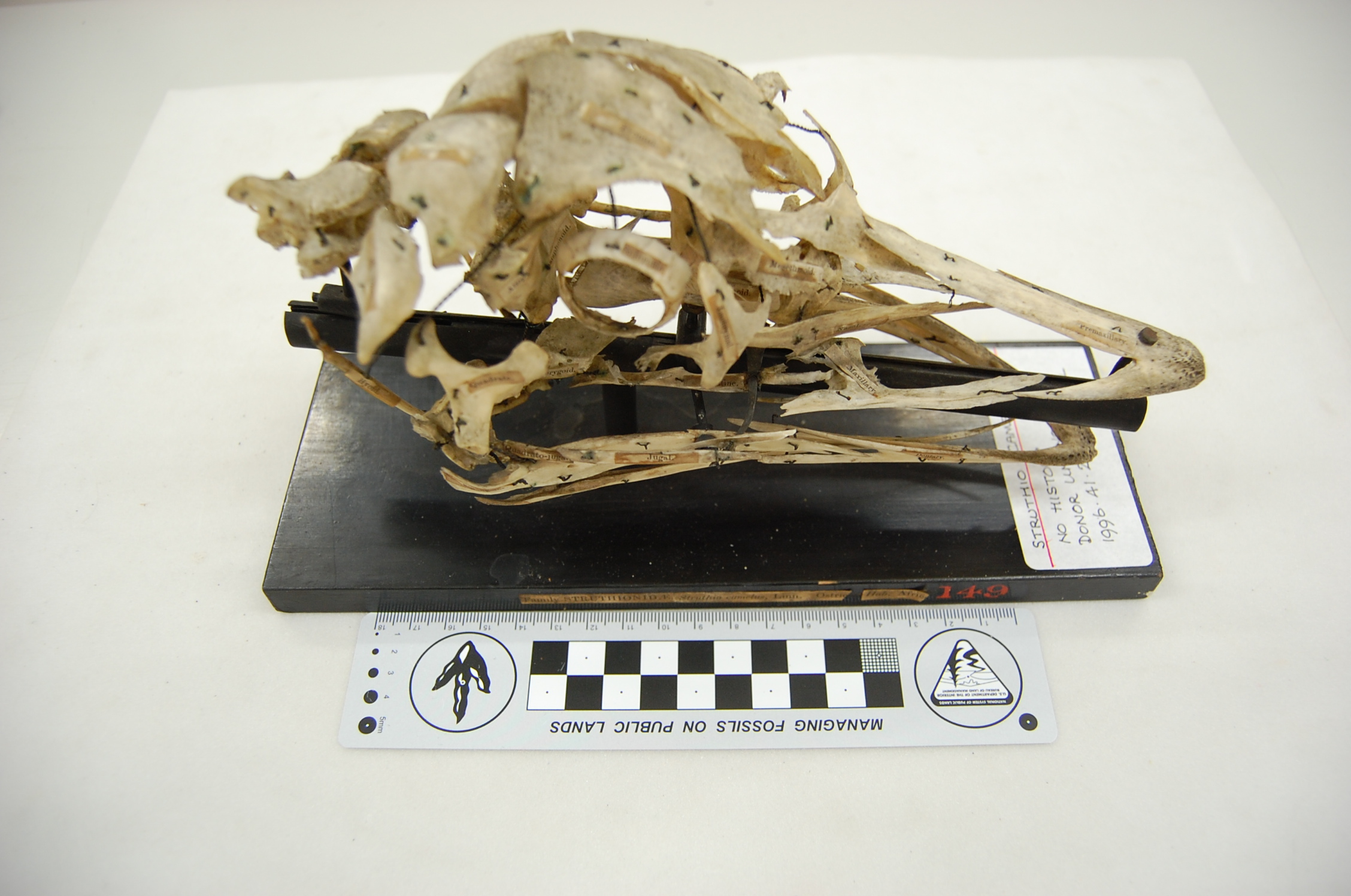
Exploded skull of an ostrich/ This takes skill.

Exploded skull of an ostrich, Struthio camelus. This kind of careful preparation takes crazy skill, and creates a thing of rare beauty.

Neat skull of a cassowary, Casuarius casuarius.

Imposing skull of a cassowary, Casuarius casuarius, with a rather worn head casque.

Mummified Owen's Little Spotted kiwi, Apteryx owenii.

Mummified Owen’s Little Spotted Kiwi, Apteryx owenii. The feathers were still soft and fluffy, but I would not call this specimen cuddly.

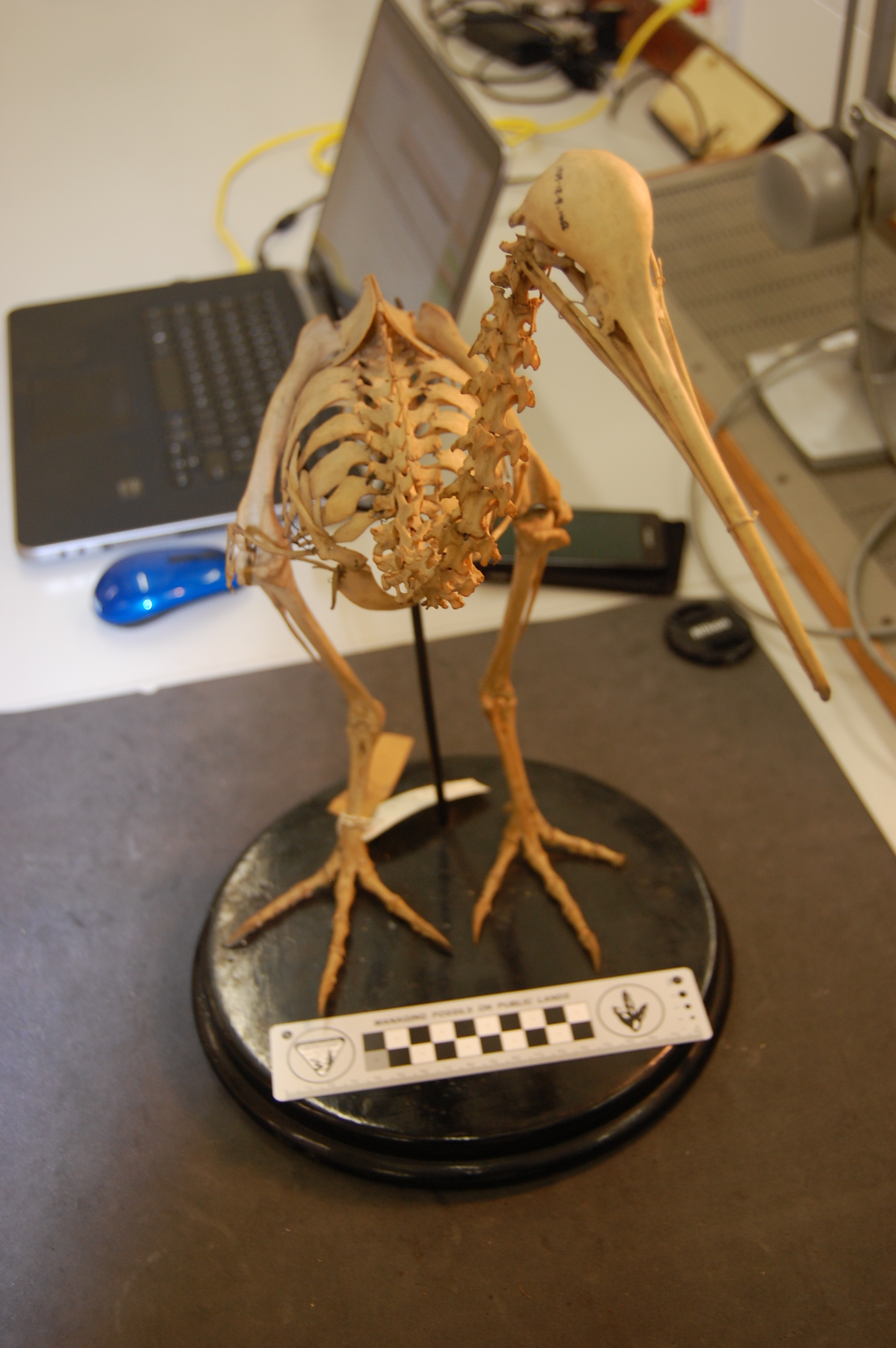
Dorsal view of the back/hips of the Great Spotted kiwi, Apteryx haasti.

Dorsal view of the back/hips of the Great Spotted Kiwi, Apteryx haasti. I like this photo and am not sure why. The symmetry and shading pleases me, I guess.

Front view of the back/hips of the Great Spotted kiwi, Apteryx haasti.

Front view of the back/hips of the Great Spotted Kiwi, Apteryx haasti, watching over my laptop and watching me while I write this blog on my laptop… so meta(ornithine)!

Wing of a kiwi, showing the fragile bones and feather attachments.

Wing of a kiwi, showing the fragile bones and feather attachments. “Apteryx” = “no wings”… well not quite. Click to emkiwi(?) so you can identify the individual bones, from the humerus right down to the fingers! I love this specimen.

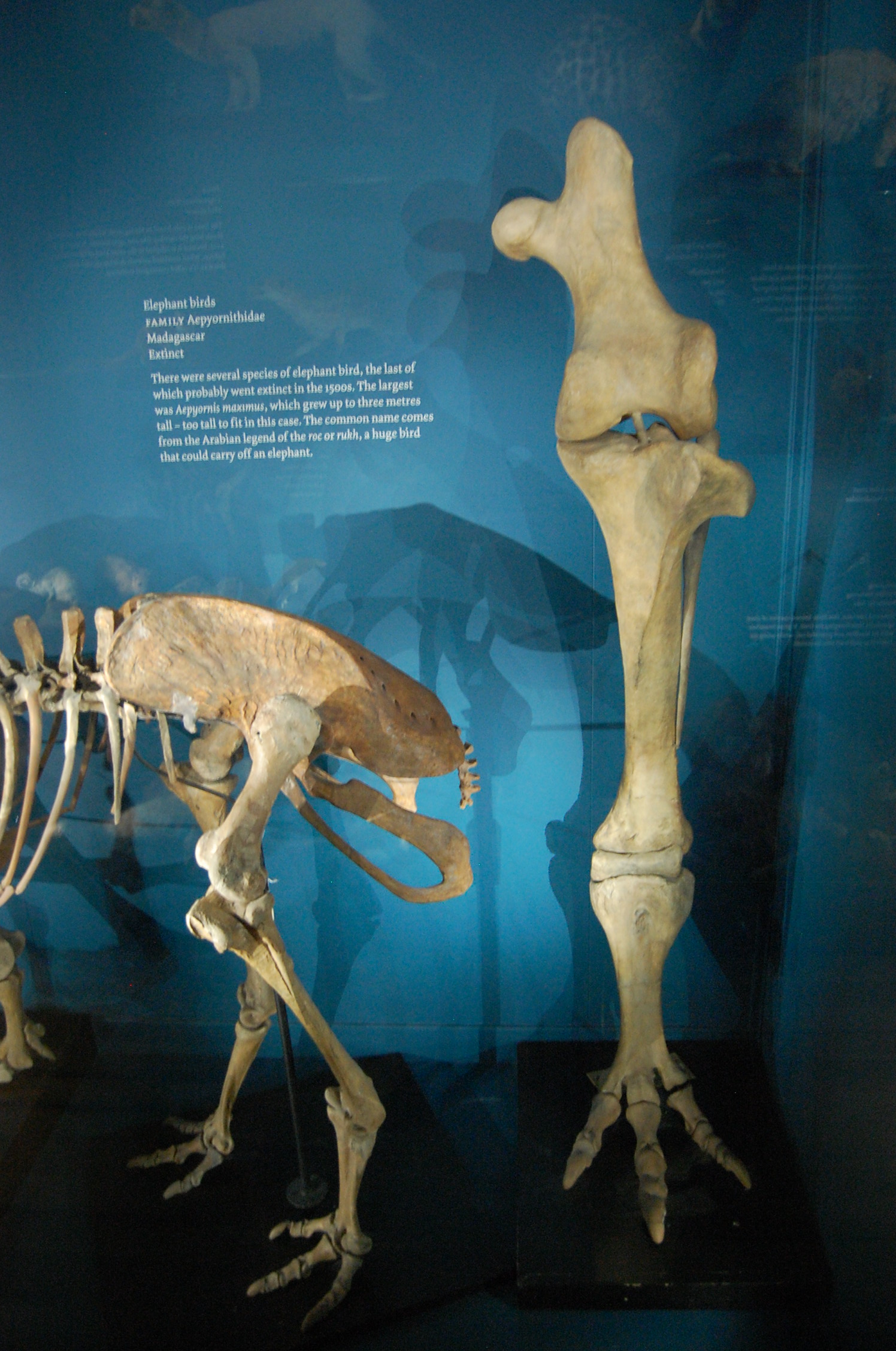
The left leg (in front view) of the elephant-bird, Aepyornis maximus, from Madagascar, with a small moa nearby in left side view.

The titanic left leg (in front view) of the Elephant Bird, Aepyornis maximus, from Madagascar, with a small moa nearby in left side view. There’s so much awesomeness about elephant birds I don’t know where to start, but this is one good place to do so.

Mummified Unulated tinamou, Crypturellus undulatus.

The smaller end of the palaeognath scale: a mummified Undulated Tinamou, Crypturellus undulatus. Somehow the head got stuck into the abdominal cavity underneath the sternum, so this tinamou almost had its head up its arse. A tinamou with head in its proper position looks and sounds like this (video).

And now we take a left turn into the Galloanseres, most basal branch of the neognath birds, to see some of the neglected, strange early branches off from the “main line” that led to the modern diversity of ducks, geeses and swans (Anatinae, Anserinae).

Screamers (Anhimidae) are to Anseriformes as megapodes (see below; brush turkeys) are to Galliformes. By that I mean that both screamers and megapodes are very early branches off the main line of their respective lineages’ evolution, and both are quite strange when seen in that context… an unfair one, frankly; over-focused on the most familiar, “modern” or most speciose group. More about this issue further below.

This was my first hands-on experience with screamer anatomy; I was familiar from reading Tetrapod Zoology and other material about them. Check out the sound that gives them their name here! I’m now a big fan- they have so many strange features: oddly chunky but often very light bones, big feet with long toes, and then these switchblade-wrists, which would make Batman jealous:

Crested screamer, Chauna torquata, showing the wicked spur on the carpometacarpus.

Crested Screamer, Chauna torquata, showing the wicked spur (and smaller one) on the carpometacarpus.

Horned screamer, Anhima cornuta; similar carpometacarpal spur as in Chauna.

Horned Screamer, Anhima cornuta; similar carpometacarpal spurs as in Chauna.

Torso of a screamer seen in top view. Nice narrow body.

Torso of a screamer seen in top view. Nice narrow body, and no uncinate processes (spur-like bony struts that cross the ribs and act as levers for the muscles that move the ribcage during breathing)

The long, gracile, clawed toes of a screamer.

The long, gracile, clawed toes of a screamer. Those toes, especially as they belong to an animal called a screamer, are spooky for me. Note also: very little toe-webbing for a “waterfowl.”

Not to be outdone, on the Galliformes side of Galloanserae, we have some funky headgear in the Maleo (a megapode bird/Megapodiidae; a very basal branch of “brush turkeys” and kin) and curassows (part of the Cracidae; odd South American birds whose males make booming sounds, presumably using their head-casques as resonating chambers?):

Skull of a male maleo, Macrocephalon maleo.

Skull of a male Maleo, Macrocephalon maleo. AR Wallace famously pursued it, and here is its funky call.

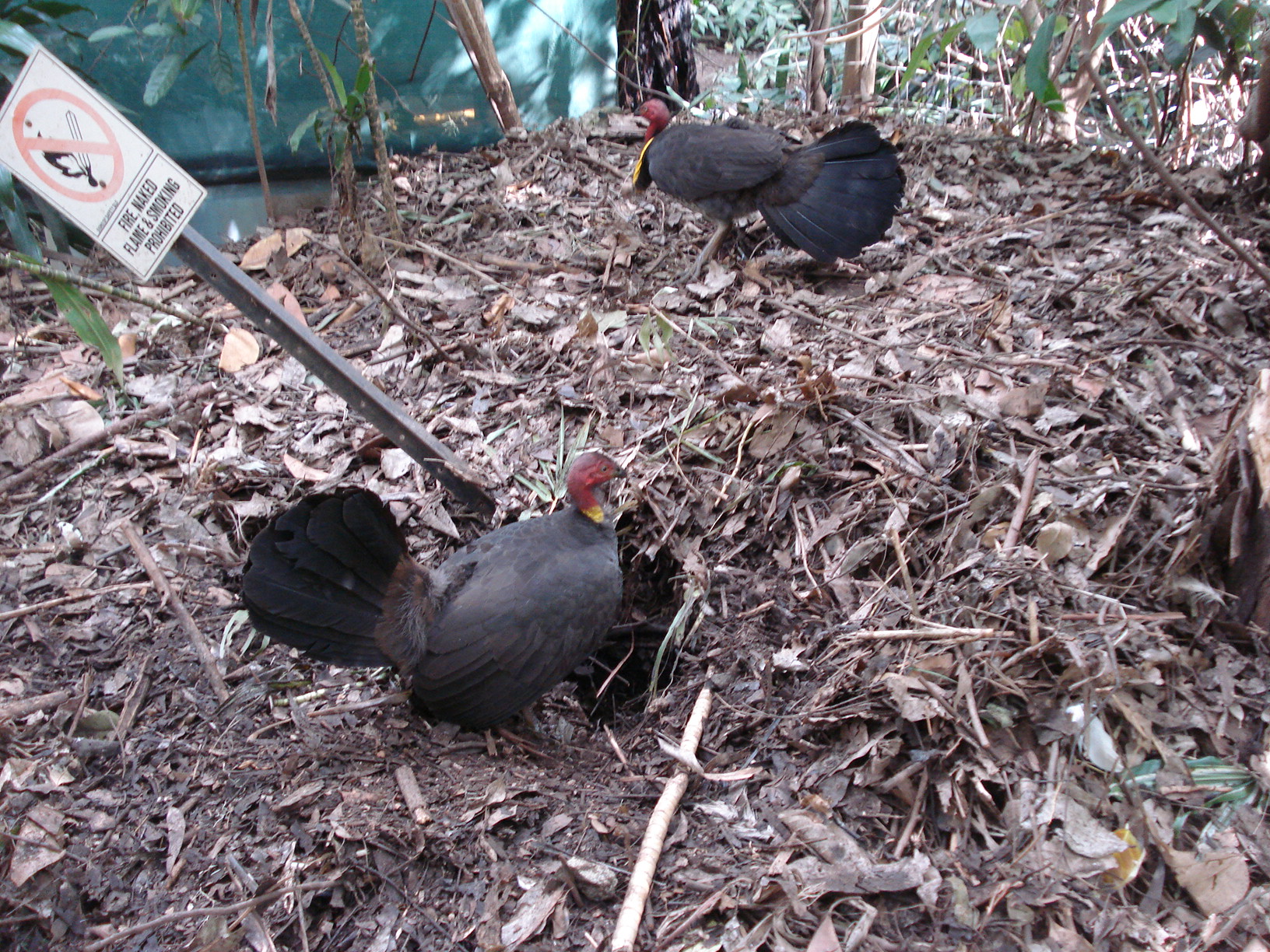
Australian brush-turkeys, Alectura lathami i, at the Alma Park Zoo near Brisbane, Australia; they run wild there. Here they are doing what they are best known for: making a mound-like nest.

Australian brush-turkeys, Alectura lathami, at the Alma Park Zoo near Brisbane, Australia; they run wild there. Here they are doing what they are best known for: making a mound-like nest. We were doing kangaroo biomechanics experiments and they were everywhere. I was in awe to see such exotic (to me) birds; locals seemed not so enthused (the birds are loud and make a lot of mess).

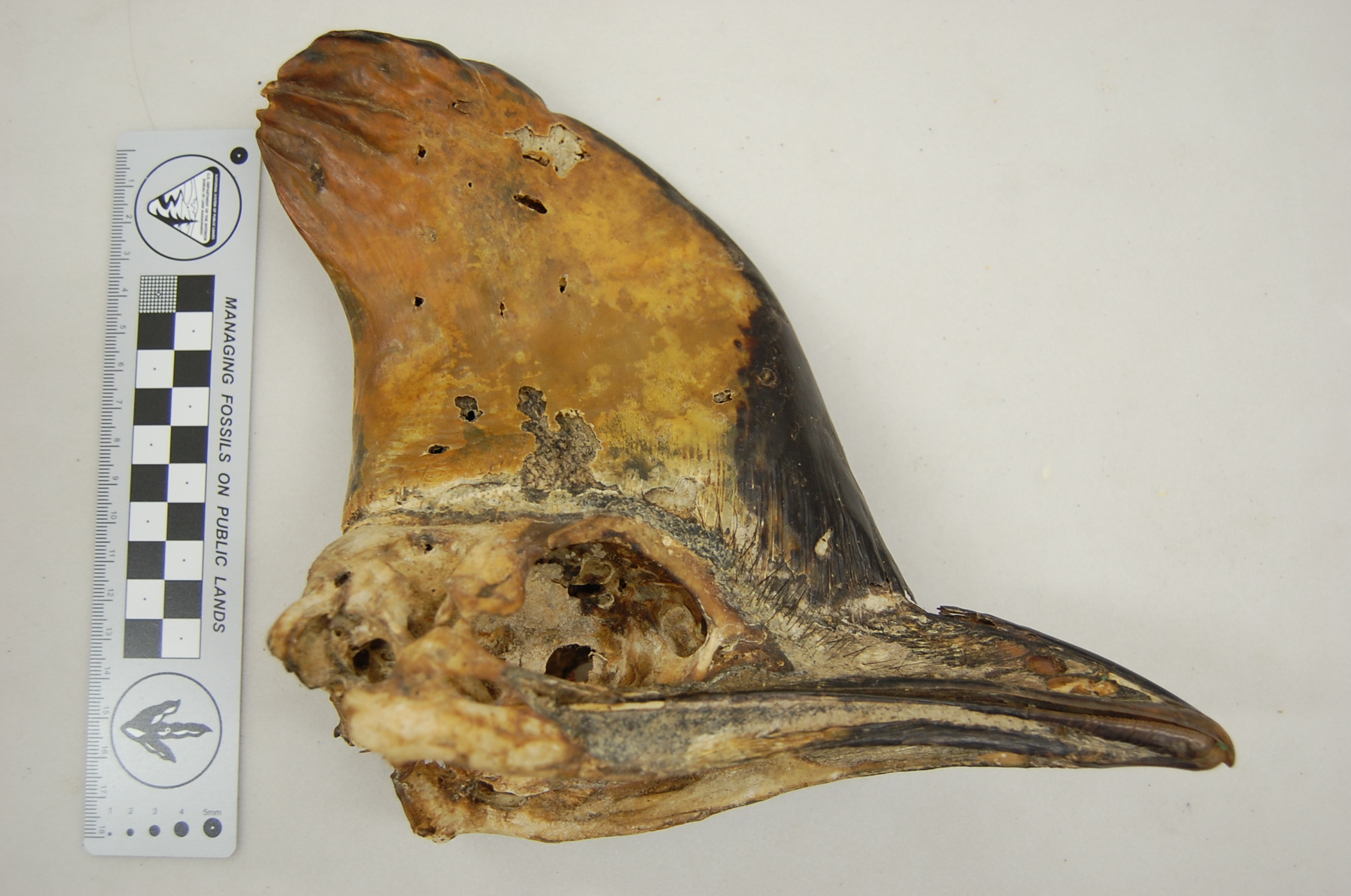
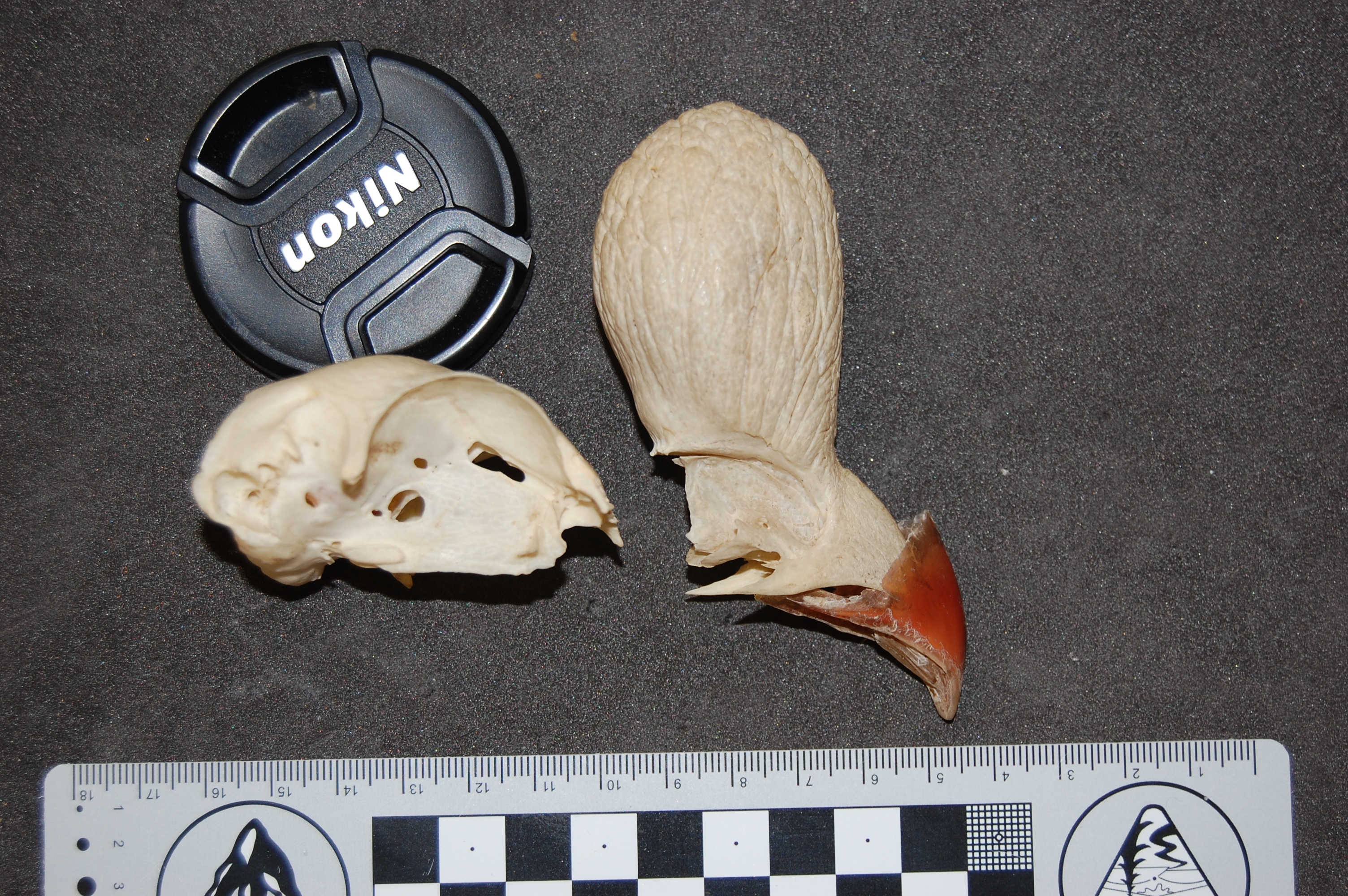
Skull of Helmeted curassow, Crax/Pauxi pauxi.

Skull of Helmeted Curassow, Crax/Pauxi pauxi,  showing that resonating chamber. Along with this boom-boom-room, the male uses a piece of food that he holds to draw in the female; if she takes it, then it’s sexy time.

Foot of a Russian Black Grouse, Tetrao tetrix (nothing to do with a certain videogame), with and without flesh.

Foot of a Siberian Black Grouse, Tetrao tetrix (nothing to do with a certain videogame), with and without flesh. Regard the broad, feathered feet, well insulated and with plenty of surface area for prancing around in the snow or moorlands. Tetrao engage in a cool display pattern called lekking, in which the males group together and show off to watching females.

A theme in the section above that is not to be missed is that there is some amazing disparity of anatomical forms in these basal lineages of poultry-relatives. Don’t dismiss the Galloanserae as just boring food-birds! Heaps of not-so-well-studied species exist here, surely with a treasure trove of cool neontological and evolutionary questions waiting for the right person to ask! Darwin’s chickens may get their share of neglect, but that pales in comparison to how little we understand about many basal Galloanserae.

What a lot of people think of as a “ground fowl” or galliform way of life is more of a way of life somewhat typical of the Phasanidae- chickens, pheasants and their familiar kin. Megapodes, curassows, guans, grouse and other Galliformes do not necessarily do things in the “typical” ground fowl way, much as the earlier branches of the Anseriformes don’t always look/act like “proper water fowl” (i.e. Anatidae). The phenomenon at play here is one of the great bugaboos in biology: essentialism— the often implicit misconception that variation away from some abstract ideal is negligible, uninteresting or just not conceivable due to mental blinders. When we say something like “the chicken is a fascinating species” we are sliding down the essentialistic slope. There is no “the chicken.” Not really. Oh dear, speaking of slippery slopes, I’d best stop here before I start talking about species concepts. And no one wants that to happen! Anyway, essentialism still pervades a lot of modern scientific thinking, and has its place as a conceptual crutch sometimes. But in biology, essentialism can be very insidious and misleading. It burrows in deep into the scientific mind and can be hard to root out. Unfortunately, it is entrenched in a lot of science education, as it makes things easier to teach if you sweep aside the exceptions to the essentialist “rules” in biology. I catch myself thinking in static, essentialist ways sometimes. The punishment is no cake for a week; so awful. 🙂

And speaking of “normal” or “typical,” morphology is of course often not that way even within a species, age class or gender. Pathology is a great example; by definition it is abnormal. It is a shattering of the “essence” of animals, brought on by some malady.

Next I’ve highlighted some of the amazing pathologies I’ve seen in the Tring skeletons. There have been so many I’ve been unable to keep track of them– some of these birds had the stuffing beaten out of them, and I’m not talking about Thanksgiving turkeys. Some were captive animals, in which the pathology might be blamed on living an inappropriate environment, but some were wild-caught — given the extreme pathologies, it’s a wonder those even survived to be found, but perhaps less a surprise that they were caught.


BONES GONE BONKERS:

View of left knee of a specimen of the Highland guan, Penelopina nigra, showing some nasty osteoarthritis around the whole joint.

View of left knee of a specimen of the Highland Guan, Penelopina nigra, showing some nasty osteoarthritis around the whole joint. Eew.  A happier Guan sounds like this.

Femora and tibiae of the Blue-throated Piping Guan, Aburria cumanensis. Amazing pathology involving the left femur (broken, rehealed) and tibiotarsus (secondary infection?).

Femora and tibiotarsi of the Blue-throated Piping Guan, Aburria cumanensis. Amazing pathology involving the left femur (broken, rehealed) and tibiotarsus (secondary infection?). Interestingly, the non-fractured limb also showed some pathology, perhaps indicating general infection and/or arthritis in reaction to the severe damage to the other leg, or just increased load-bearing on that leg.

Little Chachalaca, Ortalis motmot, showing a broken and rehealed right femur and the tibiotarsus.

Little Chachalaca, Ortalis motmot, showing a broken and rehealed right femur and the tibiotarsus. As in the guan above, this animal was not walking for many weeks; its femur had snapped in two, but somehow melted back together. The tibiotarsus didn’t look too great, either; lumpy and bendy. In better times, the Chachalaca does the cha-cha like this.

These two specimens blew my mind. On the right is a normal Tetrao tetrix (Black grouse); on the left is one hybridized with another (unknown) species.

These two specimens blew my mind. On the left is a normal Tetrao tetrix (Black Grouse); on the right is one hybridized with another (unknown) species.

In the picture above, what amazed me first was the very unusual flattened pelvis/synsacrum of Tetrao, which characteristically is light and wide. But in the hybrid this morphology was completely gone; the pelvis had a more standard “galliform” (read: Phasianid)-like shape, deeper and narrower and more solid in build. I am guessing that the hybrid was a cross with a pheasant like Phasianus itself, whose anatomy would be more like this. Somewhere in here there is a fantastic evo-devo/morphometrics project waiting to happen.

That’s my quick specimen-based tour of “basal birds”. Beyond these two clades of Palaeognathae and Galloanseres, there lies the forebidding territory of Neoaves: much of living avian diversity, and extremely contentious in its phylogenetic relationships. I’m tackling them next for my research on the evolution of the patella/kneecap. But first, I’ll be at the NHM-Tring today for a whirlwind tour through the respectably speciose “normal” Galloanseres clades of Phasianidae and Anserinae+Anatidae, so off I go! (It’s my wife’s birthday celebration, so cake may have to wait for later this time)

So what do you think? What’s your favourite neglected “primitive” bird group (more apropos: early branching avian lineage that may still be very specialized, rare and poorly understood), or cool factoid about palaeognaths and basal neognaths?

No quaggas were harmed during the writing of this post.

No quaggas were harmed during the writing of this post. Polly wanna quagga?

Read Full Post »

Bovids to the right of me, pinnipeds above, what's a guy to do but squee?

Bovids to the right of me, pinnipeds above, what’s a guy to do but squee?

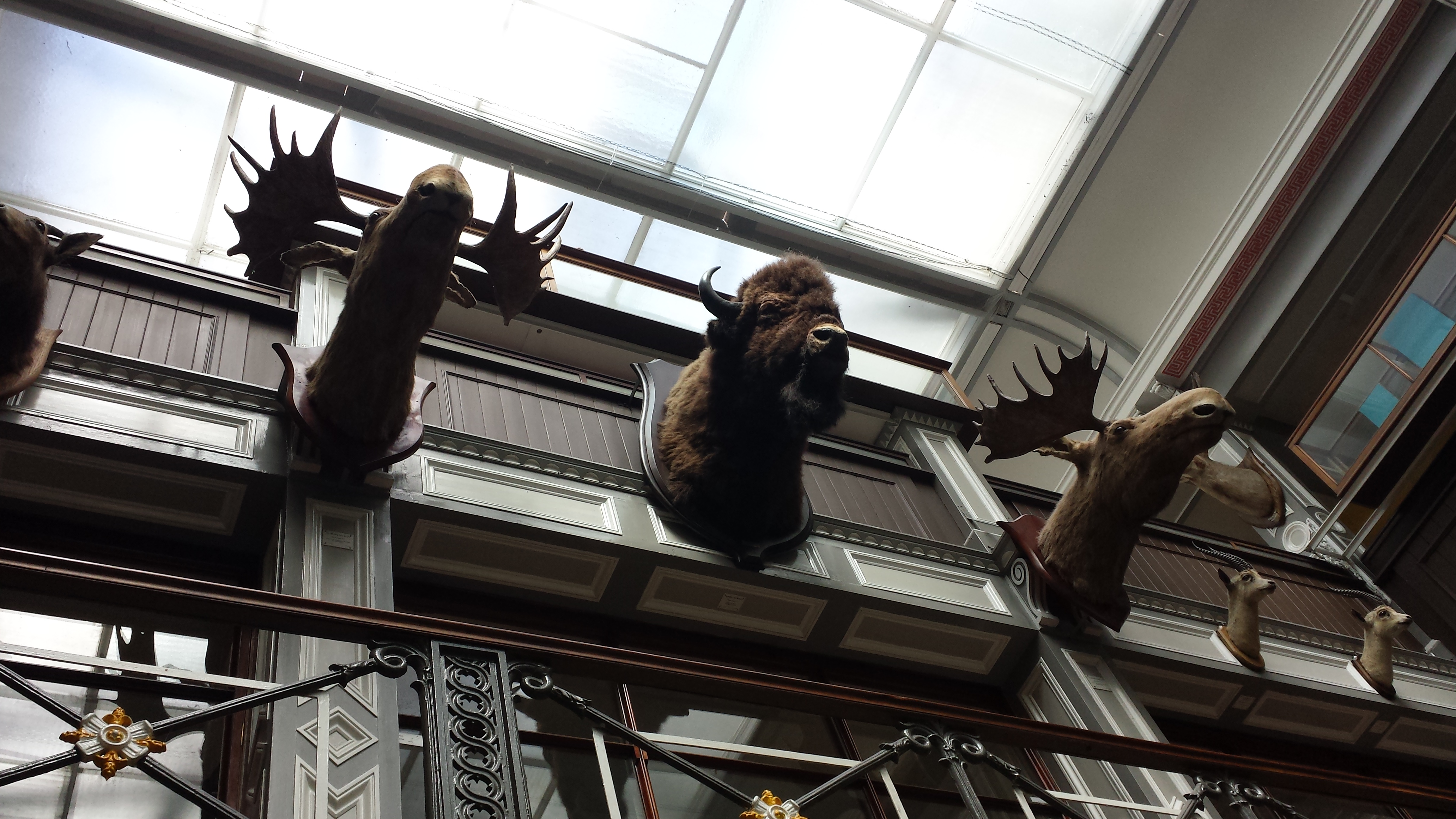
I’ve been doing some osteological studies of the patella (bone in the major tendon in front of the knee; termed a sesamoid) that have included frequent visits to the Natural History Museum’s avian skeleton collection at Tring. It’s a cute little town, northeast of London, in the green county of Hertfordshire where I live and work. The museum at NHM-Tring is a great old school multi-storey display packed with skeletons and stuffed animals in dark wood cabinets, with many critters hanging from wrought iron railings or other suspensions above (see above). I blogged about the Unfeathered Bird exhibit (and book) that just finished up its tour there yesterday. And I’ll be blogging later, as I keep promising, about the cool things I’ve learned during the past year of my studies of the form, function, development and evolution of the patella.

As an aside, I heartily recommend doing research at the NHM-Tring. It’s away from the bustle (and arduous Tube trip) of the South Kensington NHM, and the curatorial staff are immensely helpful… and there is something else that makes the trip even more enjoyable, but you must read more below to find out about it.

Stomach-Churning Rating: 2/10; 150-year-old dry bones. But an advance warning to (1) diabetics and (2) pun-haters, for reasons that will become evident.

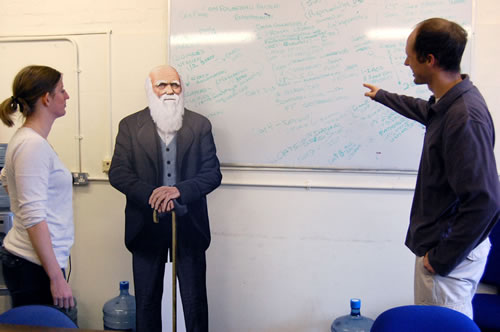
Dr Heather Paxton and Dr Jeffrey Rankin, postdoc researchers working on our collaborative BBSRC chicken biomechanics grant (see thechickenofthefuture.com), explain their science to an attentive Darwin.

Dr Heather Paxton and Dr Jeffery Rankin, postdoc researchers working on our collaborative BBSRC chicken biomechanics grant (see thechickenofthefuture.com), use the Structure & Motion Lab whiteboard to explain their science to an attentive Darwin.

Today I have a short pictorial exhibit of something wonderful I ran into while patellavating in the NHM collections. As often happens while doing museum research, I had a serendipitous encounter with a bit of history that blew my mind a little, and had me geeking out. These things happen because museum collections are stuffed with specimens that, to the right eyes or the right mindset, pack a profound historical whallop. As a scientist who is pretty keen on chickens (Gallus gallus), there are probably no museum specimens of chickens that would get me more excited about than the chickens Darwin studied in his investigations of artificial selection. In fact, most museum specimens of domestic chickens would not be that interesting to me, especially after seeing these ones.

Darwin wielded the analogy between artificial selection and his conceptual mechanism of natural selection in the first ~4 chapters of On the Origin of Species to clobber the reader with facts and try to leave them with no doubt that, over millennia, nature could craft organisms in vastly more complex and profound ways than human breeders could mould them over centuries. While people most often speak of Darwin’s pigeons when referring to Darwin and avians or artificial selection and variation, his chickens appear in The Origin and other writings quite often, too (most prominently, The Variation of Animals and Plants Under Domestication in 1868– more about that here). For example, from my 1st edition facsimile of The Origin from Harvard University Press, pp. 215-216:

Natural instincts are lost under domestication… It is not that chickens have lost all fear, but fear only of dogs and cats, for if the hen gives the danger-chuckle, they will run… and conceal themselves in the surrounding grass or thickets; and this is evidently done for the instinctive purpose of allowing, as we see in wild ground-birds, their mother to fly away. But this instinct retained by our chickens has become almost useless under domestication, for the mother-hen has almost lost by disuse the power of flight.”

Well told, Mr D!

I am also reminded of how chickens and Darwin have had darker relationships, such as this sad story. Or how evolution via Darwinian mechanisms crosses paths with pop culture in fowl ways, such as how tastes-like-chicken evolved, or how some say that chickens, over great periods of time, have been naturally selected in such a way that they are now heritably predisposed to cross roads, or that the amniote egg preceded the evolution of the genus Gallus by some 325+ million years. I see I am drifting and drifting further away from the topic at hand, so let me segue back to Darwin’s chickens. We’ll take this corridor there:
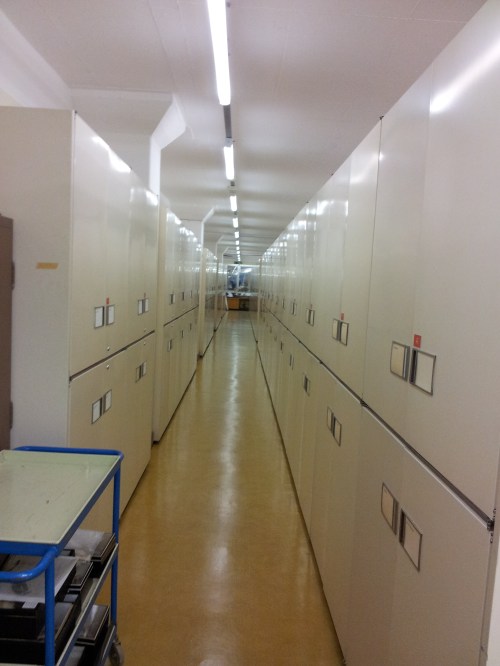
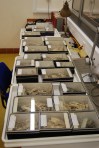
Inside the avian osteology collection at Tring. Sterlie at it might seem, places like this are  fertile breeding grounds for scientific discovery.

Inside the avian osteology collection at Tring. Sterile at it might outwardly seem, places like this are fertile breeding grounds for scientific discovery. And a sterile-looking collection means well cared-for specimens that will persevere for future discoveries.

So anyway, when museum curator Jo Cooper said to me something like “I have some of Darwin’s chickens out over on the other counter, do you want to have a look or shall I put them away?” my answer was quick and emphatic. YES! But only after lunch. I was hungry, and nothing stops me from sating that hunger especially when the sun is out and there are some fine pubs within walking distance! I settled on the King’s Arms freehouse, and had a delicious cheeseburger followed by a spectacularly good apple-treacle-cake with ice cream, expediently ingested while out on their sunny patio. Yum! I cannot wait to have that cake again. What a cake! Darwin’s bushy eyebrows would have been mightily elevated by the highly evolved flavour, which would have soothed his savage stomach ailments. He would have been like:

Damn, Emma! Holy s___ this is great apple-cake; here, try some! There is grandeur in this tasty cake, with its several flavours, having been originally cooked into a few baking trays or into one; and that, whilst this pub has gone on serving fine food according to the fixed hygiene laws of Tring, from so simple a beginning endless foods most beautiful and most wonderful have been, and are being, devoured.” And Emma, cake then firmly in hand, would have said something like, “My dear Charles, I shall try this enticing dessert, and I am glad to see you so enthused about something other than barnacles. Write a letter to Huxley or Lyell about that cake later. You need to focus on concocting an ending to that big species book of yours, not cakes. It’s been 20 bloody years, dude; cake can wait. End the book on a high note.” And so it must have happened.

Working at a museum collection is like having an extra home/office for a day or more. You get familiar with the environment while working there, and start to settle in and enjoy the local environs while taking work breaks. Or I do, anyway. So this post is also partly about how cake and other provisions are an important part, or even a perk, of life as a visiting museum researcher. Put in some good solid work, then it’s cake time, but where are the cakes? You explore, and you discover them– opening the door of an unfamiliar shop or pub near a museum can be like opening a museum cabinet to discover the goodness inside. Just don’t get them mixed up. Museum specimens: for research; subjects for science. Cakes: for eating; fuel for scientists. Got it?

But I digest digress. This post is not about my lunch. Not so much, anyway, although I did enjoy the cake quite a bit. Back to the chickens. Here, try some!

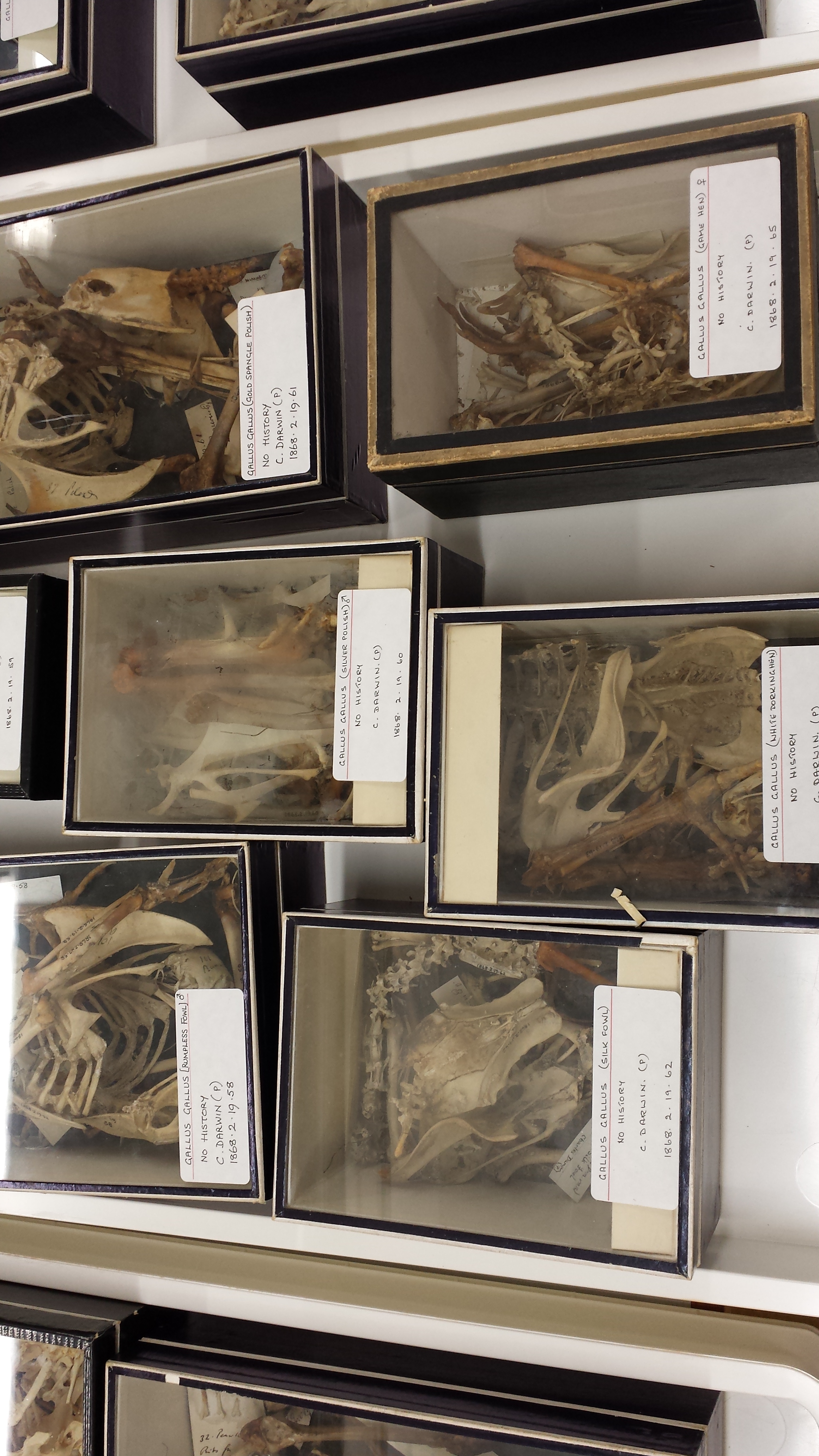
Darwins-chickens (1)Darwins-chickens (6)

Darwins-chickens (5) Darwins-chickens (4)

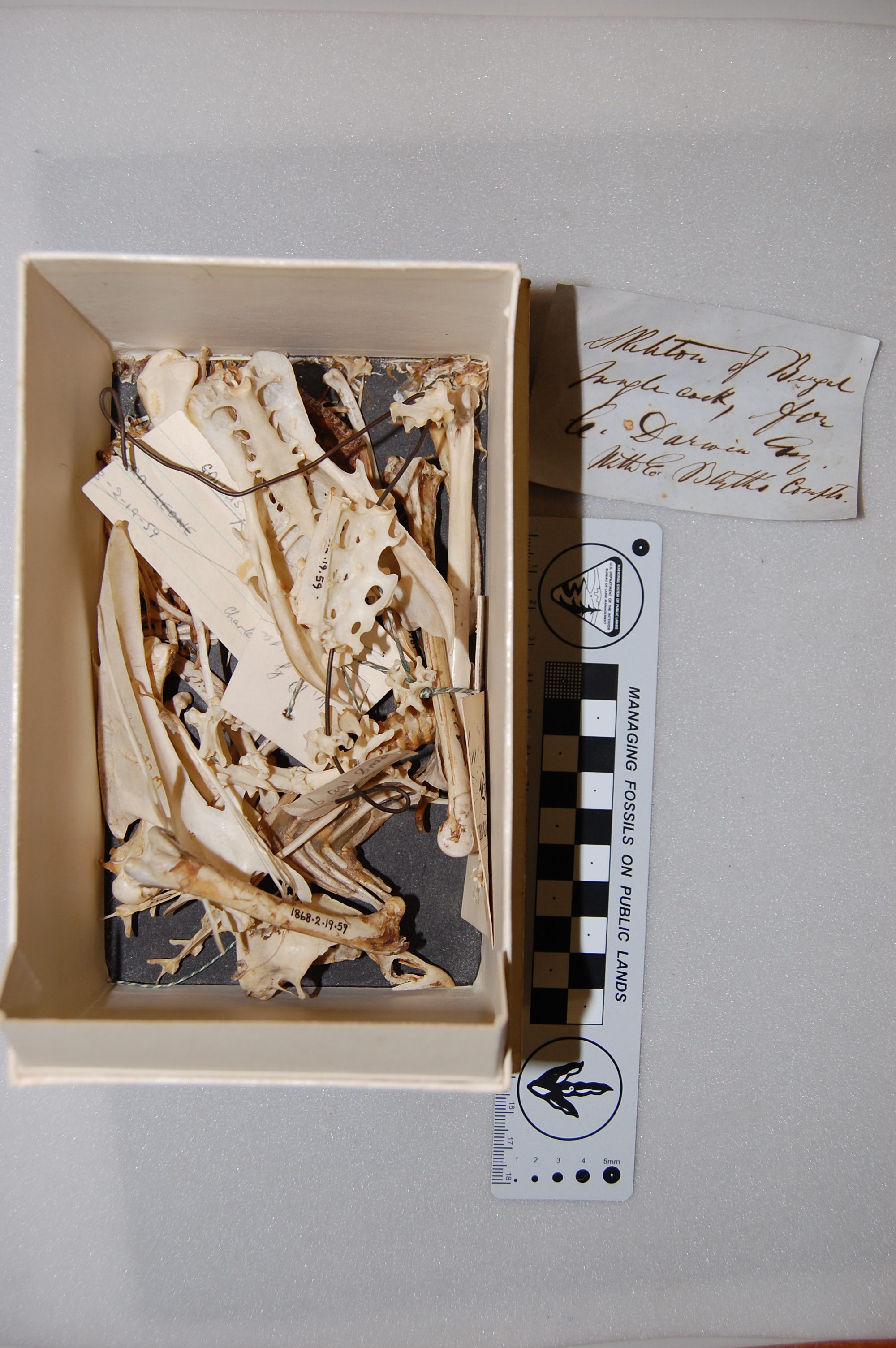
Above: Views of Darwin’s chickens laid out at the NHM-Tring.  (all photos in this post can be clucked to emchicken them)

The chickens, much like the pub lunch, did not disappoint in the least. Here I had before me Darwin’s own personal specimens, which I envisioned him dissecting and defleshing himself, studying them in deep introspection, then handing them over to the museum for curation once his lengthy researches were complete (all the ones I studied dated back to around 1863-1868, so they were curated shortly after The Origin was published (1859)). Perhaps the museum gave him some fine sponge-cake in return. There was at least one male and female adult of each of numerous breeds, many of them still bearing the dried flesh of centuries past. This was great for me, as the patella often gets removed and clucked chucked in the bin with its tendon when museum specimens of birds are prepared (much as elephant “sixth toe” sesamoids are). All of the specimens had their honking huge patellae on display, so that’s what a lot of my photos feature. I do so lament that I did not take a photo of the cake. Did I tell you about that cake? Oh… Check out these examples of Darwin’s chickens:

XXXX breed in right side view, with the patella indicated by a red arrow. It is still attached to the tibiotarsus by the patellar tendon (often misnamed the patellar "ligament", but it is just a continuation of the proximal tendon).

African rooster (wild variety? Darwin’s label was not clear) in right side view, with the patella indicated by a red arrow. That patella is still attached to the tibiotarsus by the patellar tendon (often misnamed the patellar “ligament”, but it is just a continuation of the proximal tendon).

Darwin's handwritten label and the well-endowed patella of the Spanish Cock. What? Oh, you. Stop it.

Darwin’s handwritten label and the well-endowed patella of the Spanish Cock. What? Oh, you. Stop it. That has nothing to do with cake, and only cake-related humour is allowed in this post.

Some other fascinating features exhibited by Darwin’s chickens, which he doubtless mulled over while nibbling on fine cakes, included the following:
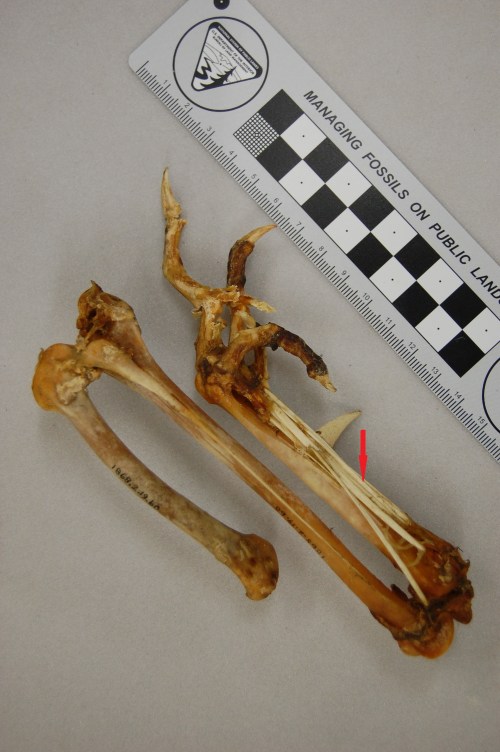
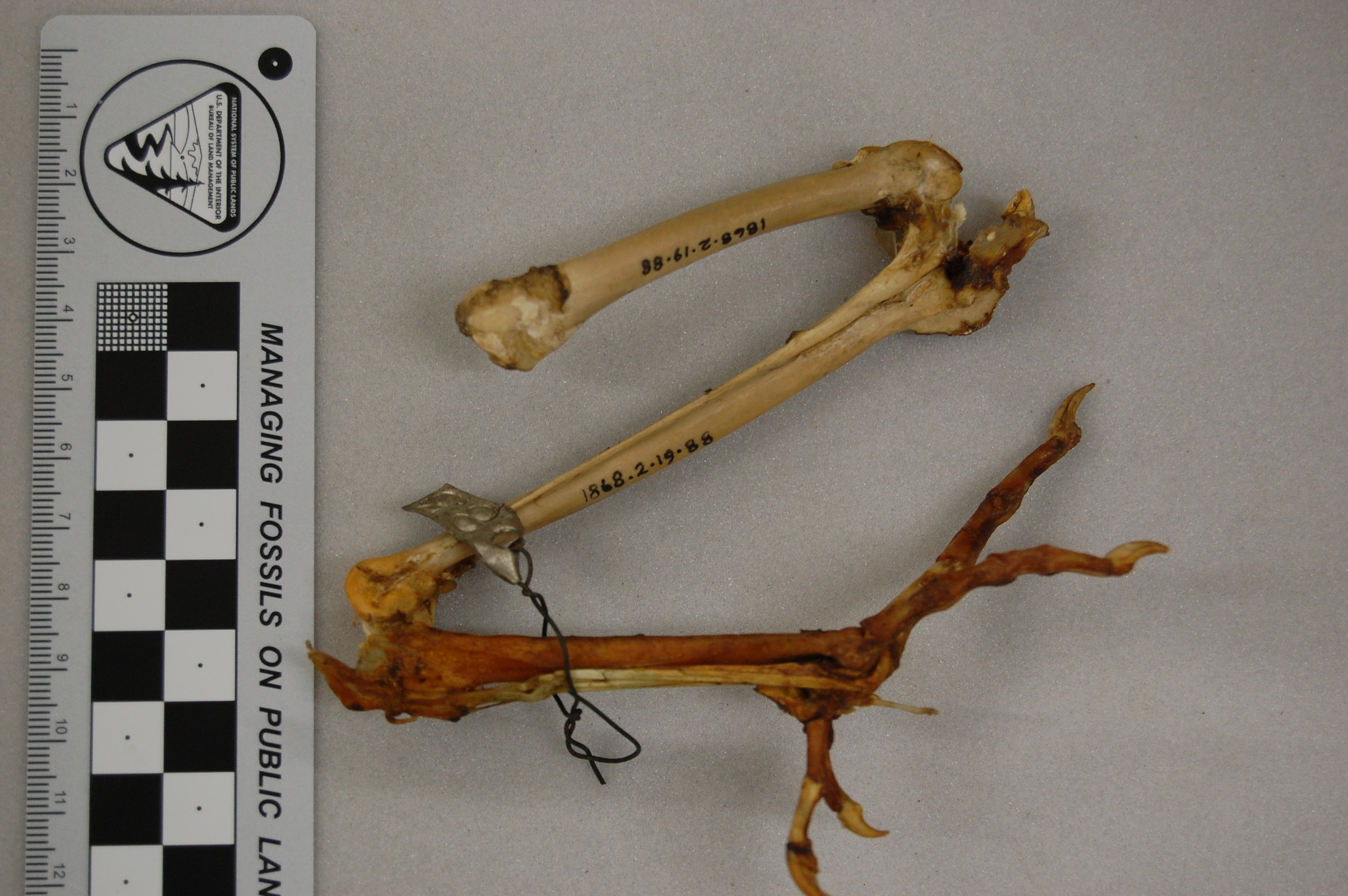
The hindlimb of a Polish Silver Laced breed, nicely showing the ossified tendons (red arrow) along the tarsometatarsus. Why these tendons turn into bone is one of the great unsolved mysteries of bone biology/mechanics and avian evolution. Check out the famed feather crest here.

The hindlimb of a Polish Silver Laced breed, nicely showing the ossified tendons (red arrow) along the tarsometatarsus. Why these tendons turn into bone is one of the great unsolved mysteries of bone biology/mechanics and avian evolution.

Check out the famed feather crest of the Silver (Laced) Polish here; it gets so extreme in males that they have a hard time seeing, and can get beaten up by other cockerels when kept in mixed breed flocks.

Here on this blog, and of course on the companion blog “Towards the Chicken of the Future,” domestic chickens and wild junglefowl have often come up, most recently with the Dorking Chicken (another of Darwin’s own specimens that I studied) in the “Mystery Museum Specimen” poetry round of late. Dorkings are HUGE chickens; easily twice the weight of even a broiler chicken, up to 4-5kg. The Dorking-characteristic polydactyly featured in that post is also observed at a relatively high incidence in Silkie and Sultan breeds, I’ve learned. Like this one! (I was so patella-focused, or cake-somnolescent, that I missed it while studying at the museum and only noticed it now while browsing through my photos, bereft of cake)

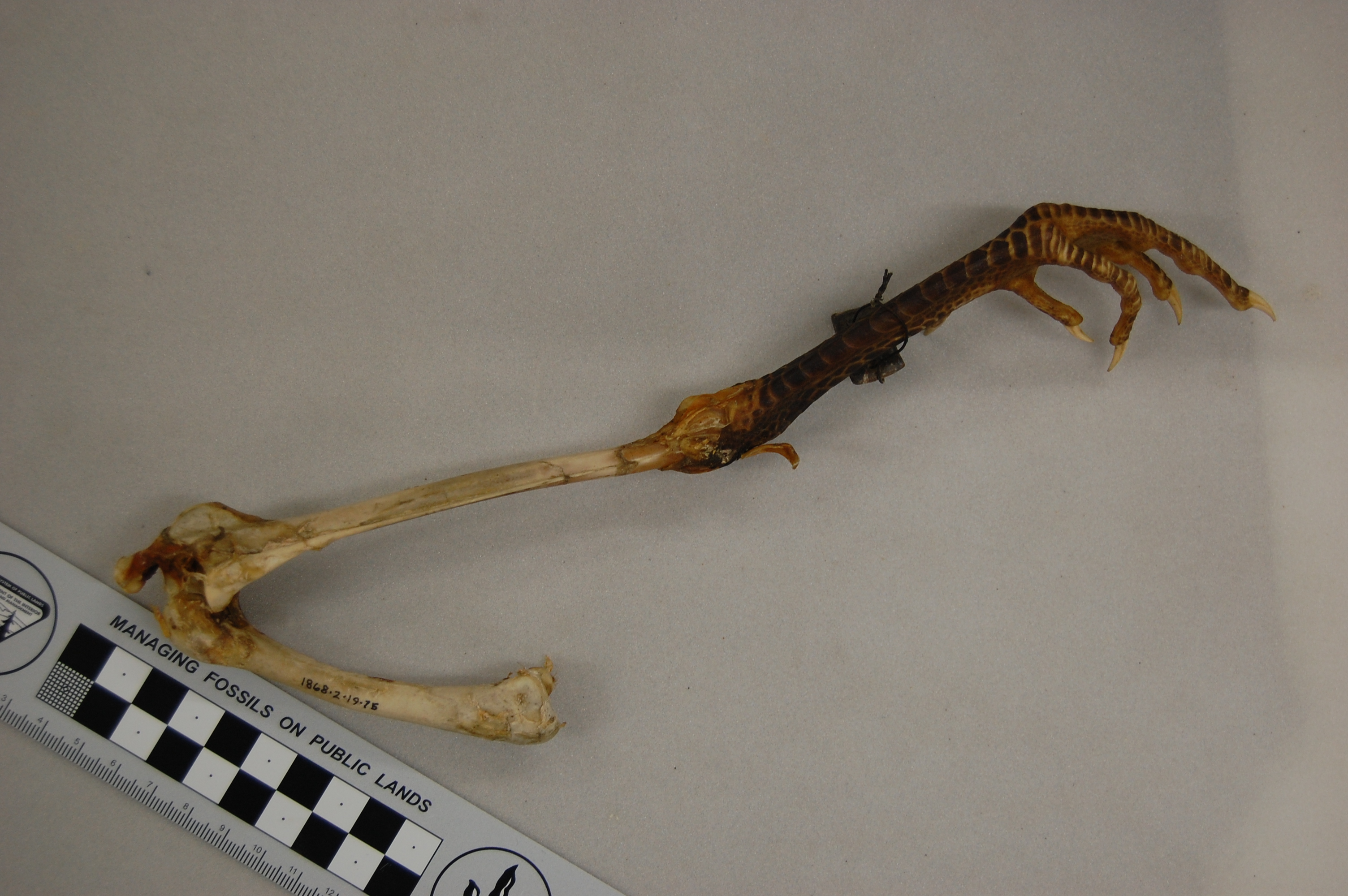
Nice leg of a Sultan hen. There is an extra toe here as in the Dorking chicken; a duplicate hallux (first toe). This is not, as it might at first seem, a pathological condition as in modern "twisted toe"-suffering domestic chickens.

Nice leg of a Sultan hen. There is an extra toe here as in the Dorking chicken; a duplicate hallux (first toe). This is not, as it might at first seem, a pathological condition as in modern “twisted toe”-suffering domestic chickens.

Malays are another giant breed like the Dorking, but with longer and more muscular legs and longer necks, looking much more like a classic, badass wild junglefowl than a fancy, pampered chicken. But here, undressed to the bare bones, it just looks like a skinny chicken leg, albeit perhaps a bit svelte compared to the Dorking or Sultan.

Hindlimb of a Malay breed of chicken, which Wikipedia nicely tells the story of its misnomer (it may originate from Pakistan, not Malaysia!). Can you find the nice patella? Check out Darwin's lovely label, too.

Hindlimb of a Malay breed of chicken, which Wikipedia nicely tells the story of its misnomer (it may originate from Pakistan, not Malaysia!). Can you find the nice patella? Check out Darwin’s lovely label, too.

You may have come across wild-eyed news stories 5 years ago about “OMG Darwin was sooooooo wrong about chickens!”, referring to his writings on the origin of domestic chickens from Red junglefowl. As Greg Laden adeptly wrote, Darwin (say it with me) didn’t really get it very wrong after all. He did quite well, in fact. Some media outlets did get it more wrong, probably inspired by this press release. Oh well; the science they were reporting about definitely was interesting- modern chickens seem to have some of their yellow skin pigmentation-related genes from Grey junglefowl, although they are still largely descendants of Red junglefowl.

Here, have a JUMBLE-fowl, or rather a junglefowl cockerel, with another Darwin label:
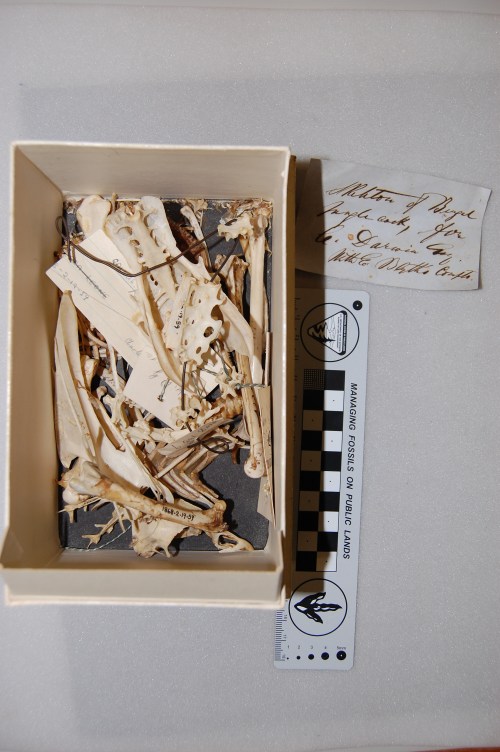
Darwin's example of a wild-type chicken; a Red Junglefowl. As he suspected, these Asian birds were the ancestors of domestic chickens, but today evidence suggests that domestication occurred multiple times in Asia and with different wild varieties of junglefowl bred/mixed in different regions.

Darwin’s example of a wild-type chicken; a Red junglefowl. As he suspected, these Asian birds were the ancestors of domestic chickens, but today evidence indicates that domestication may have occurred multiple times in Asia and with different wild varieties of junglefowl bred/mixed in different regions.

Some breeds aren’t so funky inside, of course, but just have cool feather patterns on the outside, like the “pencilling” (dark streaks on white feathers) evident in pencil breeds; also called triple-laced. Like this fine chap below once would have had, before Darwin tore off his feathers and reduced him to a research-friendly naked skeleton:

A Golden Pencil Hamburgh breed of chicken (cockerel), whose skeleton features the leg and a fine articulated patella.

A Golden Pencil(led) Hamburg breed of chicken (cockerel), whose skeleton features the leg and a fine articulated patella.

Also known as the Holland Fowl, several European countries including the UK claim the Hamsburg as an original breed from their respective realm, and no surprise they do- it’s a lovely spangled chicken. Then, later in the 1800’s the Americans got involved in breeding them, too, and it’s all a big mess. They should get together, have some delectable cakes, and just sort it out.

Scaly, still-greasy foot and hindlimb of what Darwin labelled as the male of a "Game" breed.

Scaly, still-greasy foot and hindlimb of what Darwin labelled as the male of a “Game” breed.

We thus close with another leg of another chicken. Darwin was a bit naughty here, or else terminology of breeds has changed a lot since the 1850’s (very possible), as he just labelled this as a “Game” cockerel. Now, Gamefowl is a big category of breeds. I’m guessing this one was either (1) a Cornish/Indian Game variety or (2) an Old or Modern English Game Fowl. Maybe a person who knows their chicken breeding far better than me (that’s not hard!) will opine differently. The latter varieties were popular in Darwin’s time — the (Muffed) Old English version was mated with other breeds (Malay?) to produce the Modern English form as cockfighting “sports” became banned in 1849 and breeder attentions shifted to the polar opposite of producing showy, fancy birds instead. And thus the bufante, feathered-hair-adorned 1980s pop-rock group was created, to sing about mating or moulting or melting with people or something terribly disgusting and probably having nothing at all to do with chickens,  cake, or cockfighting, or other more seemly pursuits.

So, we have come to the end of my photos of Darwin’s chicken leg bones and such. If you’ve learned something here about chicken breeds, patellae, cake, or Darwin, that’s simply frabjous. Enough of those poncey pigeons, already! I’m crying fo… no, I won’t use that pun. Nevermind. Not even remotely cake-related. Let’s give Darwin’s chickens their just desserts, is the point– and a much better pun, too. Darwin’s chickens are an important part of Darwiniana, and an interesting evolutionary study in and of themselves. I’ve certainly become impressed during my researching for this blog post by the diverse, fascinating biology of chicken breeds. My copy of the “Complete Encyclopedia of Chickens” will be getting some more thorough reading shortly.

Today, however, I am off to return to the NHM-Tring and peruse their other, non-chickeny Galliformes and Anseriformes, with a detour to the mythical hoatzin. But… but… there may be a cake detour involved, too. I shall report back in due course. Off I go!

No, hopefully not that cake.

Read Full Post »
It’s back! Mystery Anatomy is in full swing again after a lovely summer holiday in Antarctica- check out its fabulous tan freezerburn! We now have a new scoreboard page, too, for your convenience.

Today is another poetry round, which means you not only get 1 pt for trying but also can amaze and delight us all– and win extra points for rhapsodizing in sublime eloquence at the marvel of nature you are about to behold!

The poetry form for today is the SONNET. 14 lines as usual, but we’ll relax the form and allow you to be maximally creative– just include some rhyming, but you do not need to stick to iambic pentameter or other rigid, galling forms. You must (1) identify the specimen, (2) explain what’s important/unusual about it, and (3) have fun.

Look upon this foul form, feel its greasy exterior and inhale deeply of the same rancid perfume that might have graced Pliny’s or Caesar’s aquiline nose, while your mind reels at its historical significance, which spurred on one individual of some note to exclaim “I was so ignorant I do not even know there were three varieties… how do they differ?”

Mystery12

Difficulty: The poetry will be the hardest part for some.

Stomach-Churning Rating: 2/10. Again, the main threat here is the poetry.

Proceed, morpho-poets; let this museum specimen be no paltry muse!

Some labels to help those unfamiliar with the wonders of chicken foot anatomy!

Some labels to help those unfamiliar with the wonders of chicken foot anatomy! The position I’ve labelled the “extra toe” in is arbitrary; it might be “toe 1” that is the new toe. That might make more developmental sense, that the identity of “toes” has migrated up the limb to add a new toe– and is the spur in male chickens also spurred on by similar signals? No one knows, I think.

Read Full Post »

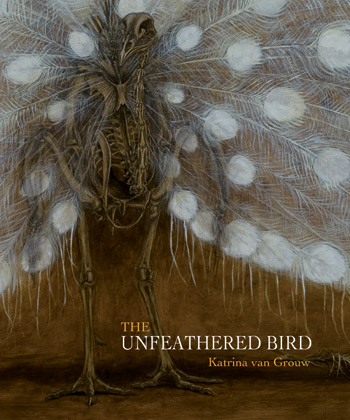
frontcover

The Unfeathered Bird book by Katrina van Grouw proclaims immediately in its Introduction that it “is not an anatomy of birds.”  True– it is far more than that, and it would be a shame if it had just been a dry, technical avian osteology reference book. It is a unique blend of art and science- particularly avian anatomy, evolution, taxonomy, natural history and more. The Unfeathered Bird is written for a general audience; birders/twitchers or just natural history buffs would be ideal targets of its unfettered passion for all things avian. A 12-year-old who is very keen on animals could enjoy it, and it may ignite the flames of ornithological excitement in many young or older readers. I am glad it was not called “The Naked Bird” as that would have caused some serious misconceptions (badum-tish!). The book is dripping with illustrations (at least one every two pages, often more). Almost all of the illustrations (except some paintings in the style of the cover) are in the same brownish sketch style that, like much of the book, evokes a bygone era of dark wooden cabinets and shadowed halls packed with skeletons, with nary an interactive graphics display, animatronic dinosaur or hyperdetailed cladogram in sight. It feels like an homage to the Victorian naturalists’ joy for anatomical detail conveyed through painstakingly detailed woodcuts. And while many still think of feathers as “the defining feature of birds,” enough about feathers already. Seriously. This is a book is about what lies beneath, and how all that non-fluffy stuff is important for birds’ lives, too.

(image-intense post; all can be clicked to embiggritate)

Katrina with peacock feather headdress? (back cover pic and rear view of same skeleton)

Katrina with peacock feather headdress? (back cover pic and rear view of same skeleton)

Katrina with front cover framed pic and the peacock skeleton that went with it.

Katrina with front cover framed pic and the peacock skeleton that went with it.

The Introduction continues to explain that the book is truly about how the external anatomy of birds is linked to the bony anatomy, which might remind astute readers of modern approaches like the extant phylogenetic bracket. The rest of the book uses both skeletal and unfeathered, quasi-myological illustrations to get this point across vividly. The explanatory text is written at a basic enough level for the average reader and is just the right length, with interesting anecdotes and natural history facts that even the expert reader will find interesting or even inspirational (e.g. possibly a goldmine for research ideas). First there is a 26 page “Basic” section with an introduction to avian osteology, with bountiful sketches to illustrate key organs and text explaining how it all fits together in the fully accoutered bird. The decision to use classical Linnean taxonomy (defunct or re-arranged taxa from the Systema Naturae like Accipitres, Picae, Anseres, Grallae, Gallinae and Passeres; which are the six “Specific” chapters in the second section of the book) was a good one- it enhances the classical feel of the tome and gives the author a great opportunity to discuss convergent evolution and how that misled past ornithologists.

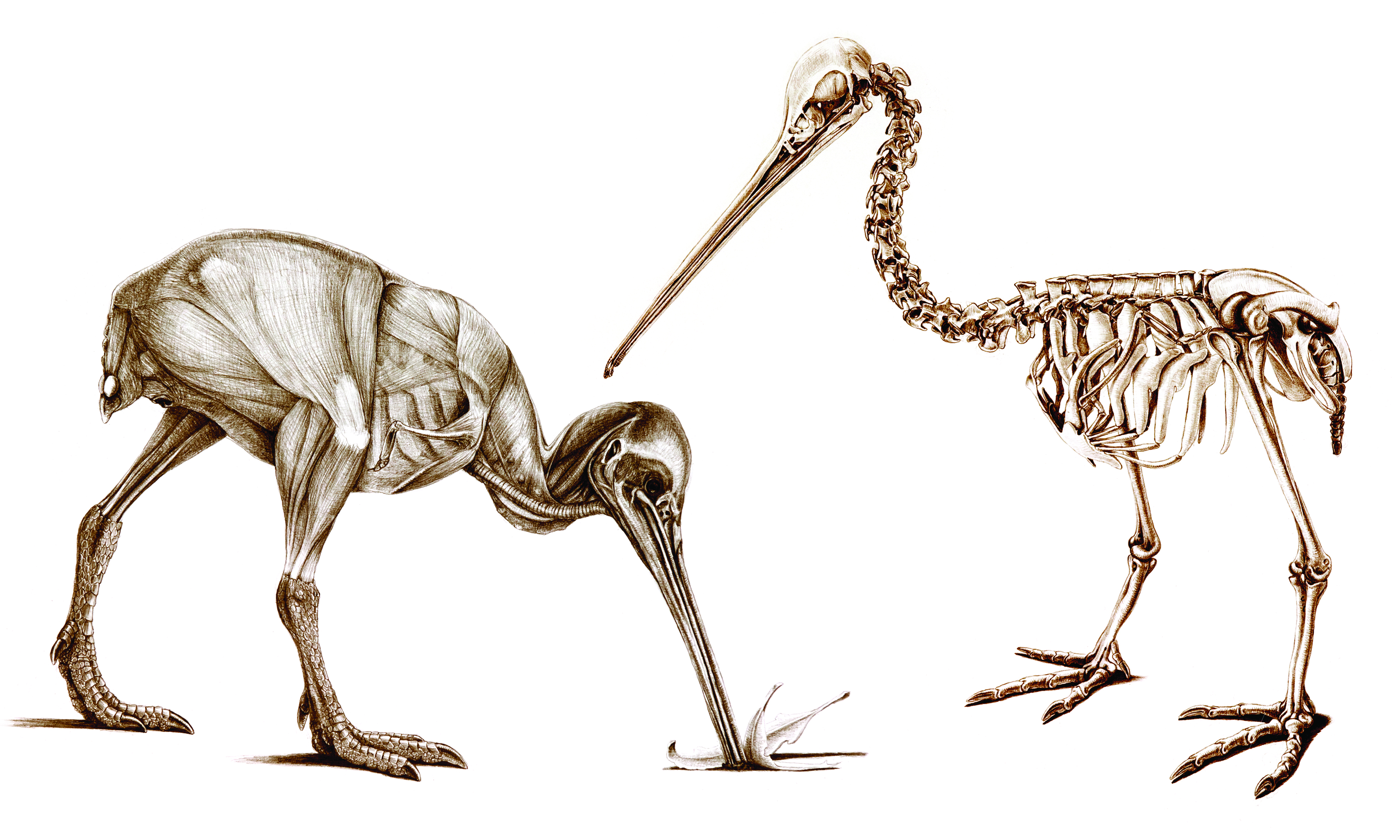
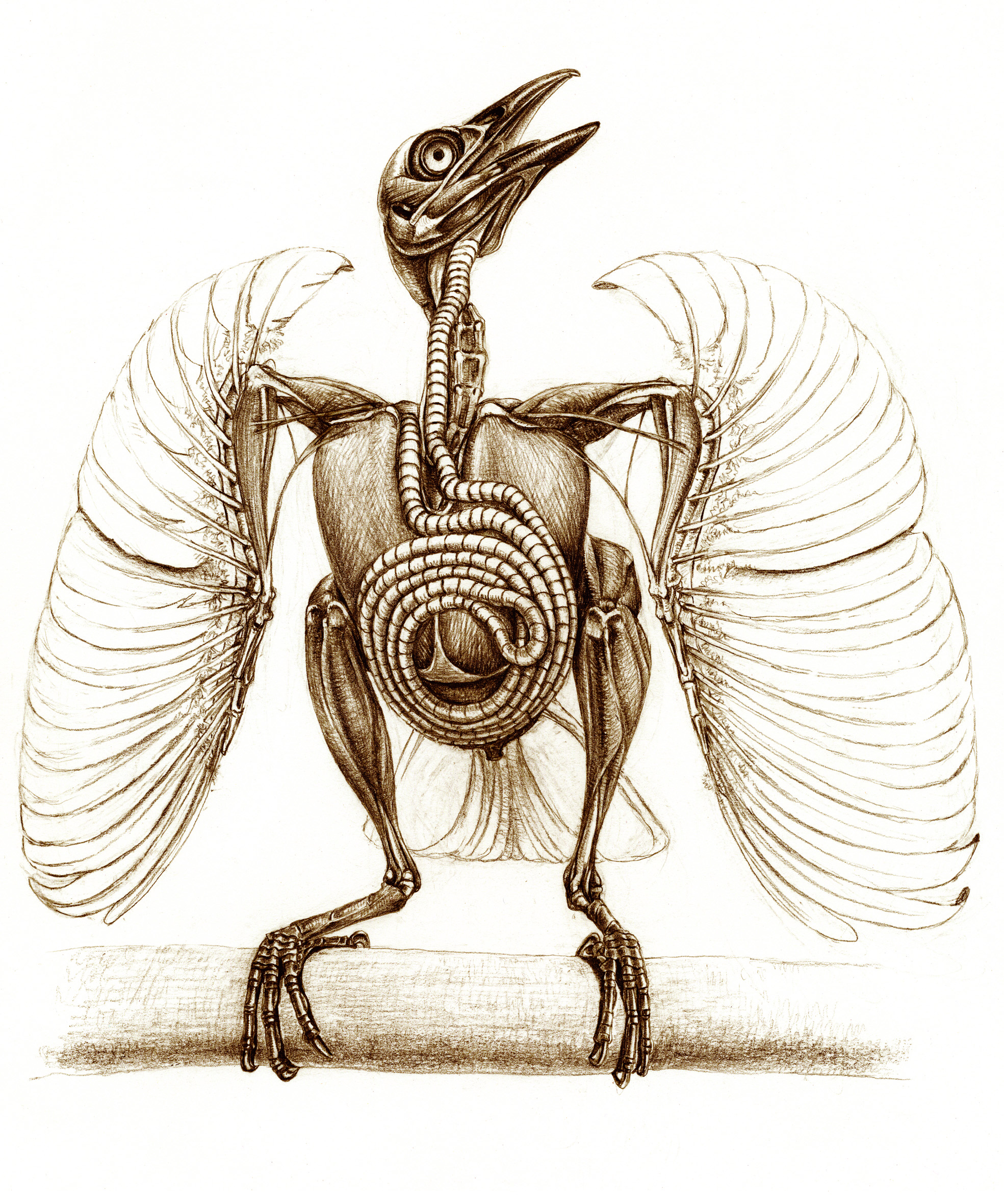
But for me, the book is most pleasurable for the visualizations and the passion for all things birdy that weaves through them and the accompanying text. The removal of feathers, or even all soft tissues, from bird bodies (posed in naturalistic behaviours) that van Grouw renders in her illustrations shows birds in a new light, emphasizing the strangeness and diversity that lie beneath. The author begins the book with a touching Acknowledgments section in which her husband Hein van Grouw, curator of birds at the Natural History Museum’s Tring collection, features very prominently, making it clear that the book was a team operation and comes from the heart after a 25-year journey. This gives the book a special warmth that is preserved throughout the remainder- although the illustrations are of flayed bodies or boiled / beetle-macerated skeletons, the tone is nothing less than an earnest love for birds of all kinds, and a zest for portraying those feelings to the reader in sketches and prose. It is a joyous celebration, not a somber litany, of the wonder of birds that can be gleaned from dead bodies. There is so much powerful, awesome imagery stuffed into those pages that it is hard to summarize. I’ll let five of my favourite images from the book (more are in her gallery and her book’s Facebook page; but even these are just the tip of the icebird) help get this across (used with permission of the author):

Naked kiwi in action.

Naked kiwi in action.

The unscaled bird: guineafowl feet.

The unscaled bird: guineafowl feet.

Deplumed sparrowhawk with dove trophy, exalting in its triumph.

Deplumed sparrowhawk with dove trophy, exalting in its triumph.

Budgerigar has made a friend? Or came to grips with its own mortality?

Budgerigar has made a friend? Or came to grips with its own mortality?

Trumpet Manucode WTF anatomy! Spiraling tracheal coil made me gasp in awe when I saw this image in the book.

Trumpet Manucode’s WTF anatomy! Spiraling tracheal coil made me gasp in awe when I saw this image in the book.

Now I’ll depart from this post just being a book review. I went to the Tring collection to do some research, and arranged my trip so I’d also get to see the debut of a Tring special exhibit featuring The Unfeathered Bird, and also to meet Katrina as well as Hein van Grouw. The placement of the exhibit at Tring is apropos, because Katrina was a curator at the museum until a few years ago and Hein still is. But the inspiration for the work and the specimens used (with a few exceptions, including from other museums) are Katrina’s. She (with Hein’s help) procured bodies of birds to dissect, macerate and sketch for the book over its 25 year fledging period, noting in the Acknowledgments that “no birds were harmed” to do this– do read those acknowledgments, as there are some amusing tales there of how she obtained some specimens.

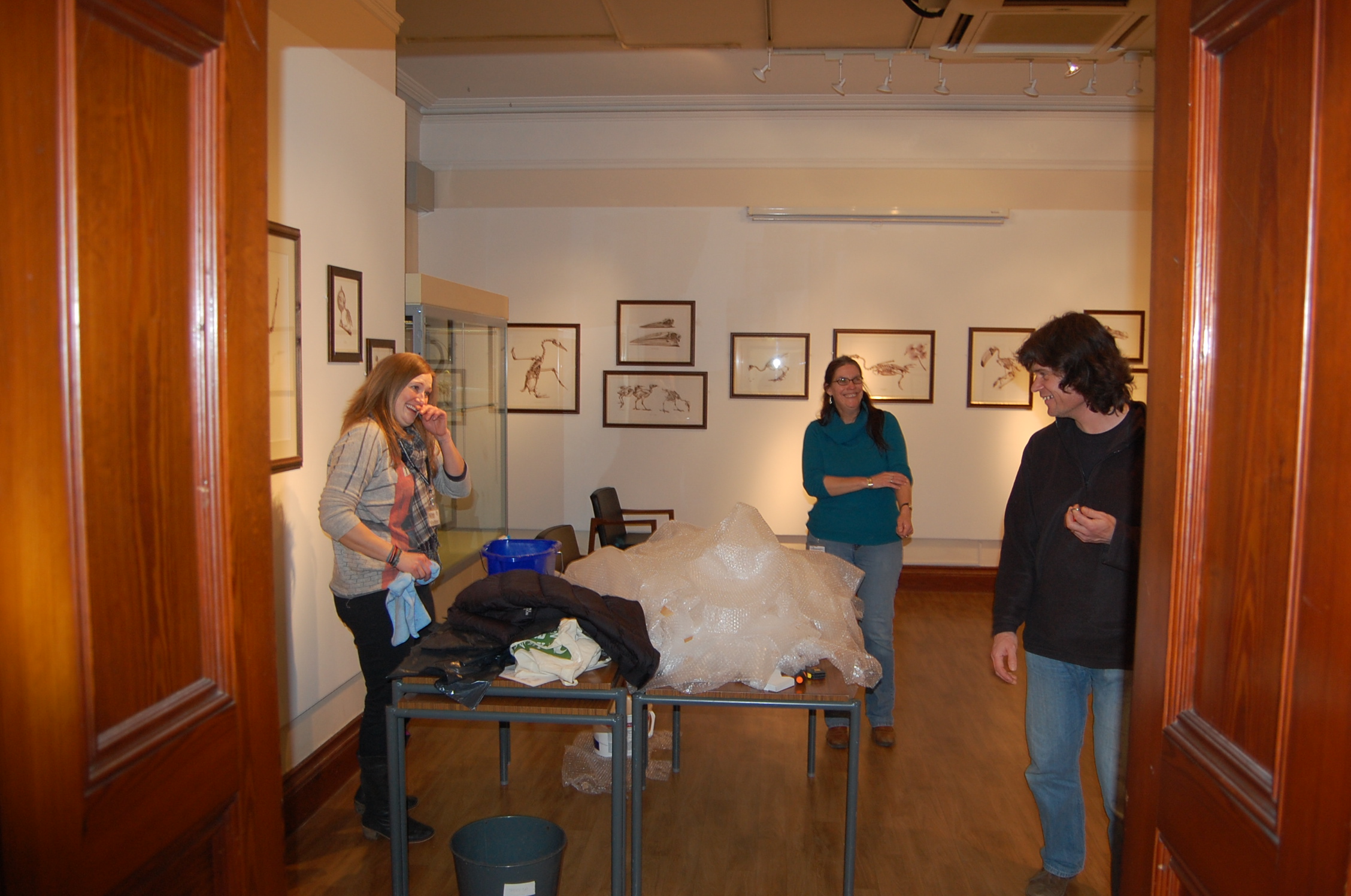
I was fortunate to be able to take some photos of the exhibit while they set it up, and grabbed some candid images of Katrina and colleagues during that process. The following images show off the exhibit, which is all in one clean, bright, simply adorned room in the Tring that lets Katrina’s framed sketches be the focus. Here are some examples:

Poster advert for the book in the Tring collections.

Poster advert for the book in the Tring collections.

Tring exhibit setup, with Katrina, husband Hein, and helper finishing it up.

Tring exhibit setup, with Katrina, husband Hein, and helper finishing it up.

Tring exhibit now ready.

Tring exhibit now ready.

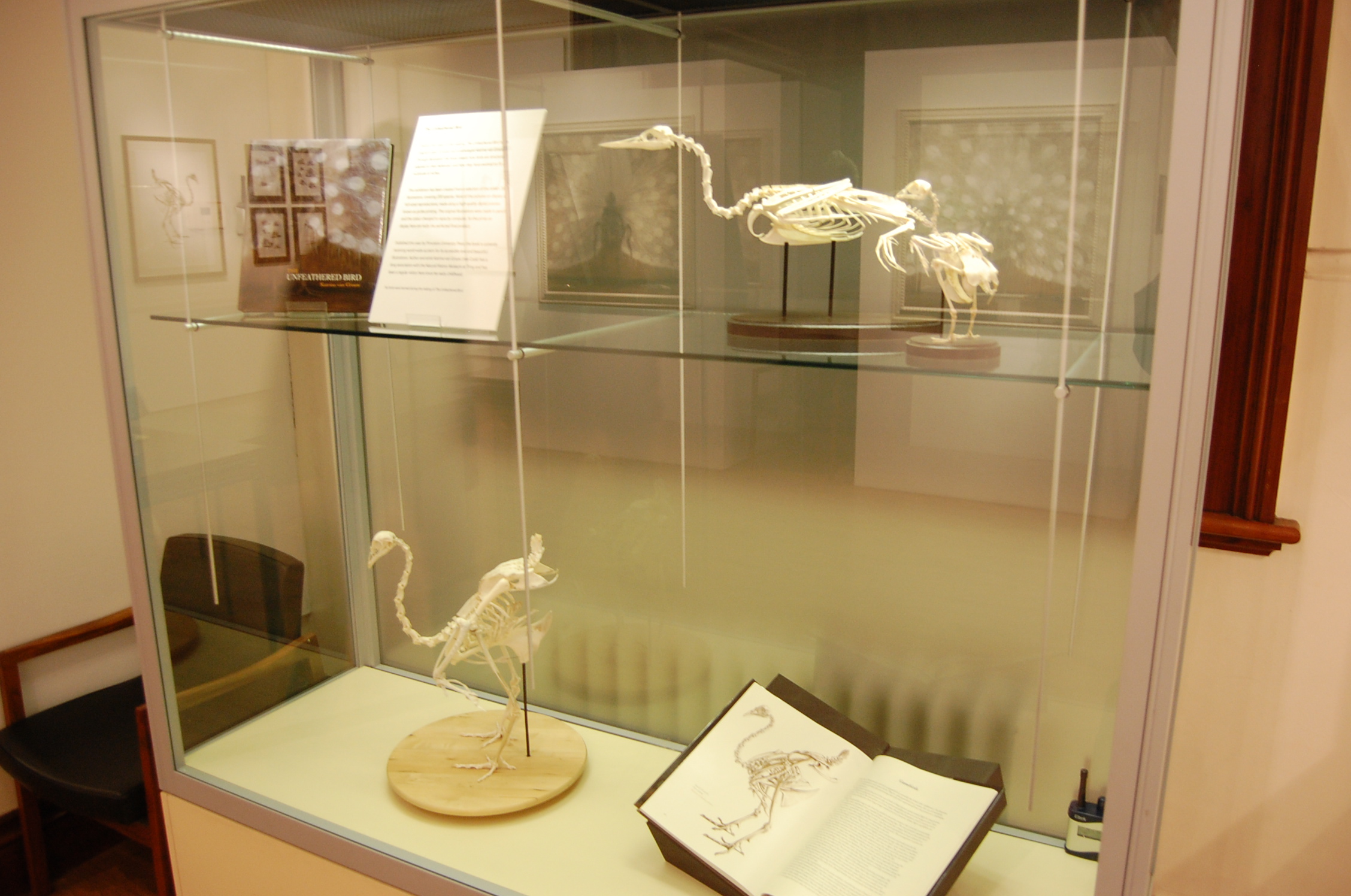
Tring exhibit case.

Tring exhibit case.

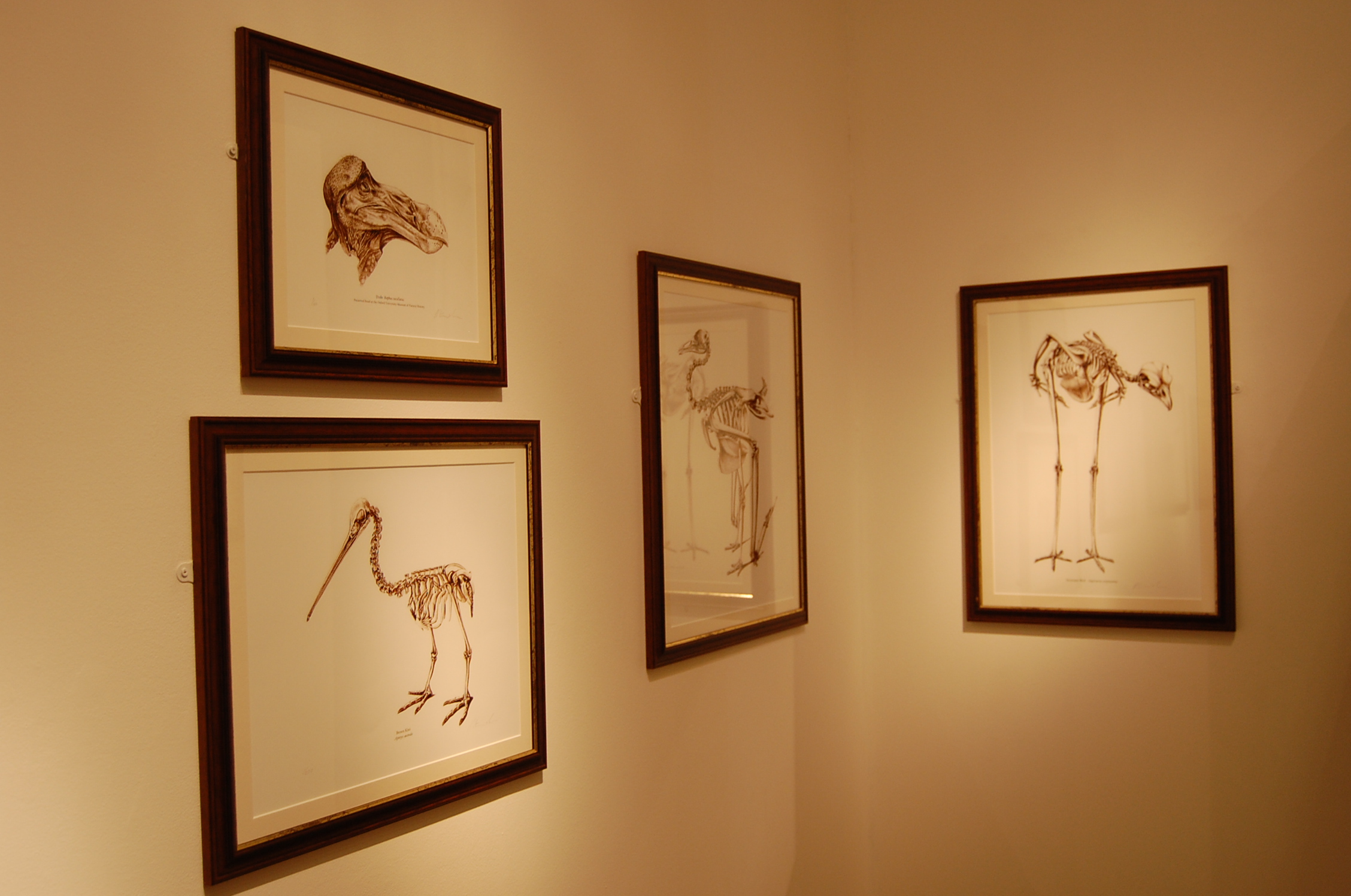
Framed sketches at Tring exhibit.

Framed sketches at Tring exhibit.

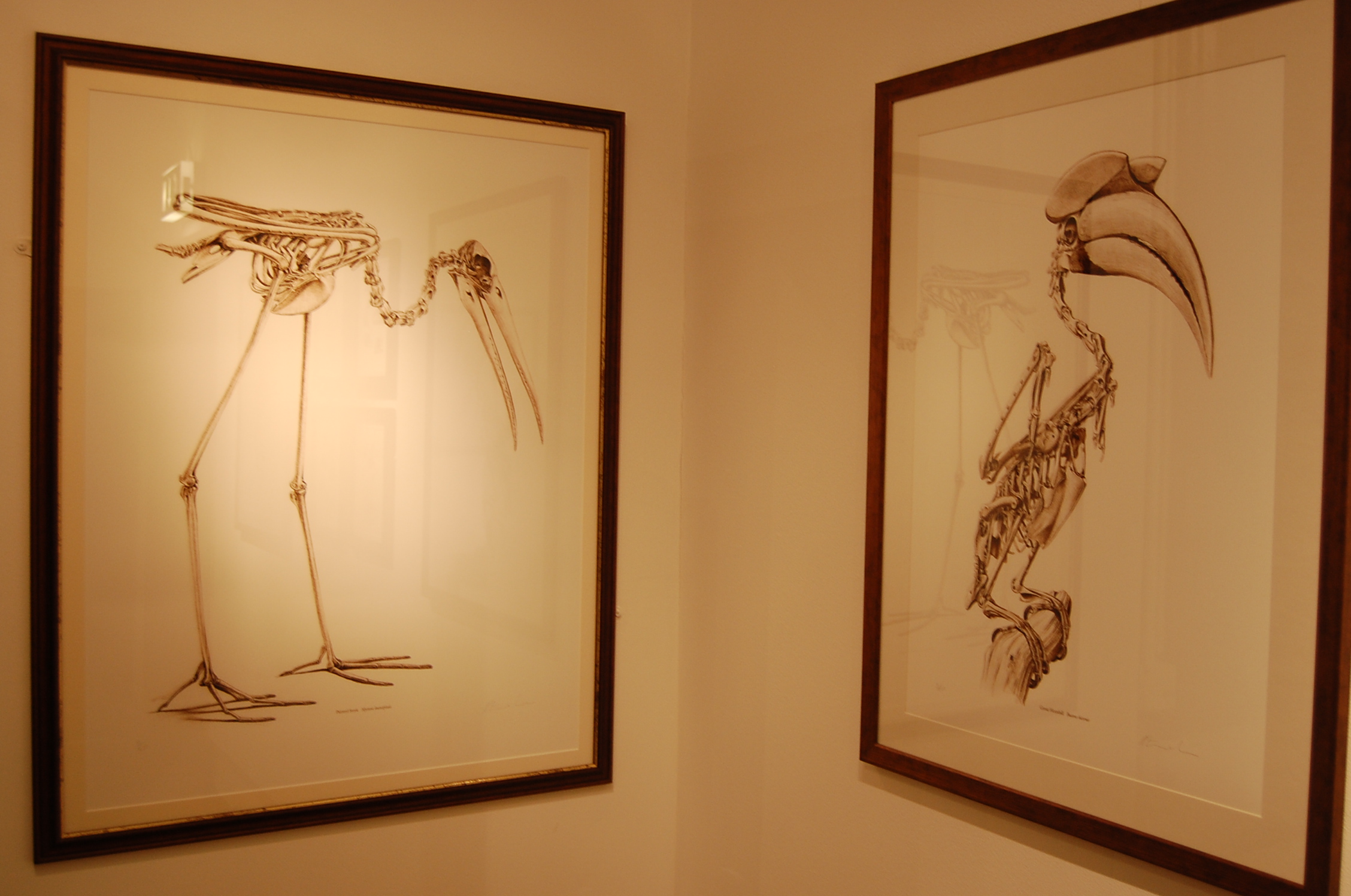
Framed sketches at Tring exhibit.

More framed sketches at Tring exhibit.

The exhibit is fun for people who are already Unfeathered Bird fans, and a good way of drawing in new ones. The book is a precious thing that any fan of birds, especially scientists, really needs to have a hard copy of. While it claims not to be an anatomy text, its illustrations provide ample opportunities to use it for that purpose. But really the point of owning all 287-plus pages is to bask in the warmth of true, pure appreciation for classic ornithology, which I found infectious. It is a book by and for bird lovers, but also for those that find the interface of art and science to be fascinating.

I confess I used to hate birds. I found them annoying and boring; all that flitting and twitting and pretentious feathers. “Get over yourselves, already, and calm down too!” was my reaction to them. When I started grad school, I had an open disdain for birds, even moreso than for mammals (OK, except cats). I was a “herp” fan through and through, for most of my life (childhood spent catching anoles in Florida, or stalking frogs in Ohio; during visits to my grandparents). What won me over was studying birds (and eventually mammals, too) as a young scientist, and learning how incredible they are– not just as endpoints in the story of theropod dinosaur evolution, as my thesis focused on, but as amazing animals with spectacular form-function relationships.  The Unfeathered Bird is saturated with that amazement, so we’re birds of an unfeather.

Framed sketch of dodo head at Tring exhibit.

Framed sketch of dodo head at Tring exhibit.

Entirely unfeathered Indian peafowl in matching views.

Entirely unfeathered Indian peafowl in matching views.

Painted Stork and Toco Toucan sketches.

Painted Stork and Great Hornbill sketches.

Red junglefowl, wild ancestor of domestic chickens (and the book ends with several such breeds illustrated),

Red junglefowl, wild ancestor of domestic chickens (and the book ends with several such breeds illustrated).

Katrina told me that she is already deep into writing the next book, whose subject I won’t spoil for you here but maybe we will be lucky enough to have her appear in the Comments and plug it? 🙂 (Her website does say “It was Hein’s stroke of genius to include domestic birds and they’ve provided the inspiration for my next project.” so the cat is out of the bag and amongst the pigeons!) It is great to hear that the book has done quite well sales-wise and critically, such as ~#67 on the Amazon sales list at one point– I hope this paves the way for more such books not only from Katrina, but from others engaged in lateral thinking (and still others) on the boundaries of science-art.

Read Full Post »

astro-dino

Keith Feinstein of Eureka Exhibits sent me this sketch he did, and when I expressed my reaction of hey-dude-this-is-awesome, he welcomed me to put it up on the blog. Well why the hell not? Awesome belongs here. Dinosaurs (especially space-tyrannosaurs) belong here. Astronauts go into space and space is cold– like an ultra-freezer? So there you are. Additional context: we’ve worked together on Eureka’s “Be the Dinosaur” simulation/exhibit and are now doing “Be the Astronaut.” I suppose this sketch foreshadows the next step: “Be The Astronaut Riding the Dinosaur in the Land of Badassedness”.

Stay tuned for a big post tomorrow…

Read Full Post »

…a daily picture of anatomy! And today the pictures are a mysteryyyyyyy! ♫

Welcome back againagain, and again (gasp, pant)– and again (exhausted howl)… and… aaaaaagaiiiiin… to Freezermas

This is the end. I’ve worked hard all week to bring you all-new content for Freezermas, and on the Seventh Day I get drunk rest— and make you do the work! Off into the hoary wilderness you go, seeking answers to eternal trivial mysteries.

Seven mystery photos of museum specimens today, each from a different museum (or other institution whose role it is to display critters, in 2/7 cases) and animal! I’ve visited all these facilities and taken these photos myself. Which specimens can you identify, and (ultra difficult) can you identify the institution it’s from?

Stomach-Churning Rating: 2/10. Super tame.

You had some impromptu practice on day 2. Very well, then. This session counts for points. If you want a recap of points, see last Mystery Dissection.

But because the pictures are small and numerous (refer to them by number 1-7, please), the points/correct answer are simplified: 2 pts for correct answer, and maybe 1 bonus pt for something clever but incorrect, 0 pts here just for shooting the breeze (“Superhuman effort isn’t worth a damn unless it achieves results.”–Ernest Shackleton), plus 1 pt extra credit if you correctly ID the museum/institution. Being first does not matter here. Just being correct. With 7 mysteries, you can freeze up a lot of points here! But…

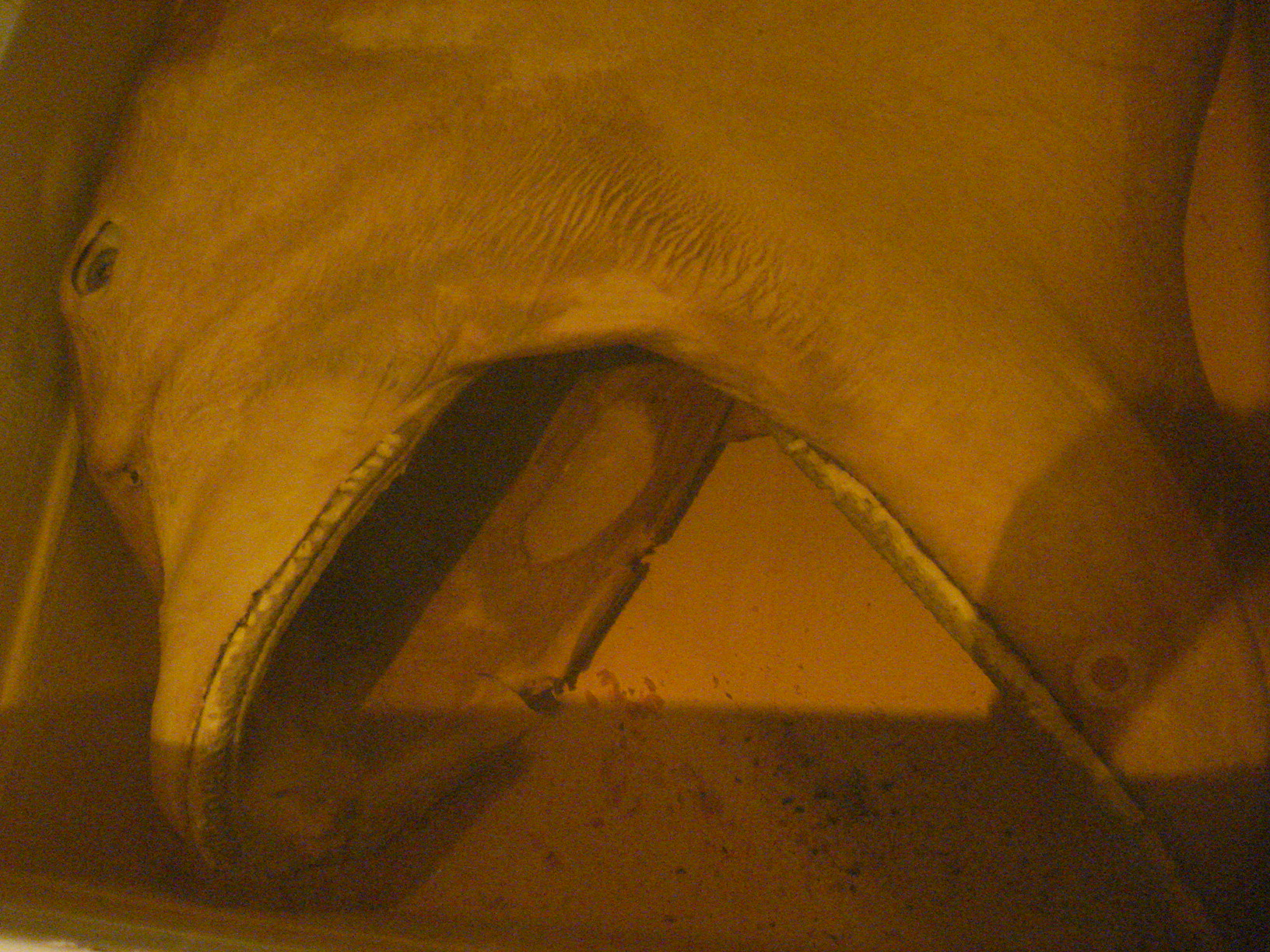
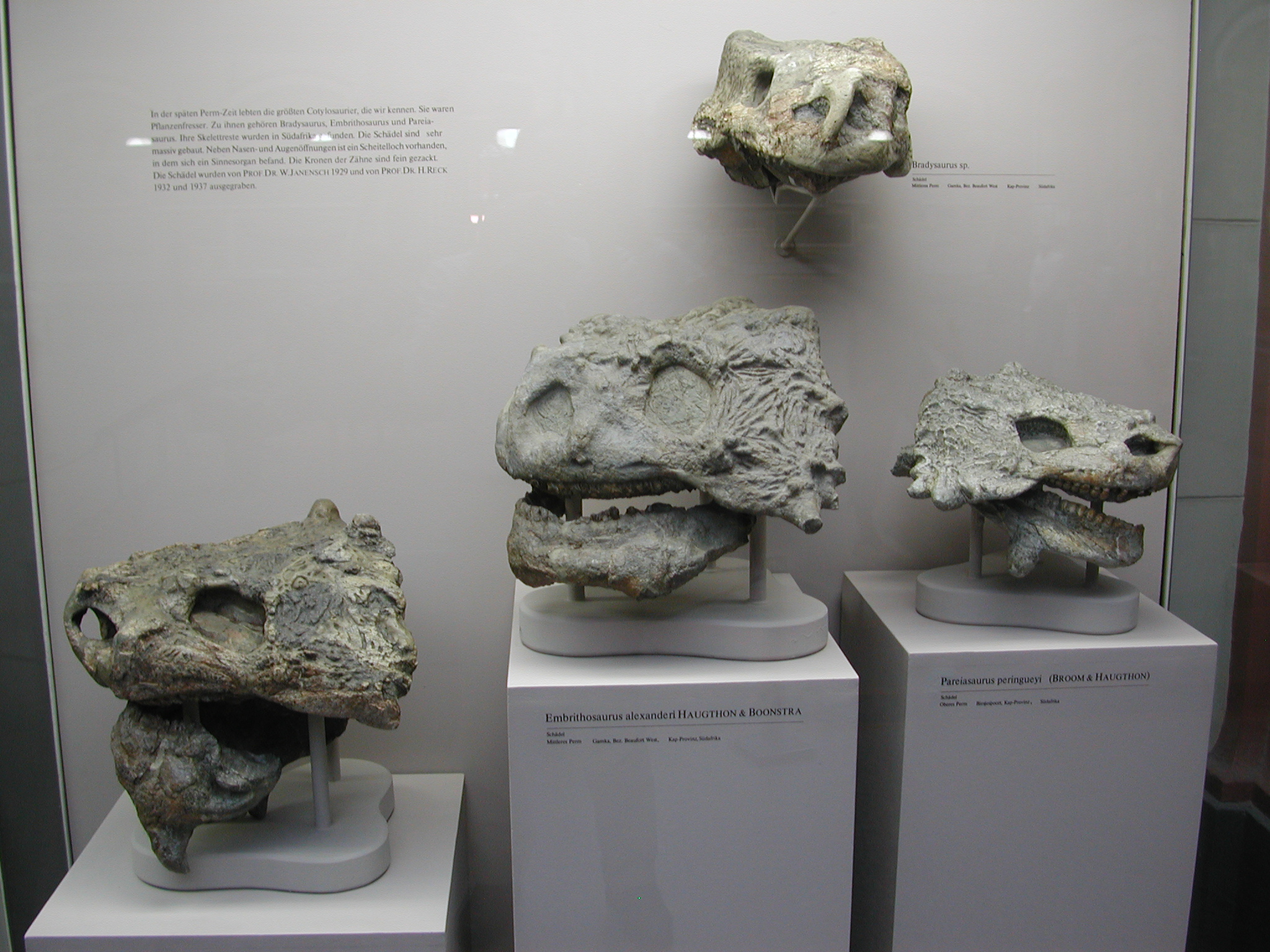
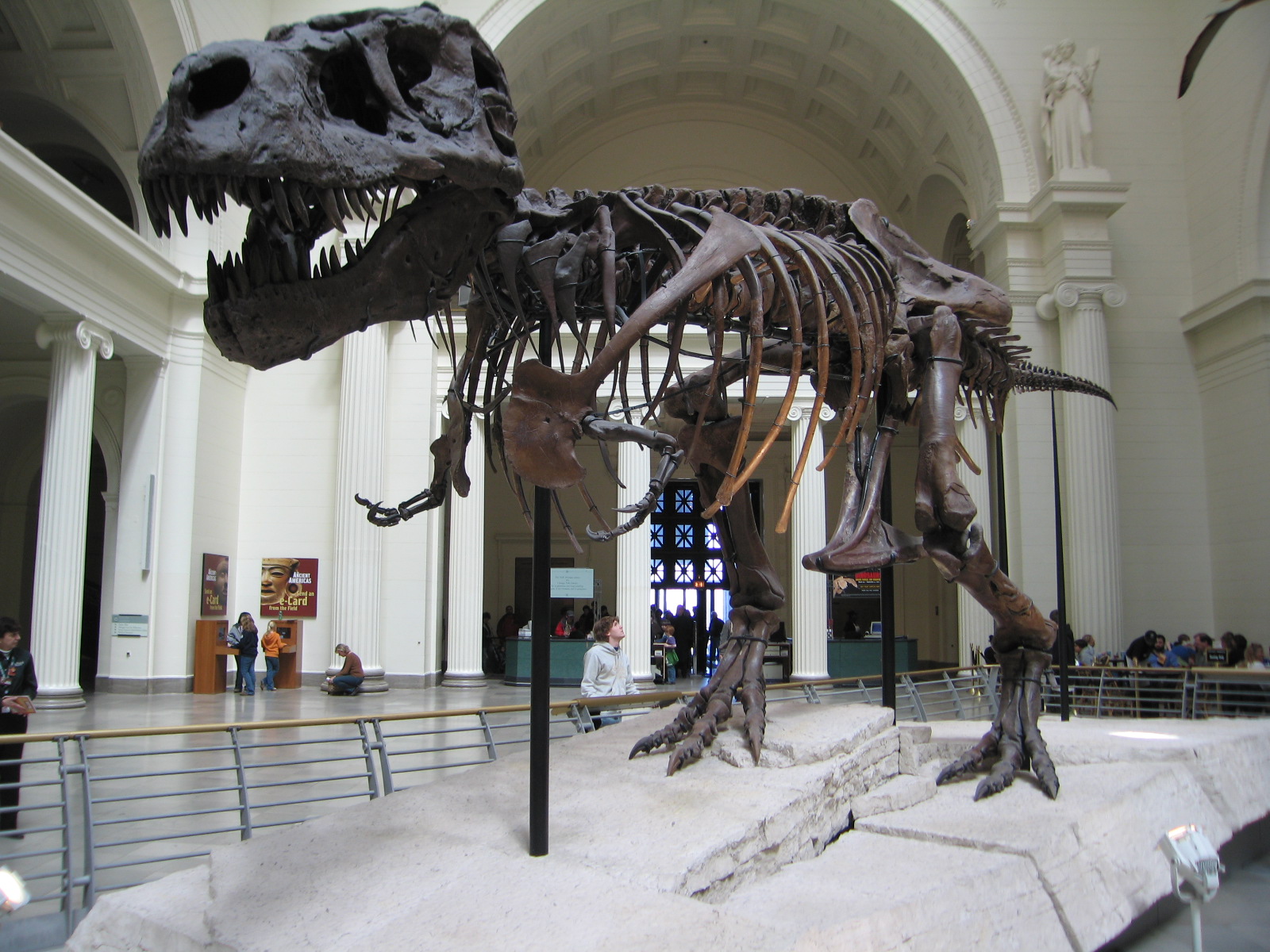
Difficulty: Cropping. Lots of cropping. And therefore quite pixellated if you zoom in much; don’t even bother clicking to embigitate. However, there may or may not be themes between some pictures, or critical clues. They are identifiable.

Off you venture, brave Freezerinos! Wear multiple layers.

1) Freezermas7-1 2) Freezermas7-2

3) Freezermas7-3

4) Freezermas7-4 

5)Freezermas7-5 6)Freezermas7-6

7)Freezermas7-7

But wait– there is a mystery eighth specimen, which even I am not completely sure what it is! No points for figuring it out, but mucho respect!
Freezermas-MysteryXtra

And…

Happy Freezermas! One last time– sing it: “On the seventh day of Freezermas, this blo-og gave to me: one tibiotarsustwo silly Darwinsthree muscle layersfour gory heartsfive doggie models, six mangled pangl’ins a-aaaaaaand seven specimens that are mysteries!” ♪

I hope you enjoyed Freezermas. Let’s hope we’re all thawed out in time for the next one.


CLUES/ANSWERS: Click these thumbnails to embigrinate them if you need help–

snapperpareiasaurs frogfish  Sclerocephalus  Suedinosauroidaardvarks

Read Full Post »

(The following post has a Stomach-Churning Rating of 3/10; the dried fish may not get you, but the bad jokes could. A respite before I slap some freezer-spawned Grand Guignolishness on you in future posts.)

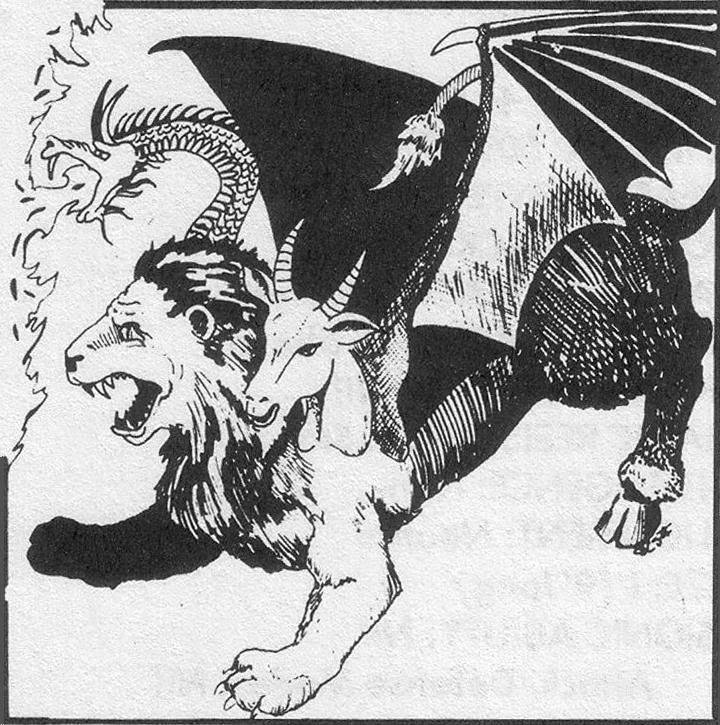
Continuing this crazy summer’s theme of anatomy exhibits in museums, here’s a different twist: using cadavers, or mockups of animal bodies, to create chimeras — fusions of the bodies of multiple species to create new, fanciful organisms. This post was inspired, and will be illustrated, by my visit to Salzburg, Austria’s Haus der Natur, which is well worth a visit for its eclectic cornucopia of exhibits. I’ve also read that the Field Museum’s Mythic Creatures is worth a peek. The post is particularly timely as true chimeras are more and more a thing of scientific reality these days (unsettling testimonial here), although lion-(dragon/snake)-goat hybrids are not coming anytime soon–we can all hope. Enjoy the links! I’ve added a lot of external links to more content if you want to further explore this post’s subjects.

Anyway, my favourite Salzburg escape (from Mozart overdoses that are an all too real- and lethal- threat) was the “Fabel und Mythos” exhibit in the “Mensch und Natur” section of Haus der Natur, which is about just what it sounds like: how natural history and mythology/fantasy intersect. That theme is a passion of mine, as a sci fi/B-movie monster/horror/fantasy film and book fan and as a scientist. It is a big part of why I became a scientist (especially evolutionary biologist/anatomist/palaeontologist) — the junctures of art and science, imagination and reason, fantasy and reality, fascinate me, and if teamed up with the grotesque, monstrous, whimsical and nightmarish, I’m helpless to resist, much as I suspect many of this blog’s readers are. So sit back and enjoy.

Chimeras (in the broader sense of mixed-up animals) have a long history of cultural significance, from Greek myth (and an atrocious recent film featuring The Worthington) even to the godfather of taxonomy, Carl von Linne, and his Animalia Paradoxa. The chimeras (and basilisks, cockatrices, etc.) have featured prominently in the art of the past as well as of the present. People today remain fascinated by the role chimeras and other anatomical tomfooleries have played in hucksterism and hoaxes, as evidenced by many online exhibits such as the Museum of Hoaxes, 15 Craziest Biological Hoaxes, April Fool’s hoaxes, kickass artworklamest hoaxesposts by The Bloggess, sightings of real (i.e. freakish) unicorns in real life, and taxidermy-gone-berserk sites like here and here and here and this cautionary tale; this also overlaps with cryptozoology and WTF-is-that internet fetishes. And let’s not forget the man-bear-pig. No, we shan’t forget that… Nor shall palaeontologists soon forget some famous chimeras in our field, particularly the infamous Piltdown man and Archaeoraptor. These hoaxes incidentally, ended up being not just a temporary embarrassment for science, but also an exemplar of how science is a self-correcting process, so frauds inevitably get unmasked– and in some cases (e.g. Archaeoraptor consisting of two very important legitimate fossils!), science makes new discoveries and advances in that process of corrective peer review.

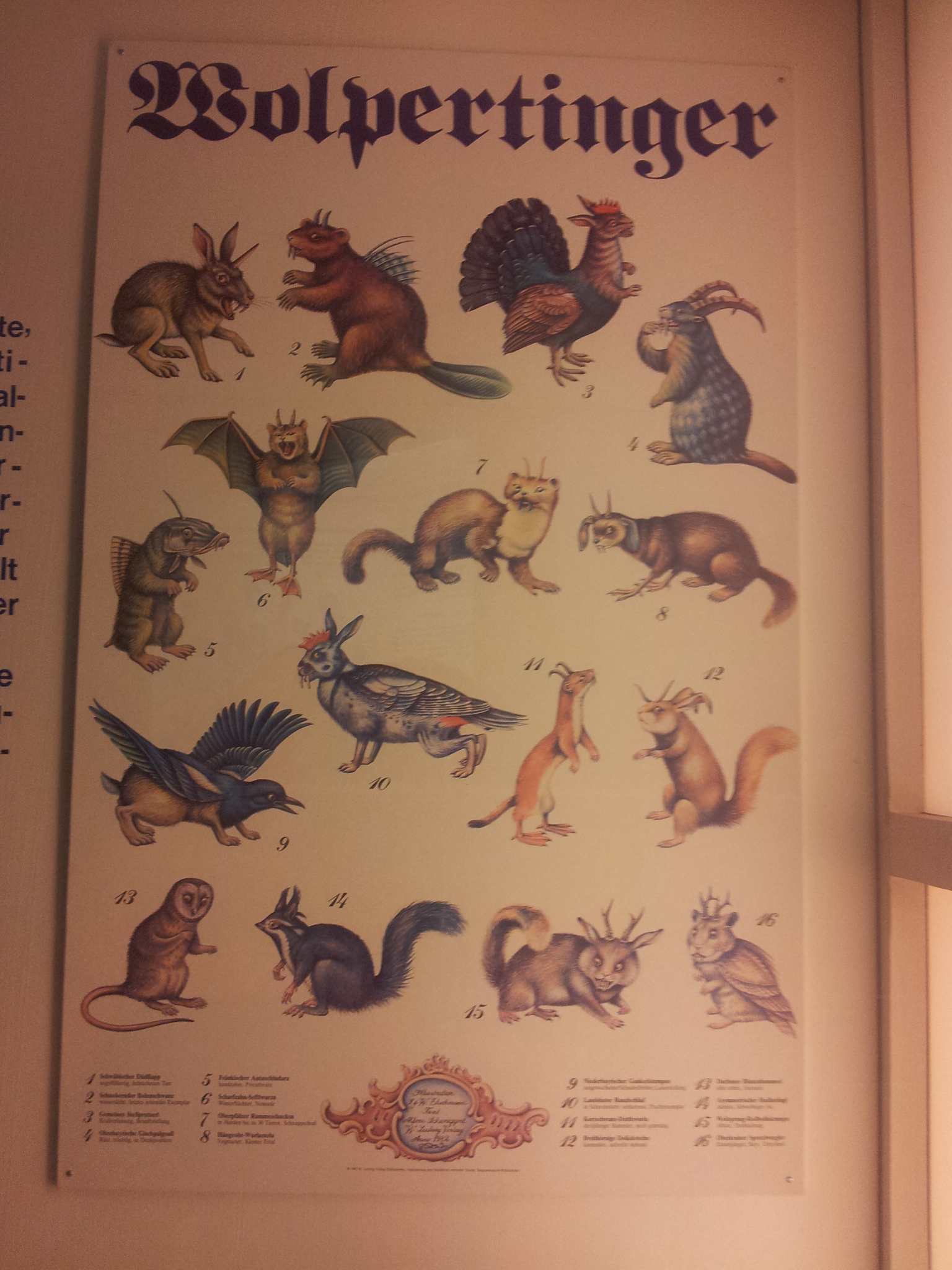
First up in this blog post: the Bavarian Wolpertingers (leaking into native Austrian culture as the Raurackl; AKA Rasselbock, Dilldapp, Skvader and other names; and leaking into video games too)! The wolpertinger is a small and not-so-scary chimera, but often with fairy powers, and is very much akin to that folkloristic mainstay of Americana, the jackrabbit-pronghorn lovechild called the Jackalope. In contrast, however, the jackalope mainly has powers of being a lame souvenir, although fable has it they are prone to ventriloquism, pugnaciousness and whiskey– a fearsome combination (don’t try this at home). This panel from the museum illustrates the diversity and anatomical disparity of Wolpertingers:

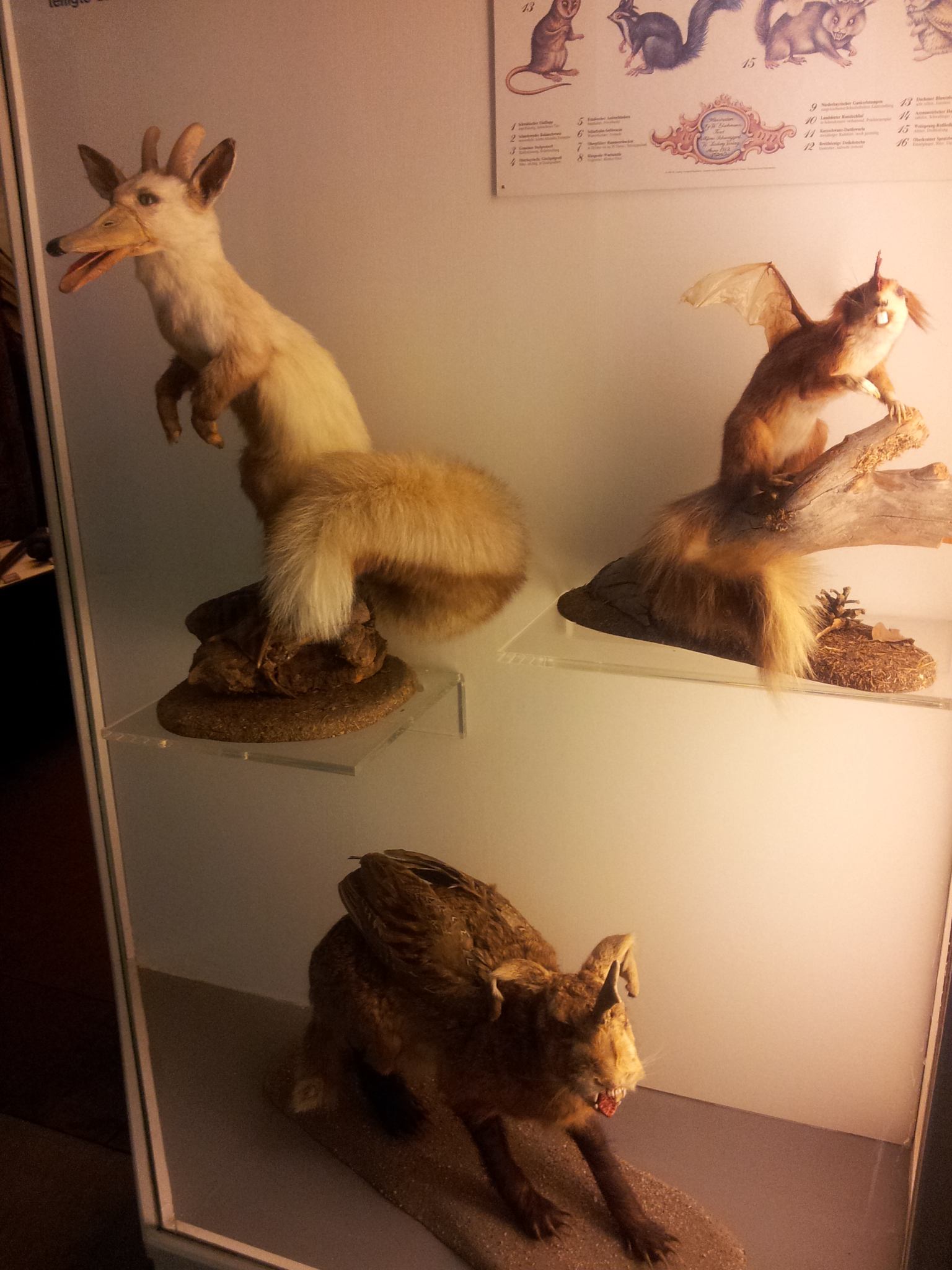
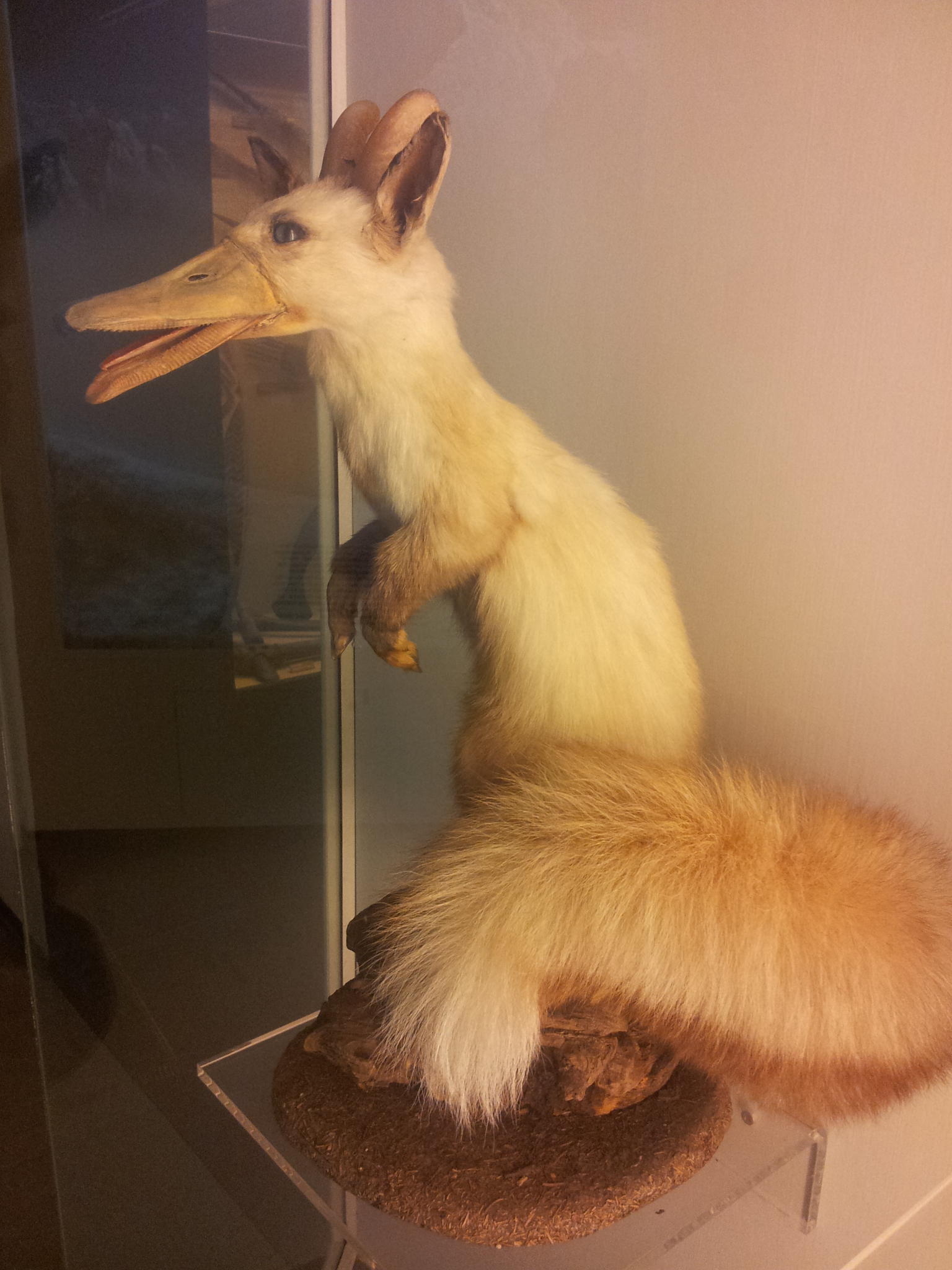
And the museum did a great job making some physical chimeras using the wonders of taxidermy… aww, do you want one of your own now?

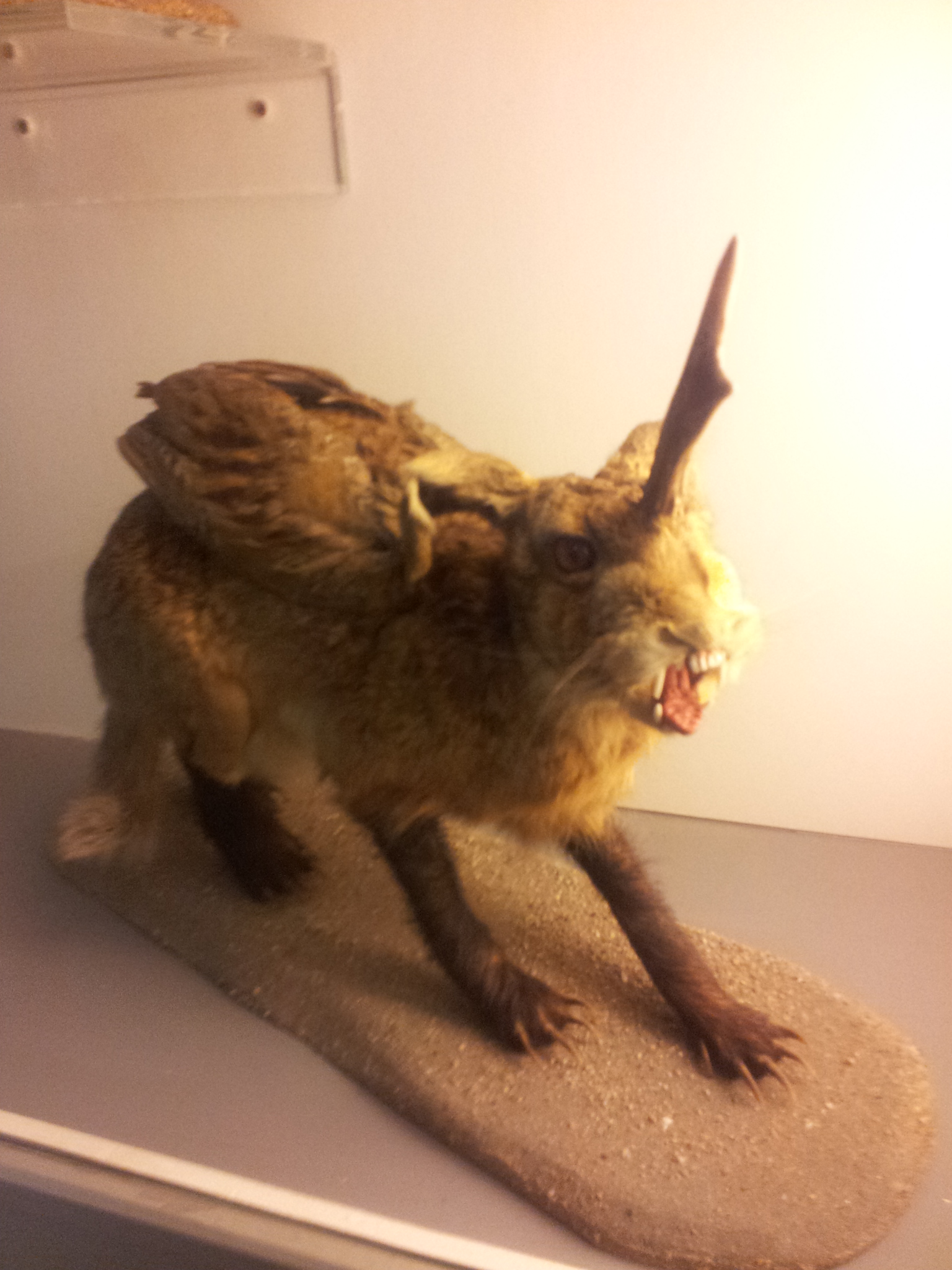
With closeups below–e.g. the jackalope from hell:

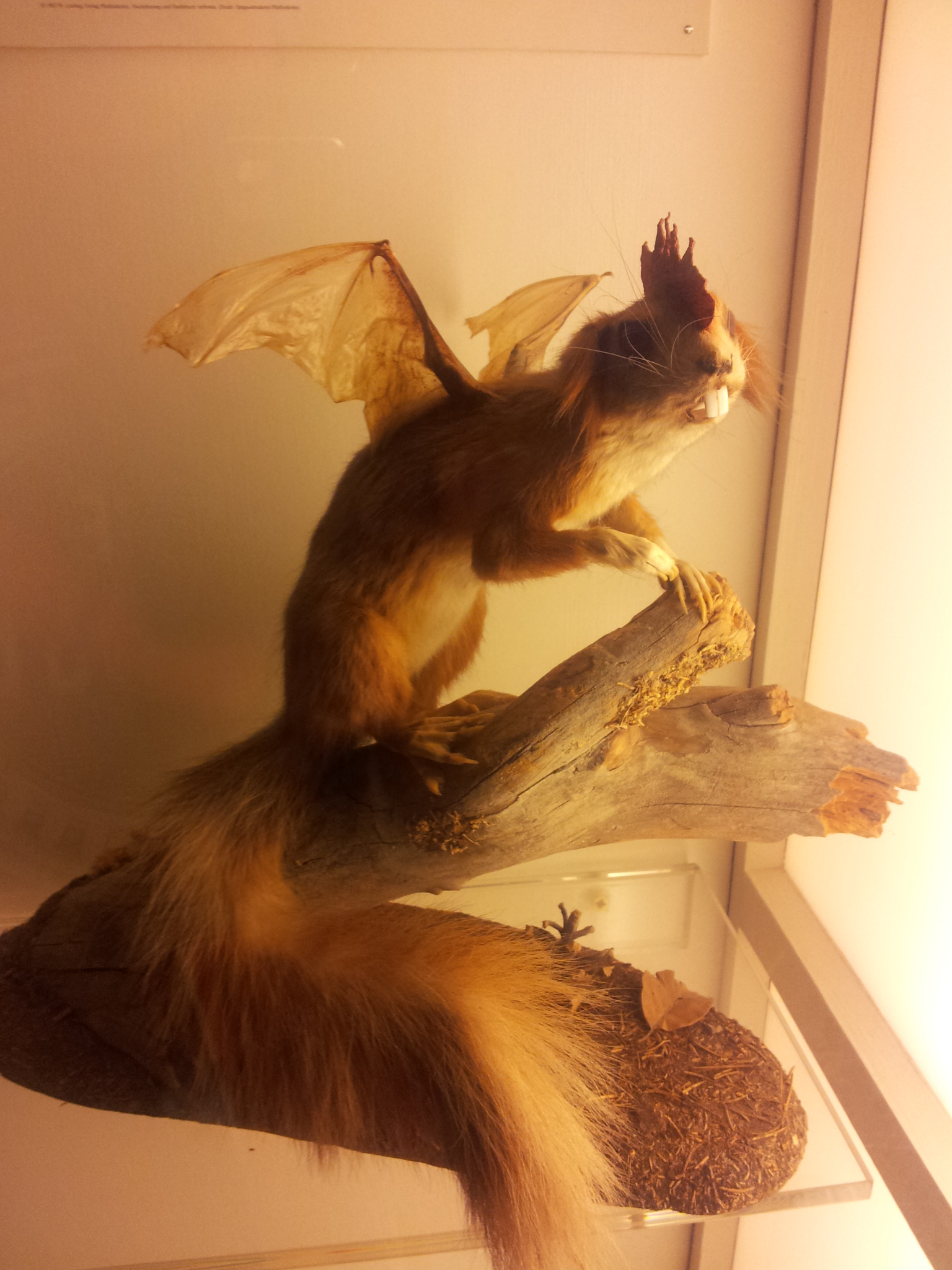
A flight of fancy?

Some quizzical quackery:

Echt toll, meine Freunde! A bit more about wolpertingers and their kin is here. Pokemonologists, take notes. People laughing at the alternative name for wolpertingers, “poontingers,” behave…

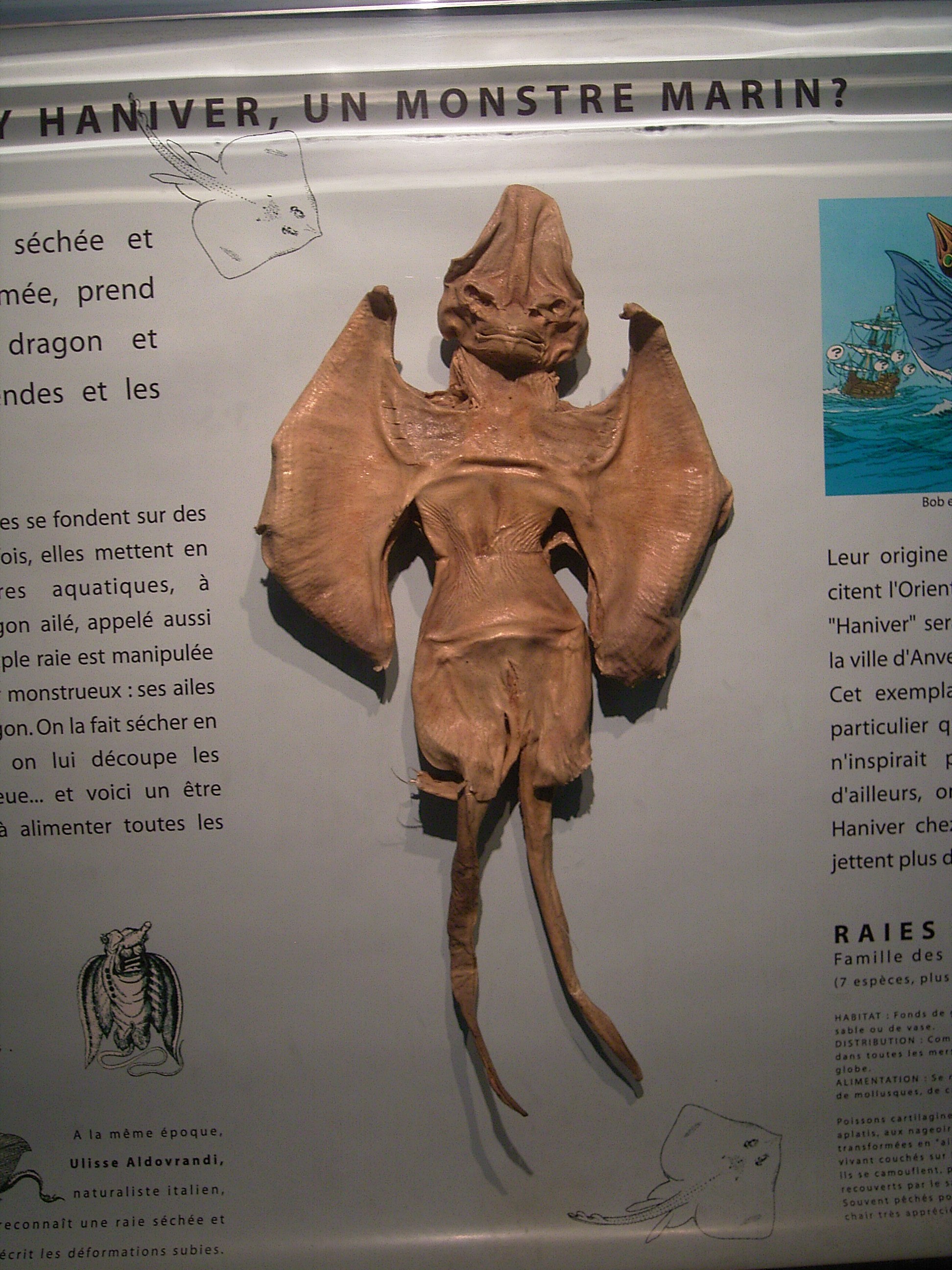
One can hardly discuss chimeras and fake animals/taxidermy hoaxes without getting into mermaids (no, I won’t discuss THAT recent TV debacle) and then into Jenny Hanivers; “devil fish”, seabishops or sea fairies. The hanivers go back to at least the 16th century, even being used by sailors to prove they’d had an exotic adventure after their voyages, or sold to supplement their meager salaries. There is plenty written on this phenomenon and how numerous people were skate punk’d (AHEM) by a simple dried fish. But then, skates (not to be confused with an altogether different, but related, kind of chimera) do look odd, and many people don’t know their anatomy or are just credulous, prone to self-deception and confirmation bias.

Stuart Pond was so kind as to send pics of a J.H. that he has in his shed (spinoff potential: What’s in Stu’s Shed???) for me to share— thanks again man! Note the apparent “legs” (probably organs used in mating’; claspers; but sometimes just snipped bits of the tail, which is also evident here):

Obviously the typical Jenny Haniver is a skate that has been messed with a bit to emphasize the humanoid features, but then there’s a sucker born every minute, and PT Barnum famously took advantage of that rhythmic nativity in the 1842 hoax he called the Fiji (Feejee) mermaid, which was a monkey’s head/torso with fish body and papier maché coating. Below, a wolpertinger-like “horn” is visible; this is the remnants of a nasal process of the chondrocranium of the ray; the flanges to either side of it are parts of the front of the head that have been cut apart to make the haniver’s head look more humanoid:

With a “face” only a mermother- or chondrichthyologist- could love– note that the “eyes” are actually nasal openings:

And thanks to Sven Sachs for some extra photos of a Jenny Haniver at the Zoological Museum Liege in Belgium– thanks Sven!:


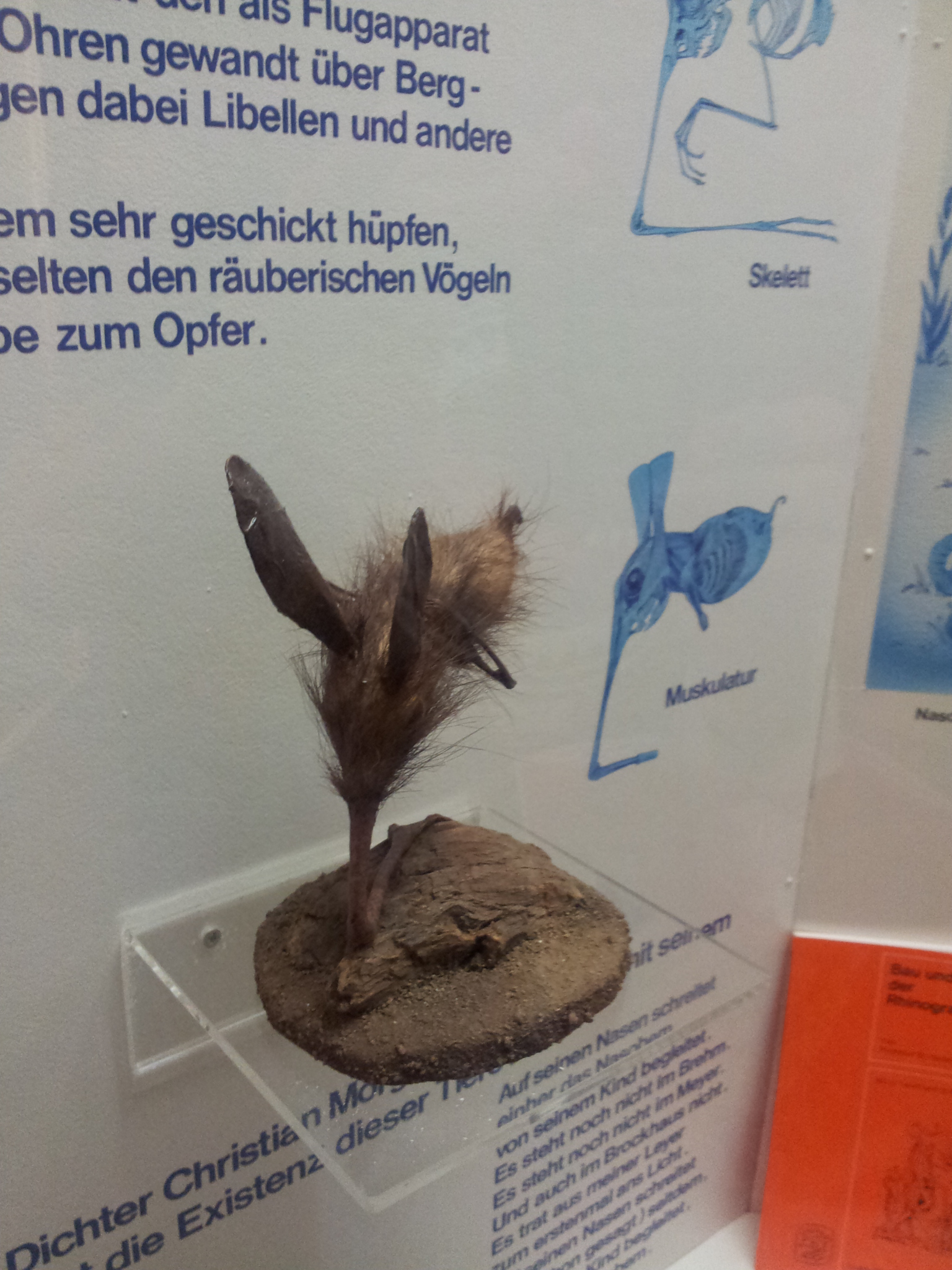
But, in the world of academic science, there is perhaps no greater you-fools-I-invented-a-fanciful-critter hoax/joke than the Rhinogradentia (snouters, or rhinogrades), rumoured in 1905 but first described in Gerolf Steiner/Harald Stümpke’s (latter= pseudonym; AKA Karl D.S. Geeste, Hararuto Shutyunpuke) wonderfully over-the-top, tongue-in-cheekish 1957 faux-scientific monographic book Bau und Leben der Rhinogradentia. Darren Naish‘s blog Tetrapod Zoology (along with others, in 4 parts) has done far better justice to the snouters than I could ever hope to, and others have contributed to the legend. But at least I can share some pics of the first reconstructed (or were they, hmm…?) rhinogrades I’ve ever seen in physical form (again from the Haus der Natur):

Here are the closeups; first Orchidiopsis rapax:

And next Otopteryx volitans:

Last but not beast, an infamous nasobeme, Nasobema lyricum!

Whether this post was hit or myth, please contribute more thoughts, stories and pictures in the Comments below. What’s your favourite hoax story, conglomerated creature, misidentified monstrous mushwee little false beastie or taxidermy horror/beauty? Why do you enjoy fanciful creations like these?

And watch out- those chimeras can pack a whallop!

Read Full Post »

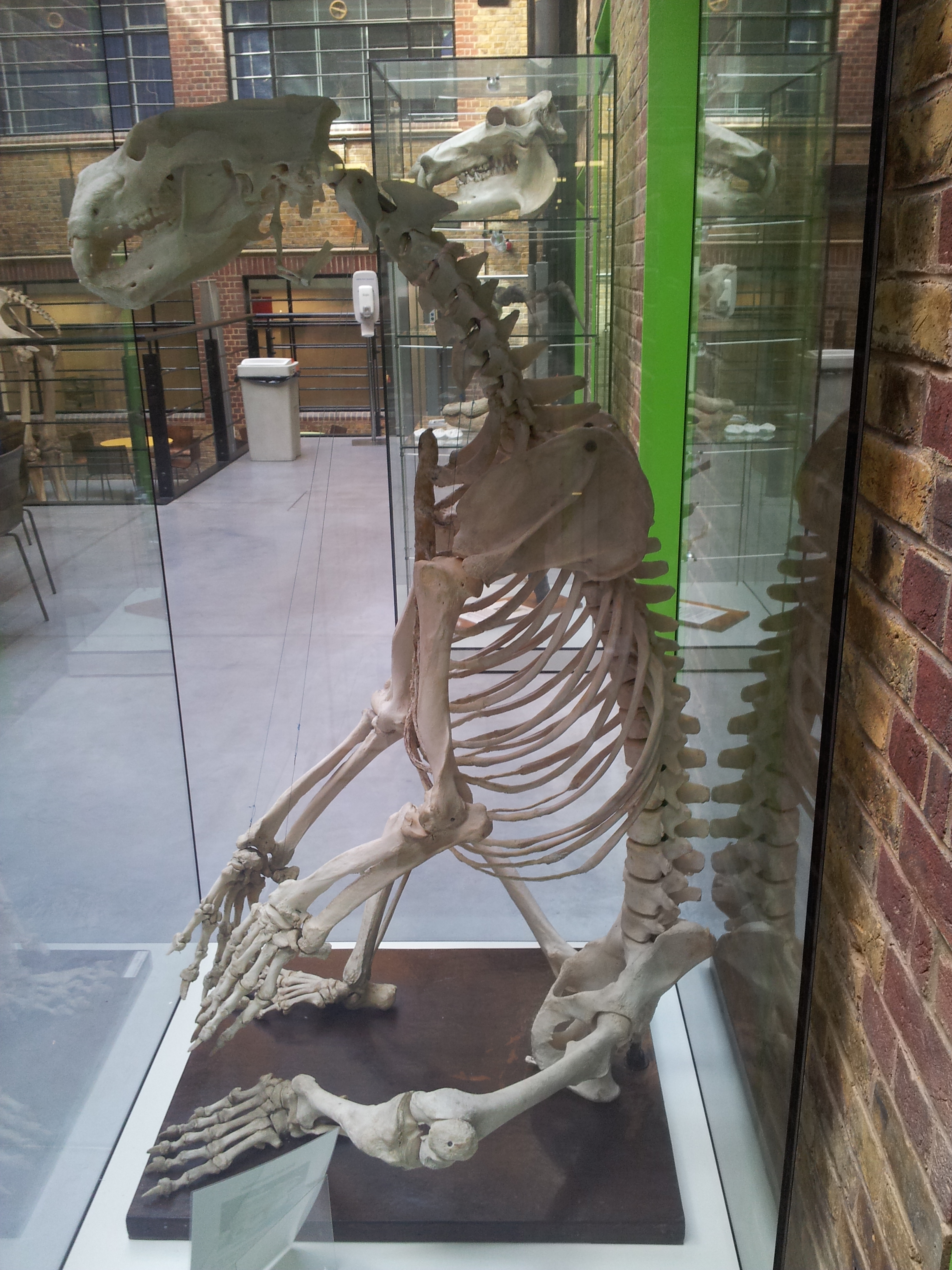
Well, I happened to take some more photos of a few of my favourite skeletons/bones from our Anatomy Museum during my last jaunt over to our Camden campus, and figured I might as well share them. So here you go! (Right now it’s so hot I wish I was a skeleton! Gigantothermy is not always so great) First, two views of our seated polar bear, which I learned this week is a celebrity— a model for the kickass armoured polar bears in the film The Golden Compass:


Then, also out in our cafe area you’ll find some nice smaller specimens in addition to our elephant. Such as:

A decent mount of a three-toed sloth is above; and below I’ll share several skulls including a second hippo (male? quite different morphology from the other one I showed):

And another charismatic megafauna, a ?black? rhinoceros (shown previously as a mounted skeleton in our old hall):

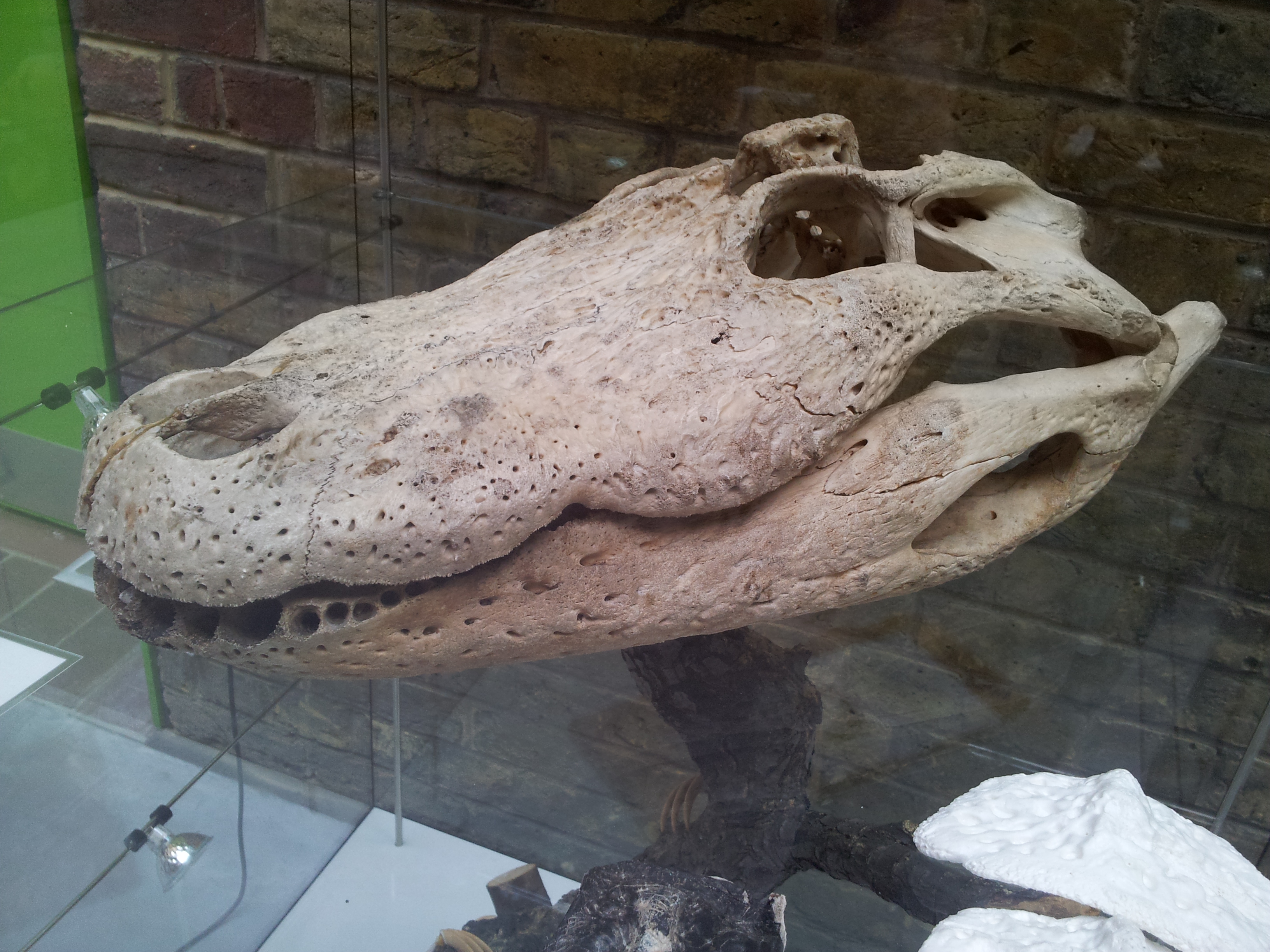
And a small gharial (Gavialis) skull:

Which can be nicely juxtaposed with a more robust Caiman (or our earlier Alligator):

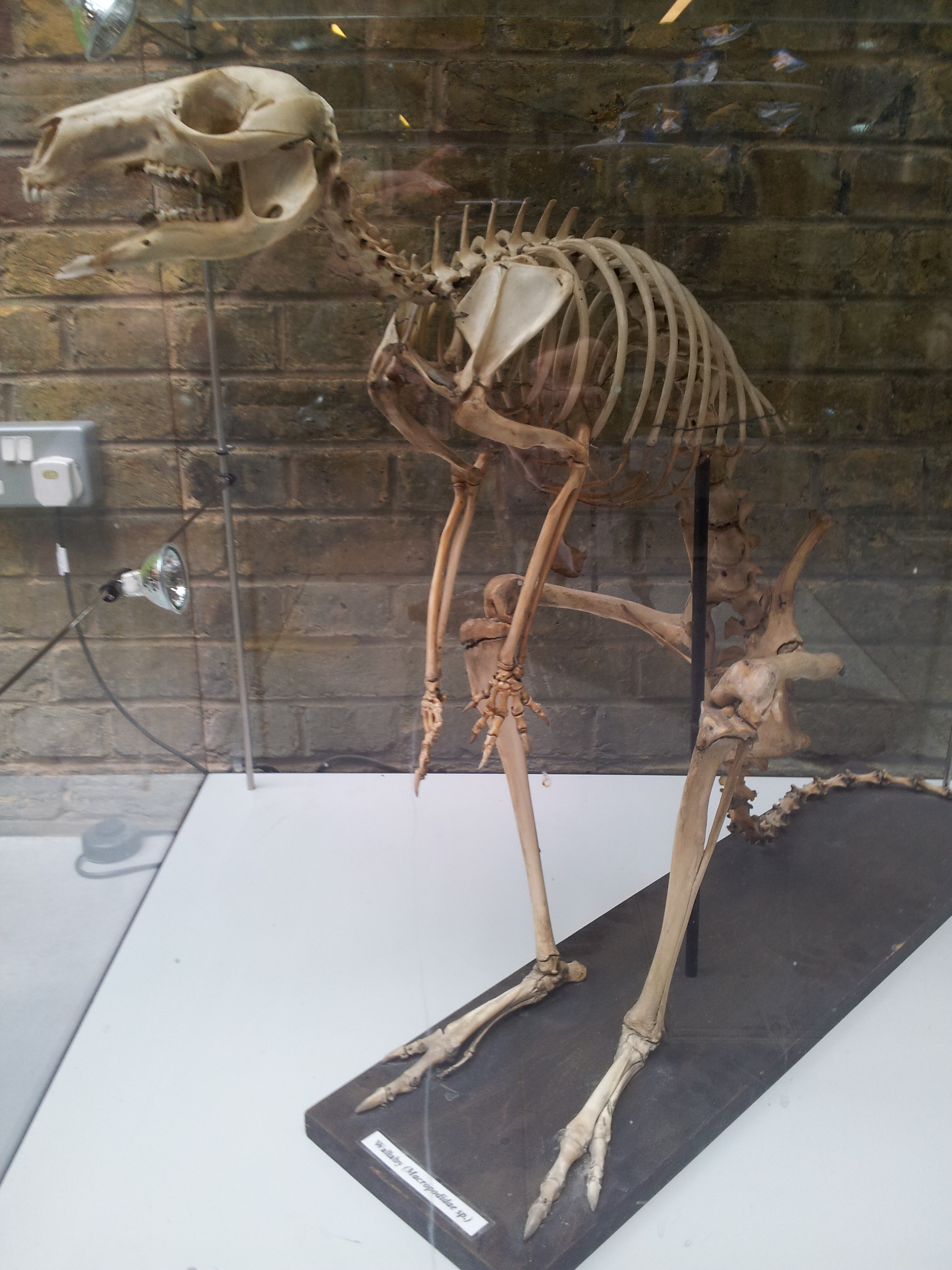
And then a small wallaby:

Let’s go back inside. I have a few more friends for you to meet. Such as our chimp next to a Lucy skeleton (both casts), briefly glimpsed in my first post:

And a really, really gnarly-faced bulldog! Shudder.

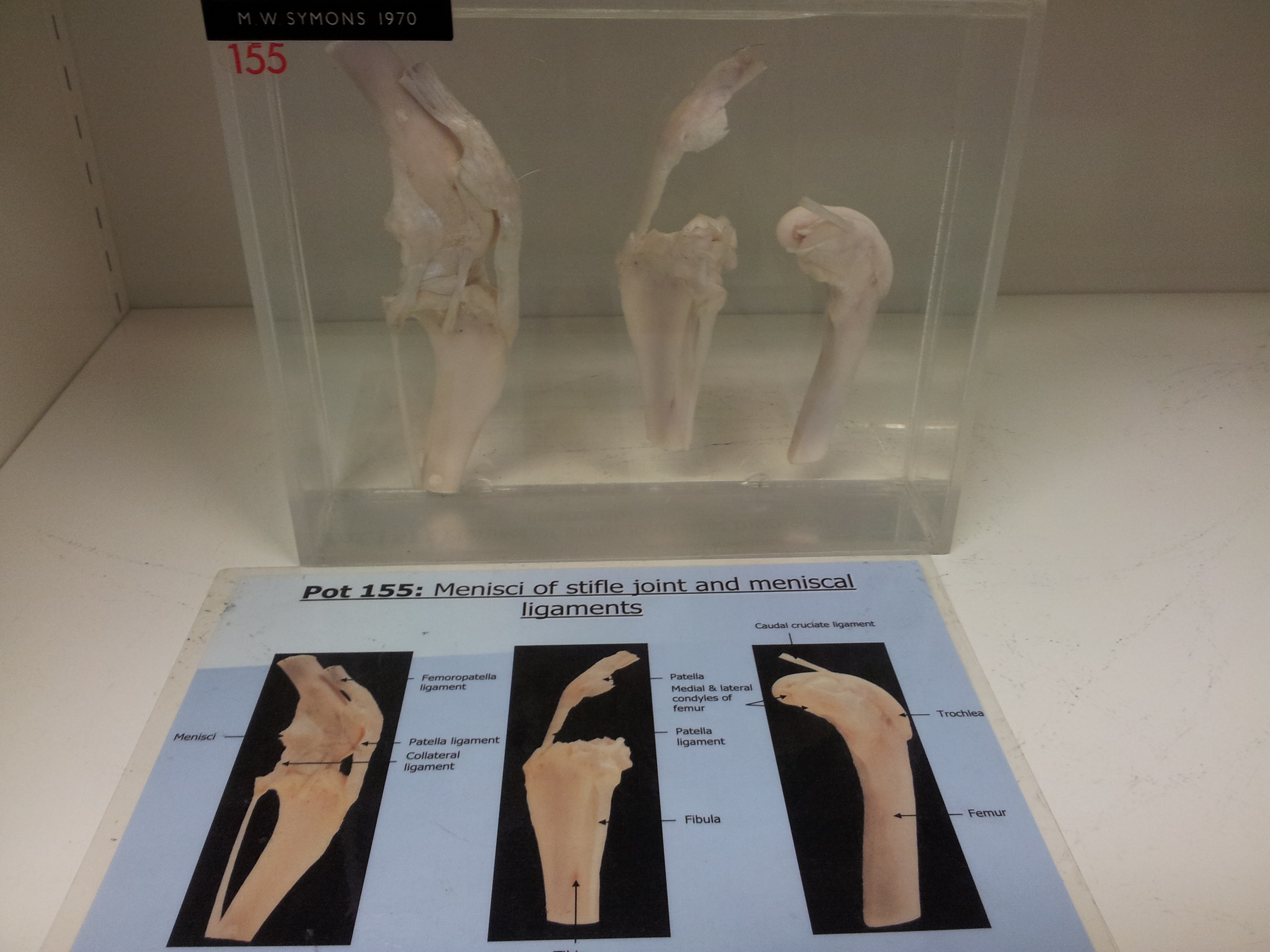
During my brief perusal of the exhibits the other day, I realized I had never shared our nice knee joint dissection in my post on those specimens, nor had I included it in my knotations about knee joints. This is particularly egregious as I am now doing a year-long fellowship/sabbatical to study knee joints, in particular the patella (kneecap) of birds. Here, a dog, with helpful labels of the anatomy around the stifle:

And that’s all folks! I’m preparing a particularly wacky post for later, which will include lots of whimsical anatomy, so stay tuned and keep coooooooool!

Read Full Post »

Well, here we are at the end of our virtual tour of the RVC’s little-anatomy-museum-that-could. Soon we will return to our regularly scheduled programme of dismembered cadavers and frozen body segments. I know you’ve missed them.

This post has a Stomach-Churning Rating (SCR) of 2/10, unless either penis bones or the backs of knees really gross you out (then maybe 4/10 at worst, although there is a link hidden in the text that might really freak you out).

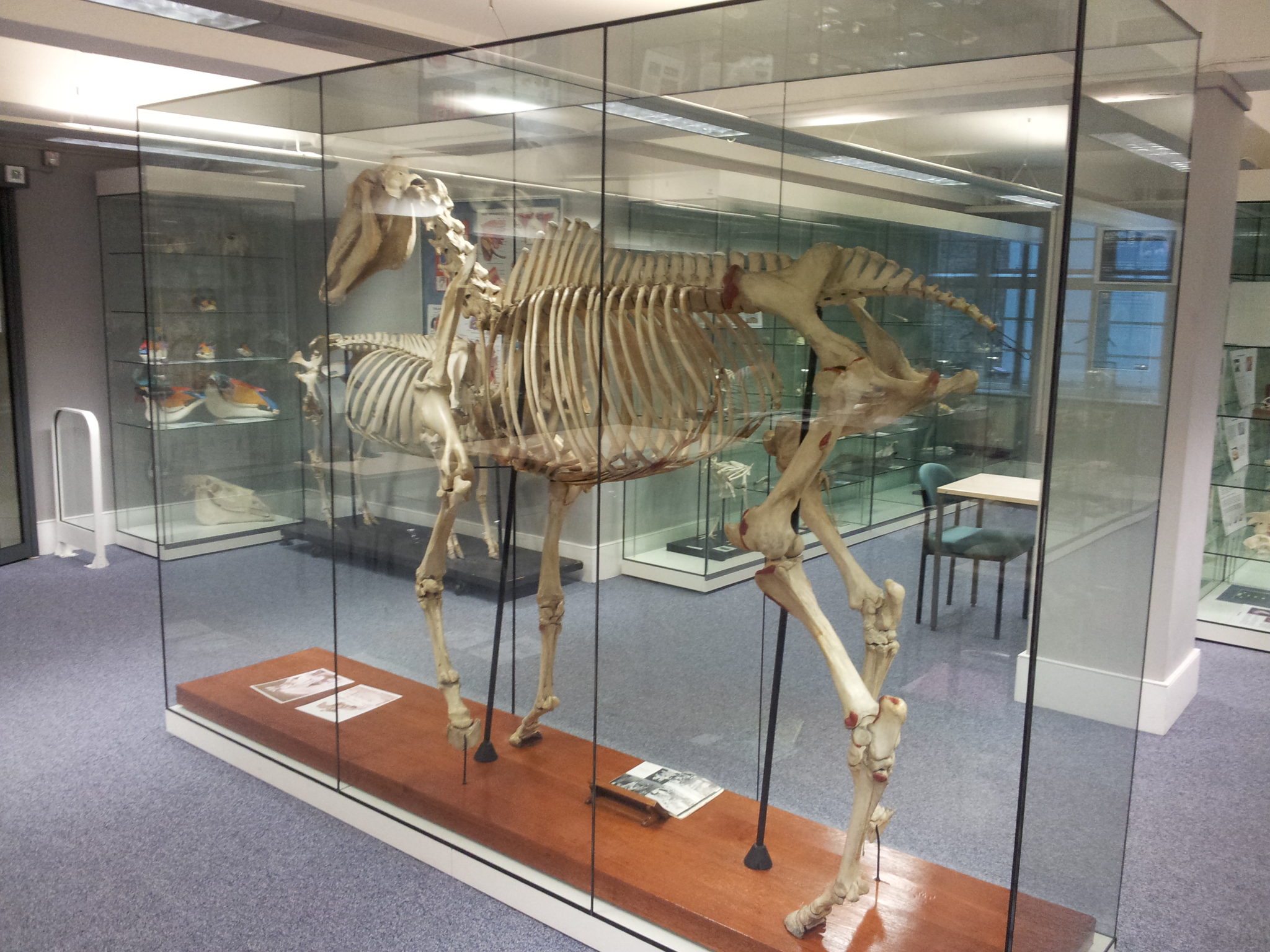
OK, here we go. You might remember this chap, the famed racehorse Foxhunter:

And the museum features sundry other domestic-type species and their close kin, such as this sheep (a Soay Ram):

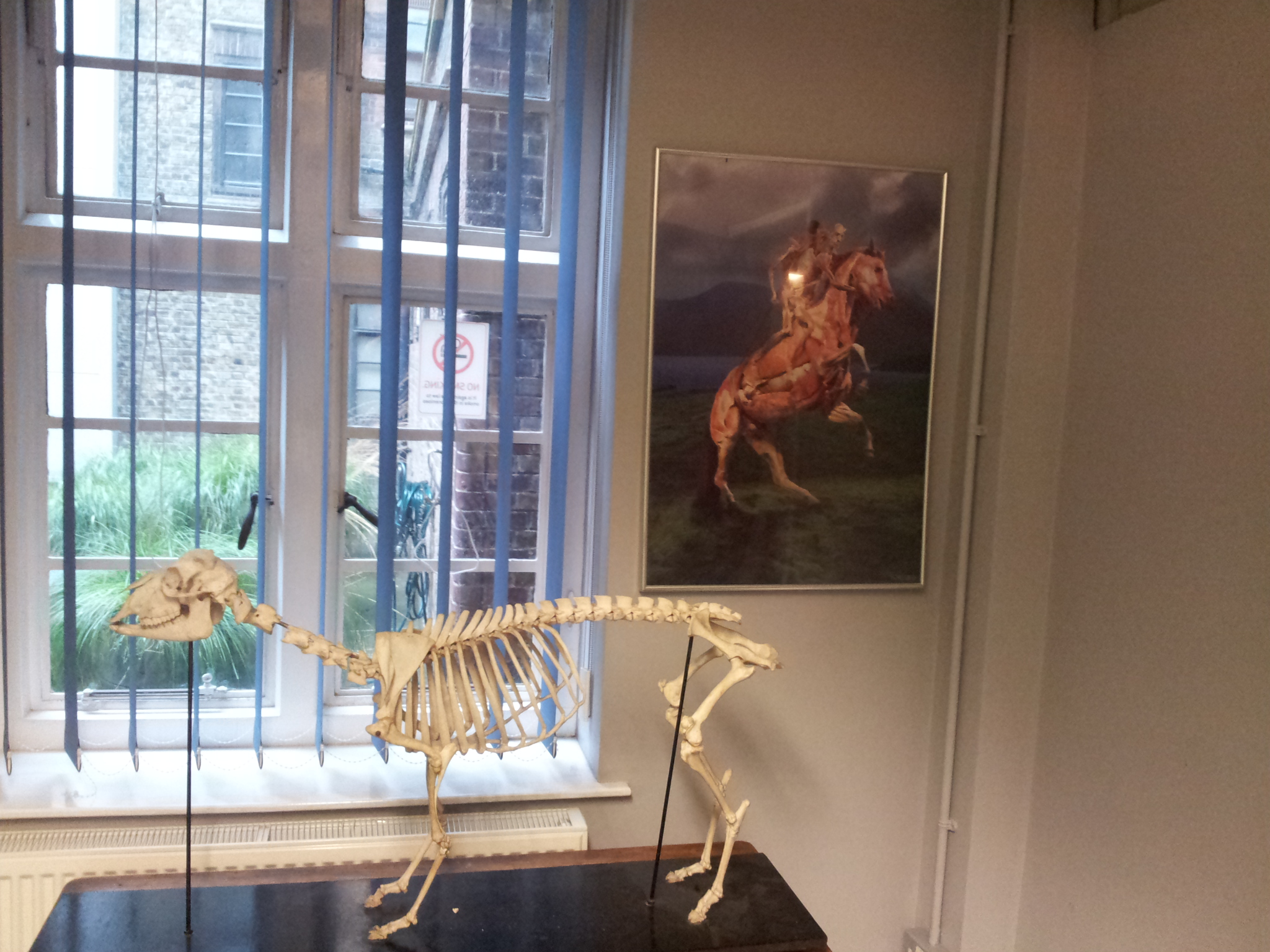
And this skeleton that is probably also a sheep, unless it is a tricky goat (notice framed photo of Bodyworlds exhibit on wall):

As well as his barnyard buddy, a quite robust pig:

But I want to focus more here on the surprises that the museum’s collection of skeletons has to offer, like this tiger poised below the pig:

Along with a wide assortment of smaller mammals such as this kinkajou coatimundi (note: label is wrong; see this Twitter chat we had that solved this mystery):

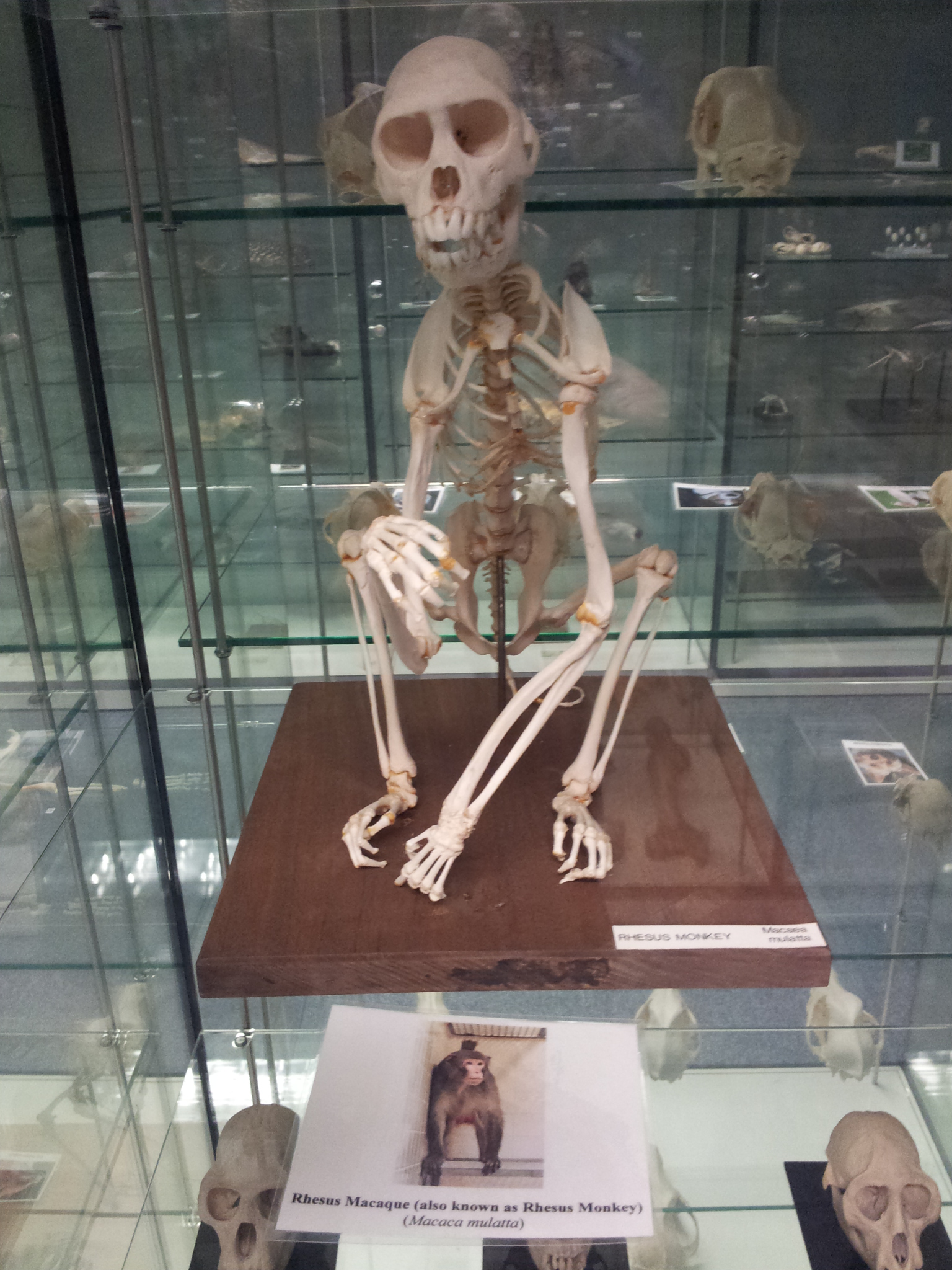
And a rhesus monkey (our primate skeletal collection is not shabby at all!):

And a whole shelf of ossified dog (and other carnivore) penises, oh joy! (os baculum; the “penis bone” of various Primata, Rodentia, Insectivora, Carnivora and Chiroptera– the infamous mnemonic P.R.I.C.C. of comparative anatomy):

But, great as penises may be and much as the internet may love them, there is much more to see here. Carry on reading, or incur the wrath of the giant fossil walrus baculum [oosik]! (this, Freezerinos, is called an argument ad baculum, I have just discovered; had to share!)

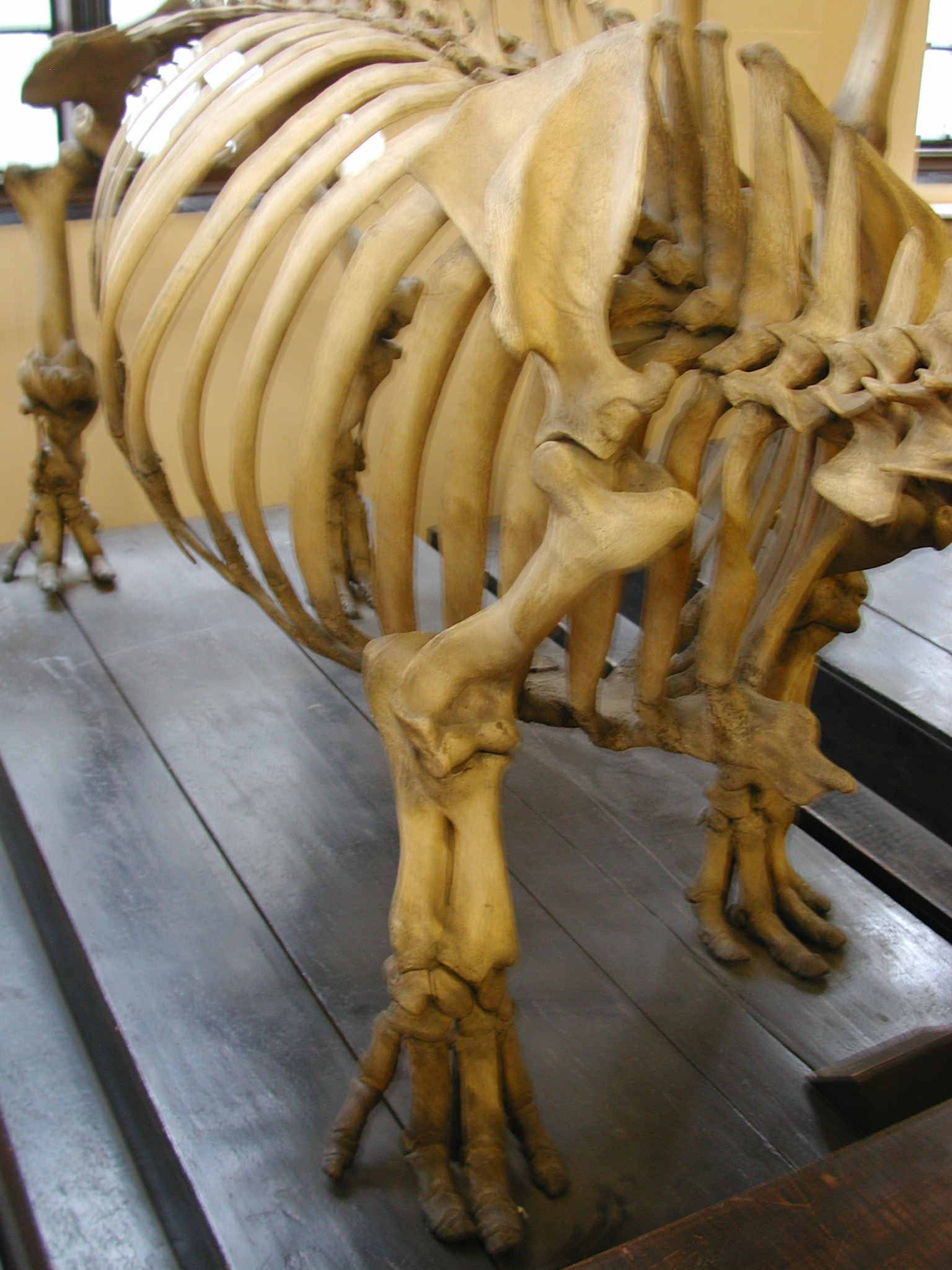
As I mentioned way back in my first post, what really sold me on the museum when I first viewed it back in 2003 was the megafauna! Here’s a photo I dug up of how the rhino used to appear in the museum’s old settings:

And the hippo was close by:

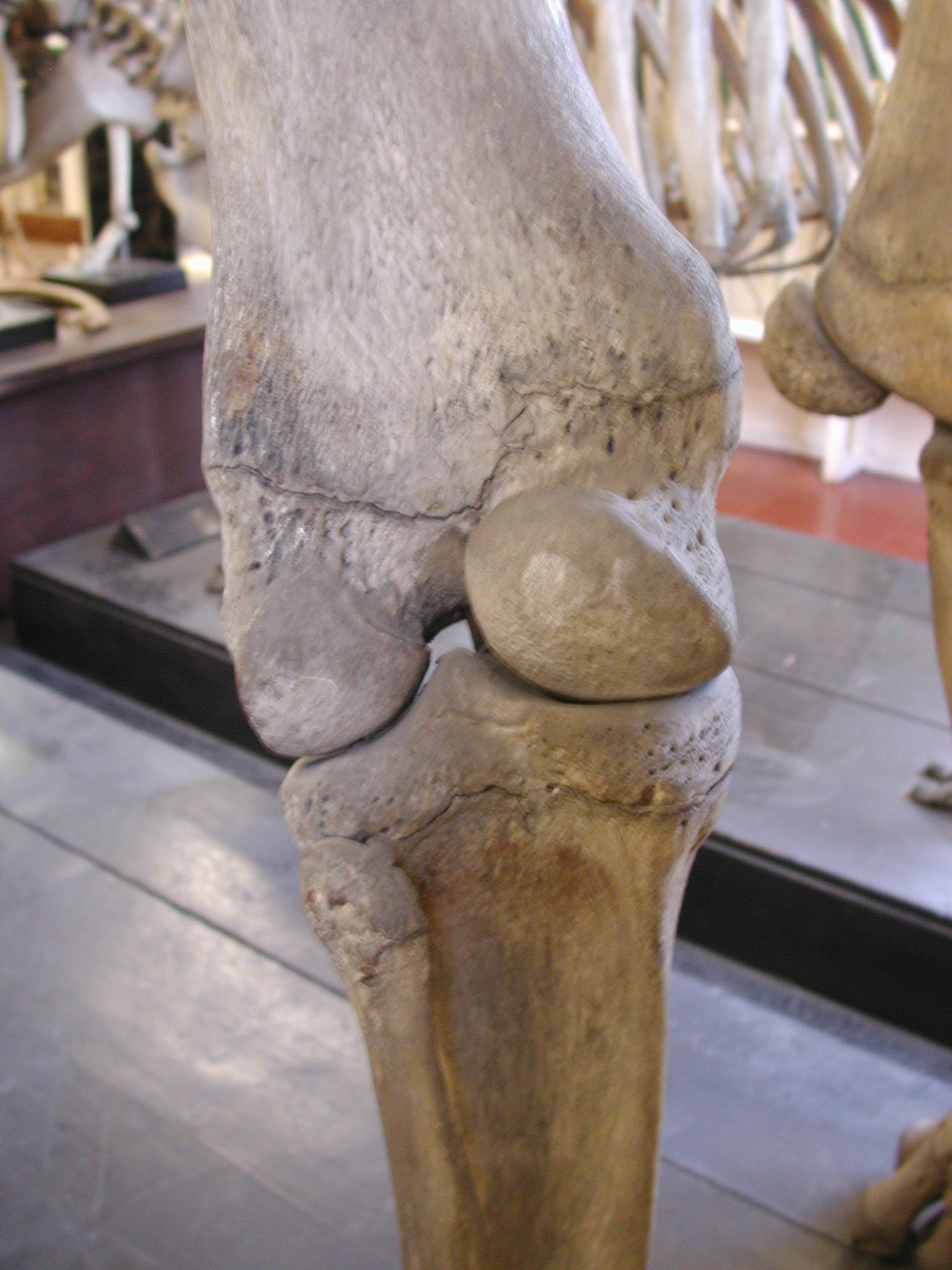
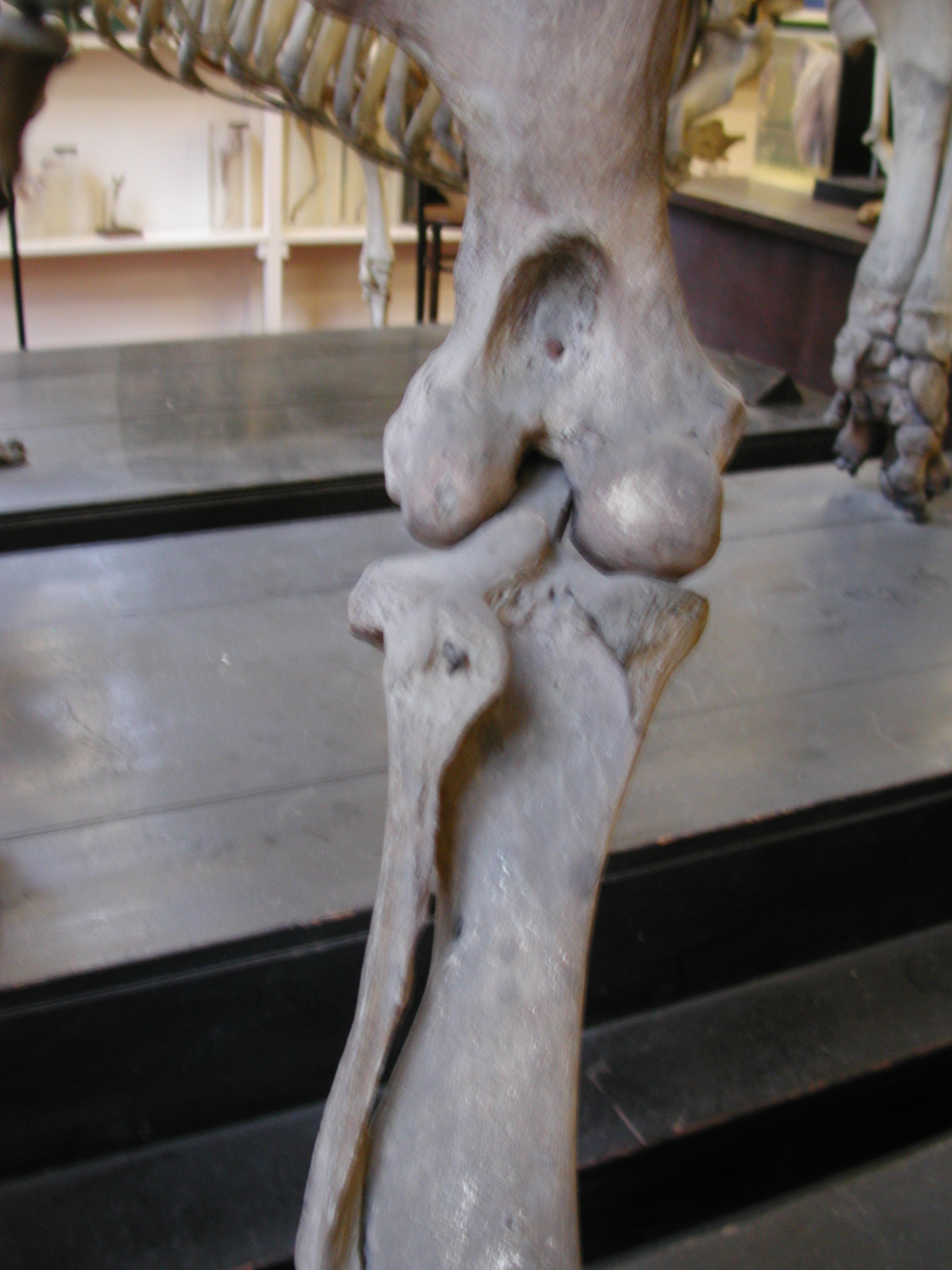
My off-with-their heads bias rears its ugly cranial appendage here, but I’ve already shown you its skull, so rest easy craniophiles; you had your day of glory. It’s time to kneel before Zod, or in this case kneel before my collection of animal knee photos! I hate to remind you of the trauma, but I did promise this with the mystery emu knee dissection, so suppress your PTSD [knee TSD?] and come along quietly now… Let an elephant knee soothe your tortured soul (from here on, all knees are left knees, in caudal/rear view):

I’m going to continue on without providing longwinded interpretations. I’ll leave you to draw your own, and just enjoy the diversity of knee anatomy, with some surprises toward the end. Descending in the size scale from multi-tonnes to semi-tonnes, first, a rhino:

And then our hippo:

The RVC does not have a mounted giraffe skeleton but I can show you the knee from our dissections, now nice and tidy (note the absence of a fibula, reduced to a small tarsal (ankle) bone in many artiodactyls– but not pigs or hippos as you can see above; what consequences this change has for knee joint mechanics is entirely unknown! However, the fibula has such a small/nonexistent connection to the femur/knee joint in many large mammals that the consequences may be negligible; who knows.):

Now, a horse of course:

One reason I find knees so fascinating scientifically is that they are mechanically so complex (and often over-simplified as simple hinges) and yet so fragile (knee injuries are common in many species; poorly adapted humans in particular! To wit…). But I also love knees because they feature prominently in discussions of form and function in extinct animals; in particular, dinosaurs. Let’s not forget Scrotum humanum, either…

Consider a few representative dinosaur images (mostly from the AMNH; not RVC!) here, starting with my old pal Tyrannosaurus (sorry, dislocated knee in this mount; ouch!):

Now, a ceratopsian (probably Triceratops??), I think; photo-labelling fail! Could easily be some sort of hadrosaur or something, though:

For what its worth, sans massive cartilages, a sauropod knee to round out the holy trinity of Dinosauria:

Consider here how the fibula plays a greater role in the dinosaurian knee joint (as in birds, too, to some degree), compared with the mammals above. But also consider the whopping amount of soft tissues missing here, as made evident in the emu post. Daunting indeed.

We kneed to know more about knees before we can knavigate their aknatomy and make knew iknfereknces about their fukntiokn! And so I’m coming back full circle to my earlier anatomical studies this year to look more closely at knees in a variety of species; more about that later.

And that’s the end. I hope you liked the kneet photos and knurture the kneed to come back for my knext post, which will kontain more knormal spellikng.

Read Full Post »

« Newer Posts - Older Posts »