Feeds:
Posts
Comments

Posts Tagged ‘what the HELL is that?’

I’m not sure if this is a new tradition at this blog or not (probably not), but hey let’s give it a name: an Anatomy Vignette. Just something curious I notice during my research that deserves more than just a tweet. I borrowed some bones from the University of Cambridge Museum of Zoology (whom I love, because they have great exhibits and are very research-friendly) to CT scan for some projects. I noticed this:

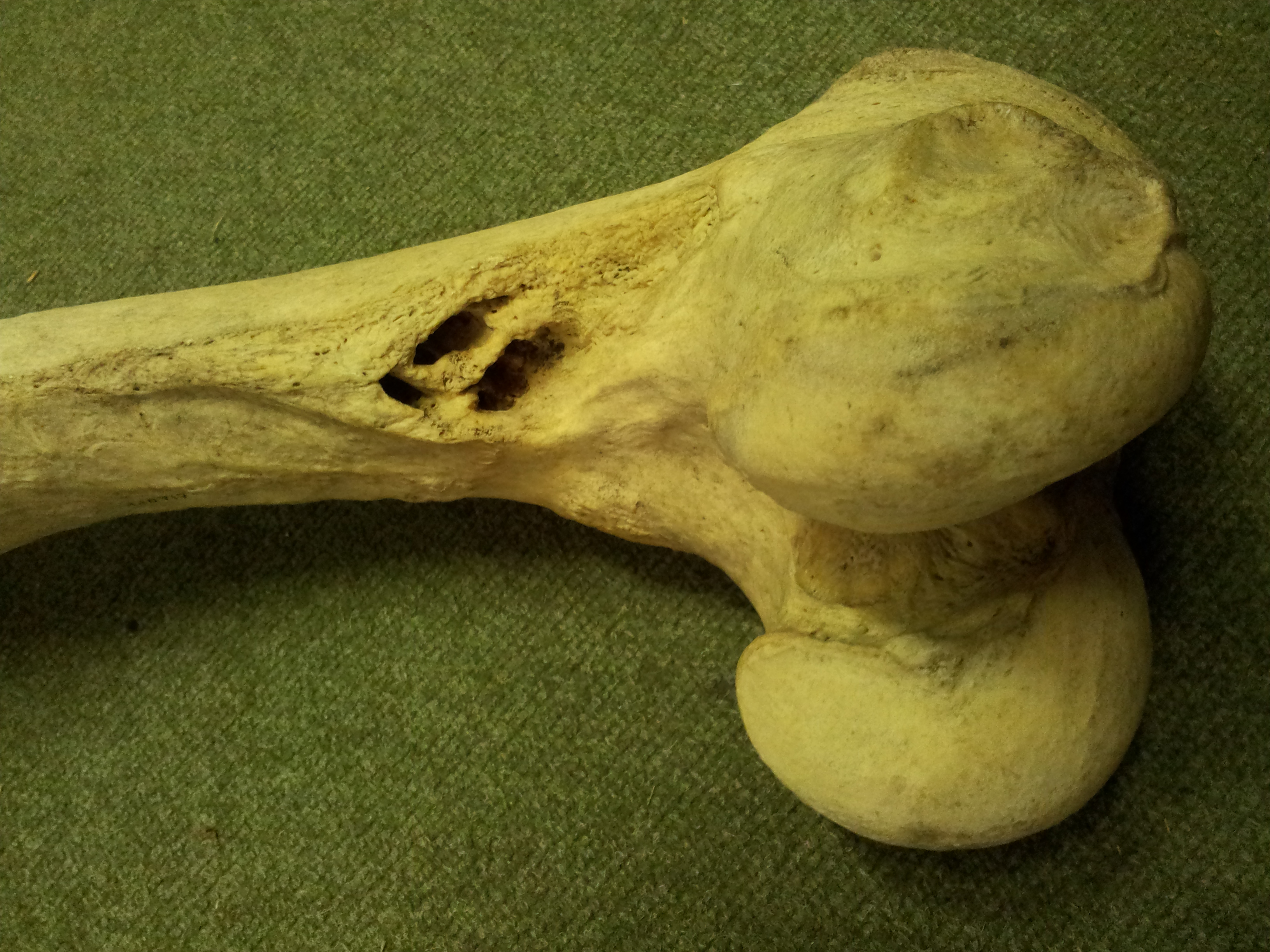
femur-path

And I thought “Ouch! That’s nasty, dude.” (the holes in the bone just above the knee joint– these should just be a roughened area where the adductor muscles and other leg muscles attach)

So I was interested to see the CT scan images to find out how these possibly osteomyelitic lesions continued into the bone. They’re really pervasive, continuing into the marrow cavity quite far up the femur, as this shows (good CT-viewing practice to match up what you are seeing in the photo above with this movie):

I would be surprised if this was not the reason this animal died (presumably being euthanased at a UK zoo). There would have been extensive infection and pain resulting from this bony disease. How did it originate? Who knows. Maybe the animal strained a muscle and bacteria got inside, or maybe there was a fall or other injury. Hard to tell.

Oh, and also note the lack of a true marrow cavity in hippos, which is true for all the long bones. The “cavity” is filled in with cancellous bone. Same with rhinos, elephants, and many other species… science doesn’t entirely know why but this feature surely does help support the body on land, and grants at least some extra negative buoyancy in water; at a cost of some extra weight to lug around, of course.

And so ends this Anatomy Vignette.

Read Full Post »

One for the weekend morning crowd here. The early bird gets the… cadaver?

At last I’ve managed to pore thru my photos and find something that works for a Mystery Dissection image, so without further adieu here it is! Answer will come tomorrow (Monday) night.

What is the largest structure evident (i.e. what is the picture mainly featuring) and from what group of organisms (be as specific as you can).

Remember, we have a scoreboard now, and rules for scoring. See here. Regular points for this round– Xmas is over, folks!

To recap, Mark Robinson is in the lead w/14pts, tied w/Filippo, but with Heinrich and RH close behind at 12 pts, followed by the 5-person Gang of Awesomeness at 7 pts.

Stomach-Churning Rating: 7– gooey ripeness.

Difficulty: Hmm, no comment.

Go! May Maytag be with you.

Mystery Dissection 11

Read Full Post »

More mysterious morphology for you

I hope that you like it too

But there is a trick

The bone here is thick

And the beast might be rude, it’s true!

(What is it and what from? Answers must be in limerick form to count. Pilot scans explained in this post.)

This post is dedicated in memory of the late, great Professor Farish Jenkins, Jr; one of the best anatomists and functional morphologists ever. Excellent retrospectives here and here and here.

Aaaaaand here is the current scoreboard, as promised last time; starting from this post onwards–

RULES: 5 pts for correct, spot-on and FIRST right answer, 4 pts for very close or second, 3 pts for partly right or third in line with right answer, 2 pts for a good try, 1 pt consolation prize for just trying, or for a good joke!

If you post as “anonymous” name then it all goes into the same tomb of the unknown anatomist.

If you change your answer, you lose ~1 pt. Answers posted via Twitter, Facebook, email or whatever do not count! No appeals. I am a frigid dictator. 🙂

(more…)

Read Full Post »

Boo!

At the Structure and Motion Laboratory, we’re not boring scientists who robotically focus only on writing grants and publishing papers, much as senior management might want us to pretend. We’re human. We like fun. And we like Halloween. And brainssss! What follows is some good, jolly, Halloweenerly, spooky, sciencey fun that we came up with yesterday (in between writing grants and papers, ahem).

First, our surreal B-movie extravaganza: It Came From the Biomechanics Laboratory. See if you can piece together the plot:

(subtitle: Open John’s freezer… if you dare!!!)

And in case you want more of the ritual sacrifice of the pumpkin at beginning, here are two versions in glorious slo-mo, from our AOS high-speed digital video cameras:

and

Finally, an outtake from the film, in which Gary, the RHex robot from Andrew Spence’s Spencelab, takes his gory vengeance on a hapless cameraman, and then turns on his masters!

Thanks to our brave participants: Miguel Lamas (who compiled the first video), Luis “Demon Emu” Lamas and his squad of brave –but now devoured– emu-wranglers from the RVC, Andrew “Robo Arrigato” Spence, Jeff “Giraffe Leg” Rankin (nice acting, Jeff!), Olgascoob Panagiotopoulou-doo, Becky “Schrodinger’s Evil Cat” Fischer, Rich “Sit, Stand, KILL!” Ellis,  Hazel Halliday, and finally that unnamed plucky, cute little kitty-girl (lone survivor and heroine of our story)!

Happy Halloween… muhahahahaaaaaa!!!

Read Full Post »

A quick and easy Mystery Dissection post for you today– these objects are left over from a dissection we did awhile ago. What are they, and (for extra points) from what species (be as precise as possible)?

Speed round. Let’s see how many correct answers we can get in the next 24 hours!

Stomach-Churning Factor: 1. They won’t bite.

Difficulty: small image, oblique angle, object on the left side of the image is in the way (and not related to this post).

This will lead into a full-length blog post, hopefully to come sometime late this week, after Halloween. And there should be a Halloween bonus post this year!

Go for it!

Read Full Post »

Hi folks, as my birthday present to you, and big thanks for racking up 70,000 blog views in 7 months (and my 50th post!), here is a new installment of Mystery CT Slice!

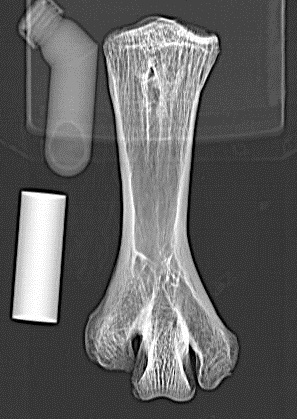
This time with a pilot (or scout) scan of an odd object. A pilot/scout scan is a quick, low exposure scan used to plan a series of CT slices, which shows a a larger area that is then narrowed down to focus just on the object of interest and a bit of buffer room for those slices. It generally isn’t used for much else, but sometimes can make a neat picture. As you can see here, the pilot scan area was excessively massive relative to the object. The two odd objects below the primary object of interest are scanning phantoms, used to calibrate density from Hounsfield units to actual real-world density (one is water at 1 g/cm3; the other is “cortical bone” at 1.69 g/cm3). Ignore them.

But what is this object and from what taxon? Be as specific as you can, but pinning it down to genus/species level will be bloody hard!

Stomach Churning Rating: 1/10; it doesn’t get much tamer than a pilot scan.

Difficulty Level: small image, hazy, not a lot of diagnostic traits visible, 1 main element.

Read Full Post »

It’s puzzle time again! For a change, and to make this installment easier but fun and different, I’ll use a movie, of a 3D skeleton segmented from 480 CT slices, rather than just 1 CT slice. Let ‘er rip, folks!

Difficulty: not to scale, and dentition/jaws obscured.
Stomach-Churning Rating: 1/10; c’mon, it’s a CT scan!


Read Full Post »

(The following post has a Stomach-Churning Rating of 3/10; the dried fish may not get you, but the bad jokes could. A respite before I slap some freezer-spawned Grand Guignolishness on you in future posts.)

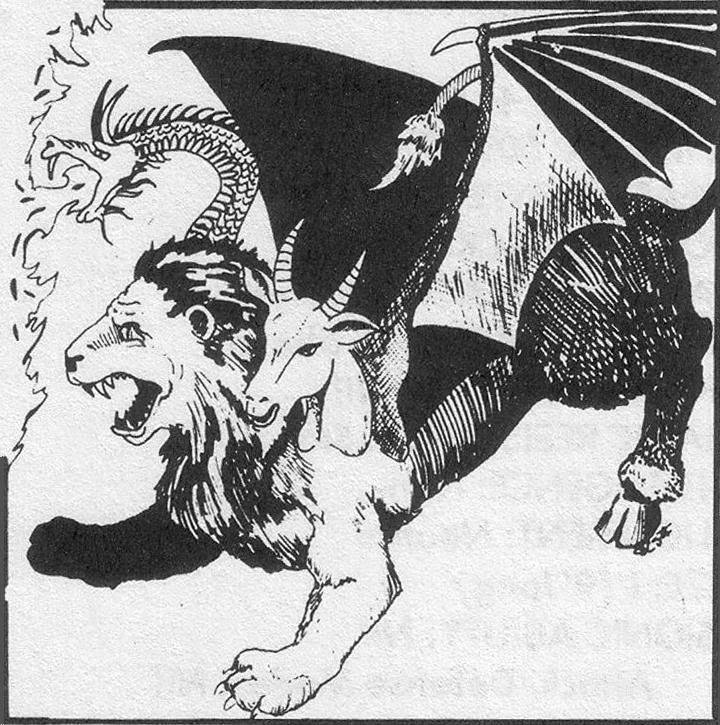
Continuing this crazy summer’s theme of anatomy exhibits in museums, here’s a different twist: using cadavers, or mockups of animal bodies, to create chimeras — fusions of the bodies of multiple species to create new, fanciful organisms. This post was inspired, and will be illustrated, by my visit to Salzburg, Austria’s Haus der Natur, which is well worth a visit for its eclectic cornucopia of exhibits. I’ve also read that the Field Museum’s Mythic Creatures is worth a peek. The post is particularly timely as true chimeras are more and more a thing of scientific reality these days (unsettling testimonial here), although lion-(dragon/snake)-goat hybrids are not coming anytime soon–we can all hope. Enjoy the links! I’ve added a lot of external links to more content if you want to further explore this post’s subjects.

Anyway, my favourite Salzburg escape (from Mozart overdoses that are an all too real- and lethal- threat) was the “Fabel und Mythos” exhibit in the “Mensch und Natur” section of Haus der Natur, which is about just what it sounds like: how natural history and mythology/fantasy intersect. That theme is a passion of mine, as a sci fi/B-movie monster/horror/fantasy film and book fan and as a scientist. It is a big part of why I became a scientist (especially evolutionary biologist/anatomist/palaeontologist) — the junctures of art and science, imagination and reason, fantasy and reality, fascinate me, and if teamed up with the grotesque, monstrous, whimsical and nightmarish, I’m helpless to resist, much as I suspect many of this blog’s readers are. So sit back and enjoy.

Chimeras (in the broader sense of mixed-up animals) have a long history of cultural significance, from Greek myth (and an atrocious recent film featuring The Worthington) even to the godfather of taxonomy, Carl von Linne, and his Animalia Paradoxa. The chimeras (and basilisks, cockatrices, etc.) have featured prominently in the art of the past as well as of the present. People today remain fascinated by the role chimeras and other anatomical tomfooleries have played in hucksterism and hoaxes, as evidenced by many online exhibits such as the Museum of Hoaxes, 15 Craziest Biological Hoaxes, April Fool’s hoaxes, kickass artworklamest hoaxesposts by The Bloggess, sightings of real (i.e. freakish) unicorns in real life, and taxidermy-gone-berserk sites like here and here and here and this cautionary tale; this also overlaps with cryptozoology and WTF-is-that internet fetishes. And let’s not forget the man-bear-pig. No, we shan’t forget that… Nor shall palaeontologists soon forget some famous chimeras in our field, particularly the infamous Piltdown man and Archaeoraptor. These hoaxes incidentally, ended up being not just a temporary embarrassment for science, but also an exemplar of how science is a self-correcting process, so frauds inevitably get unmasked– and in some cases (e.g. Archaeoraptor consisting of two very important legitimate fossils!), science makes new discoveries and advances in that process of corrective peer review.

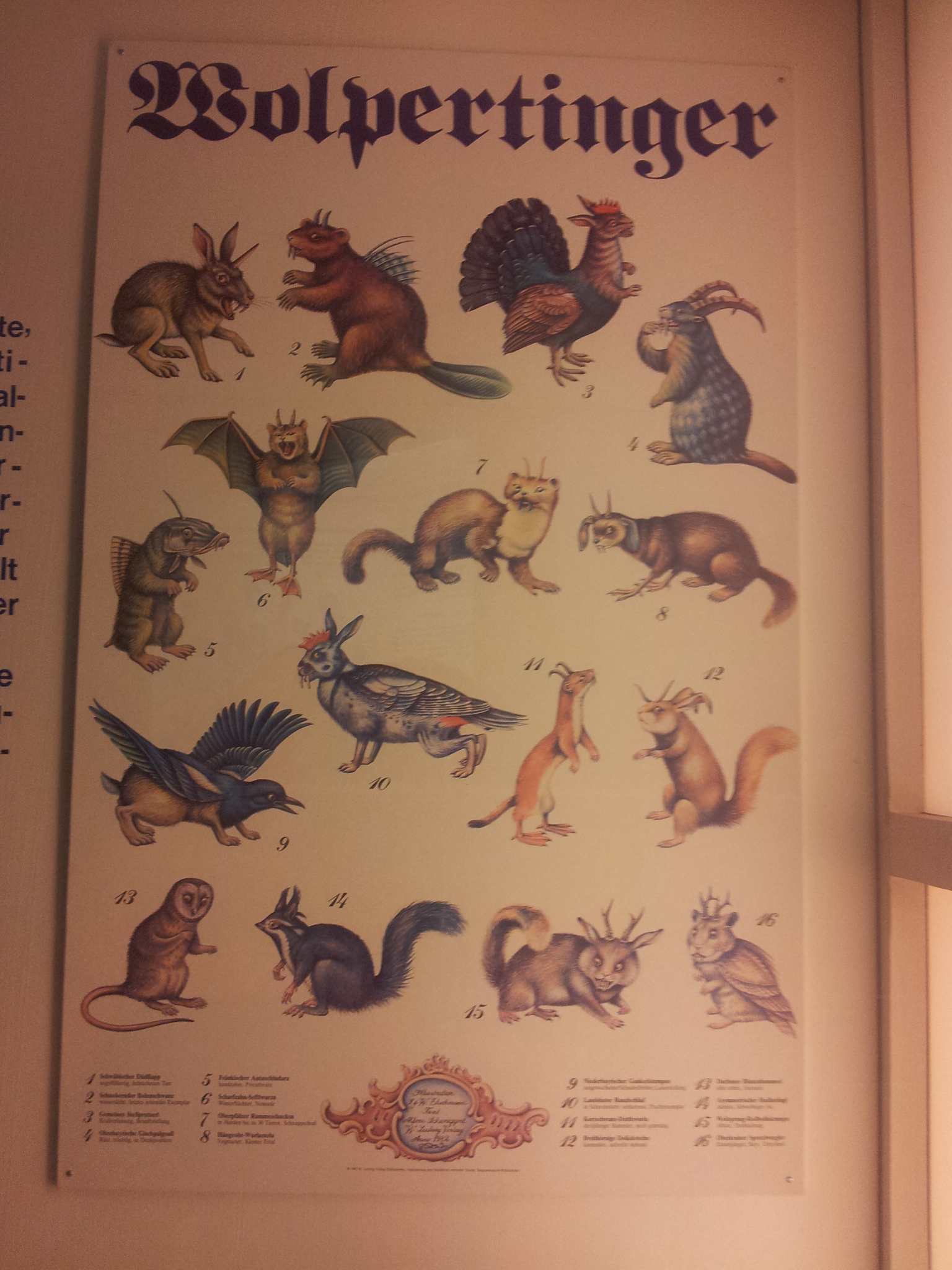
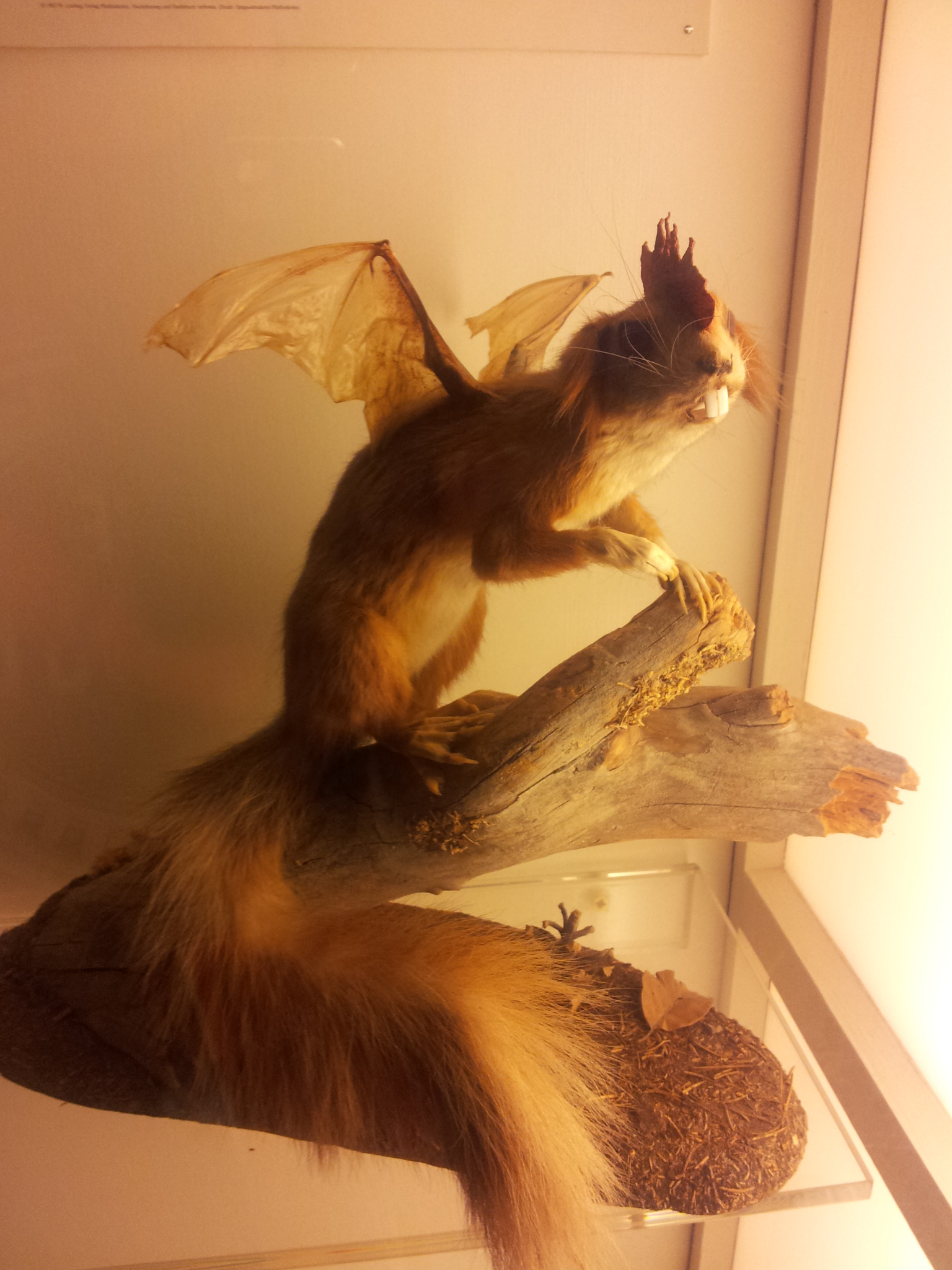
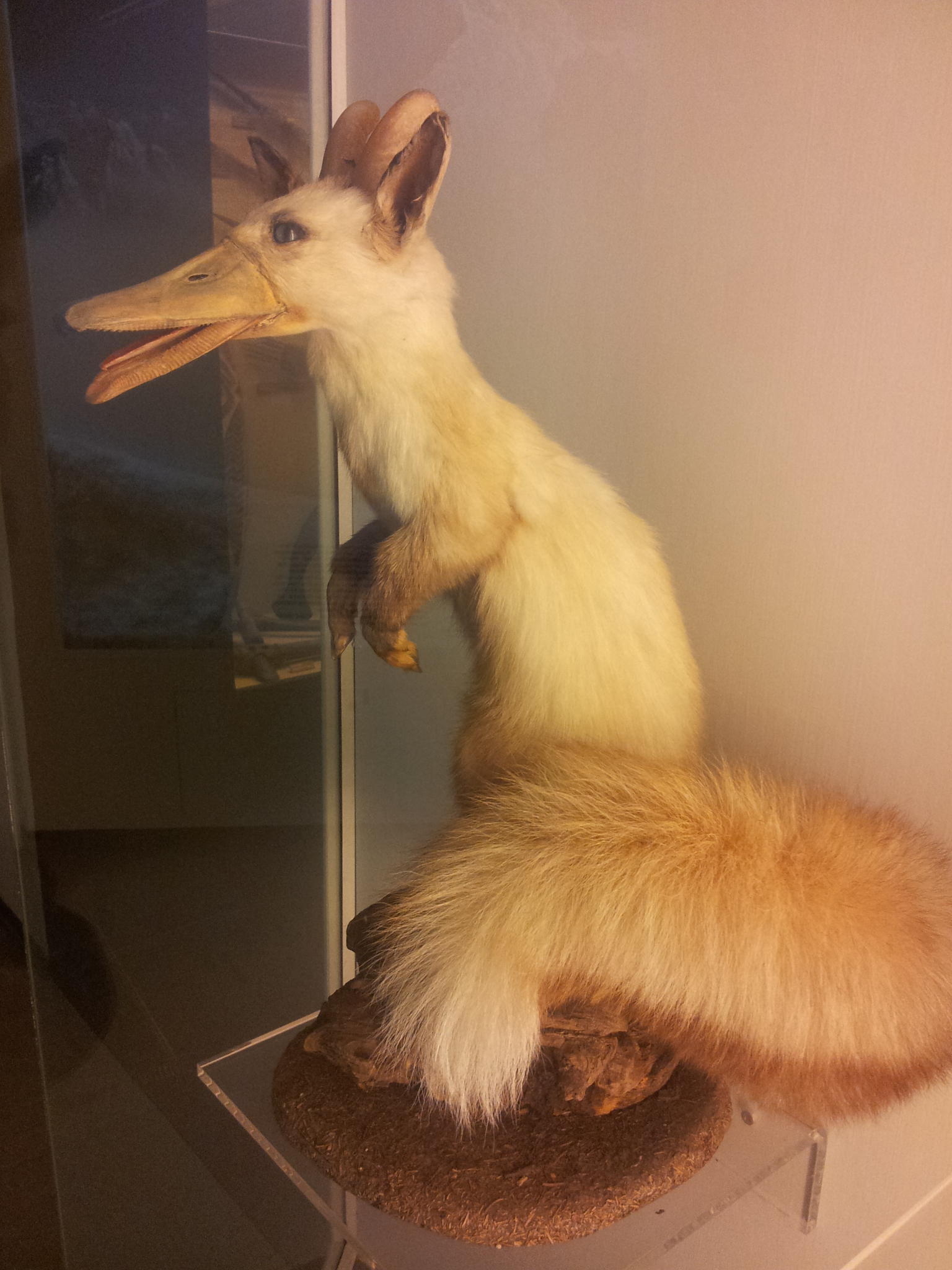
First up in this blog post: the Bavarian Wolpertingers (leaking into native Austrian culture as the Raurackl; AKA Rasselbock, Dilldapp, Skvader and other names; and leaking into video games too)! The wolpertinger is a small and not-so-scary chimera, but often with fairy powers, and is very much akin to that folkloristic mainstay of Americana, the jackrabbit-pronghorn lovechild called the Jackalope. In contrast, however, the jackalope mainly has powers of being a lame souvenir, although fable has it they are prone to ventriloquism, pugnaciousness and whiskey– a fearsome combination (don’t try this at home). This panel from the museum illustrates the diversity and anatomical disparity of Wolpertingers:

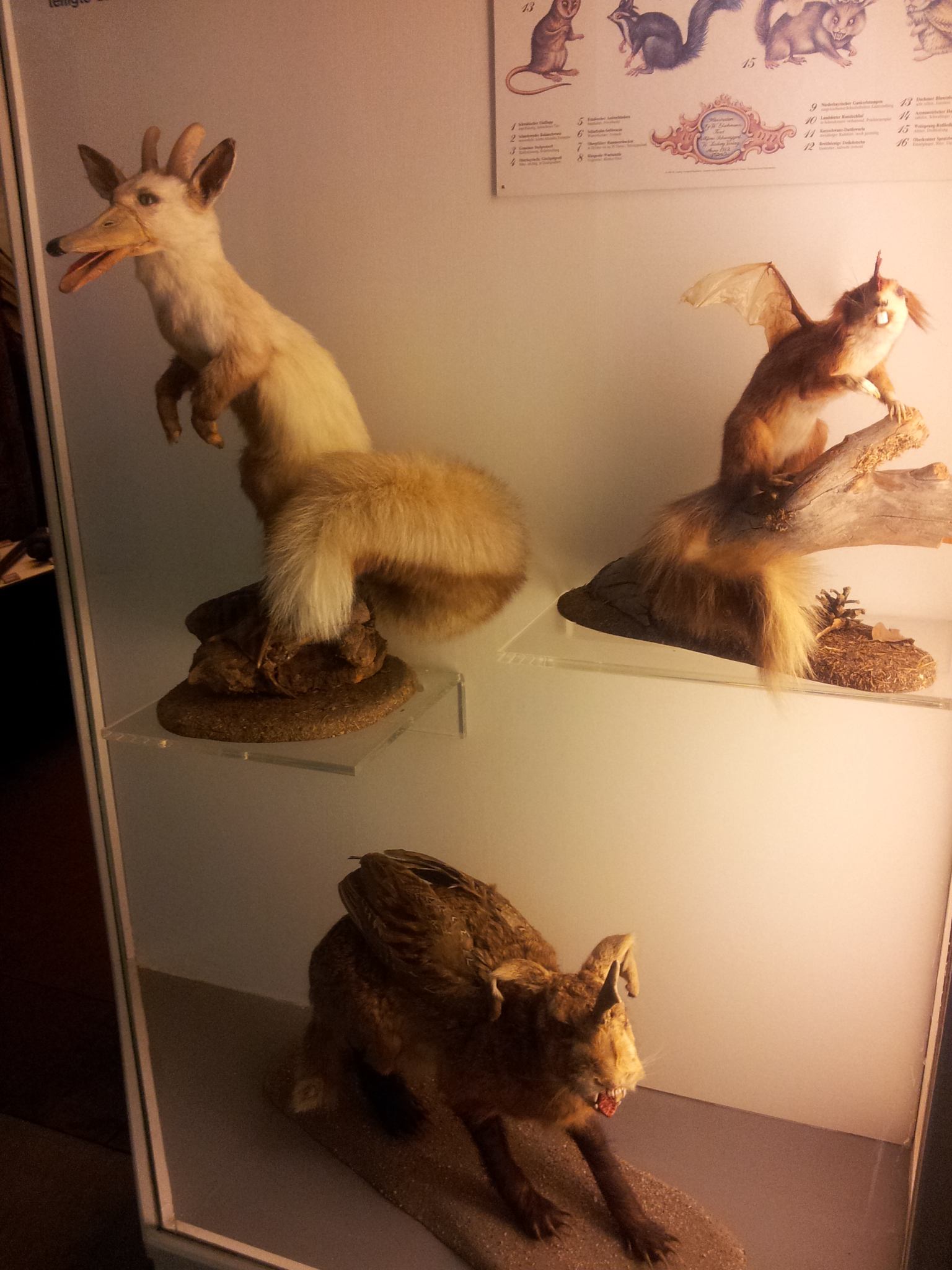
And the museum did a great job making some physical chimeras using the wonders of taxidermy… aww, do you want one of your own now?
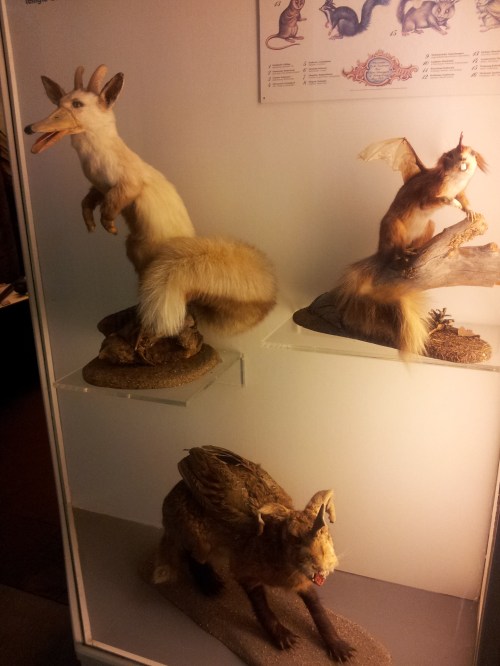
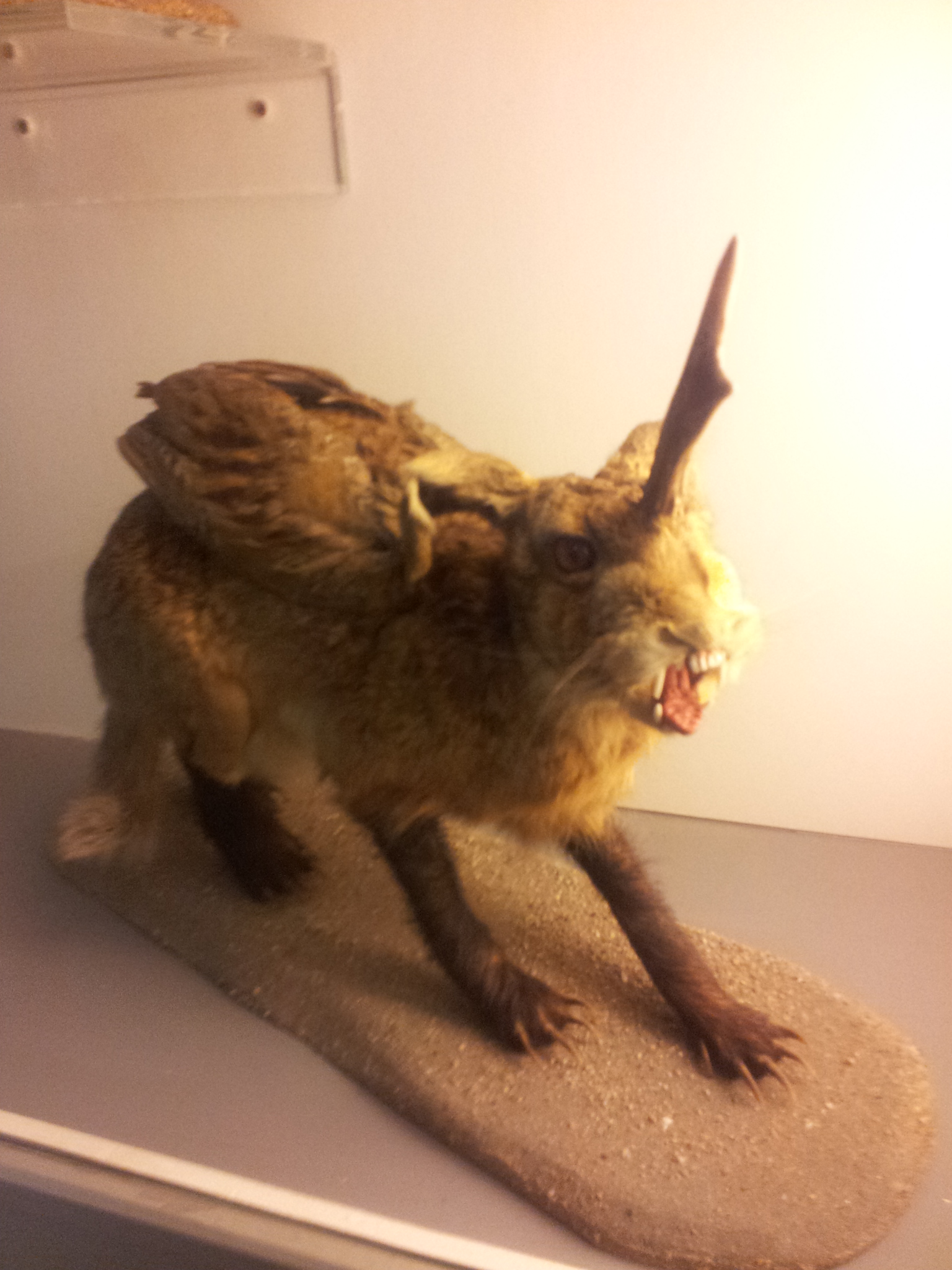
With closeups below–e.g. the jackalope from hell:
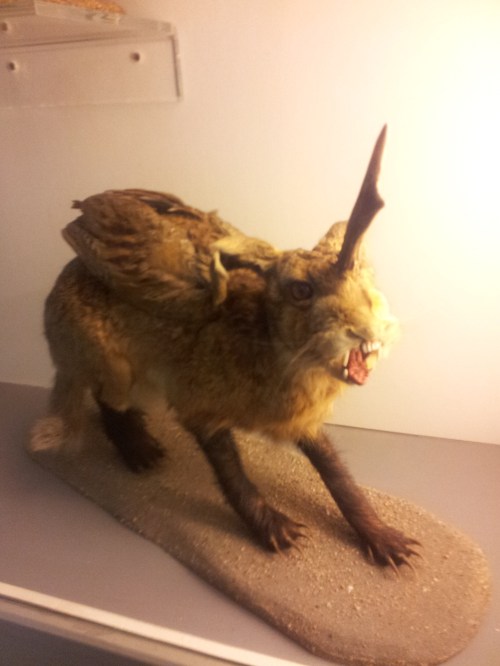
A flight of fancy?
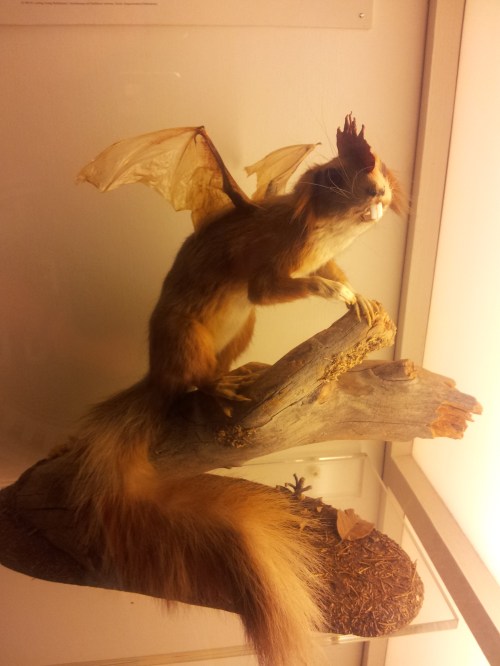
Some quizzical quackery:
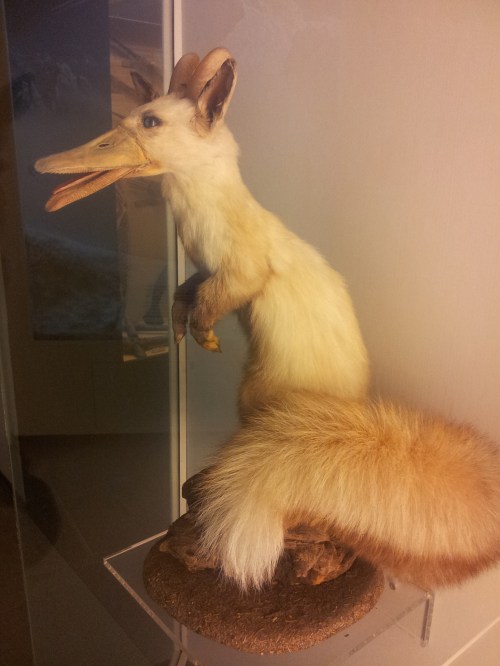
Echt toll, meine Freunde! A bit more about wolpertingers and their kin is here. Pokemonologists, take notes. People laughing at the alternative name for wolpertingers, “poontingers,” behave…

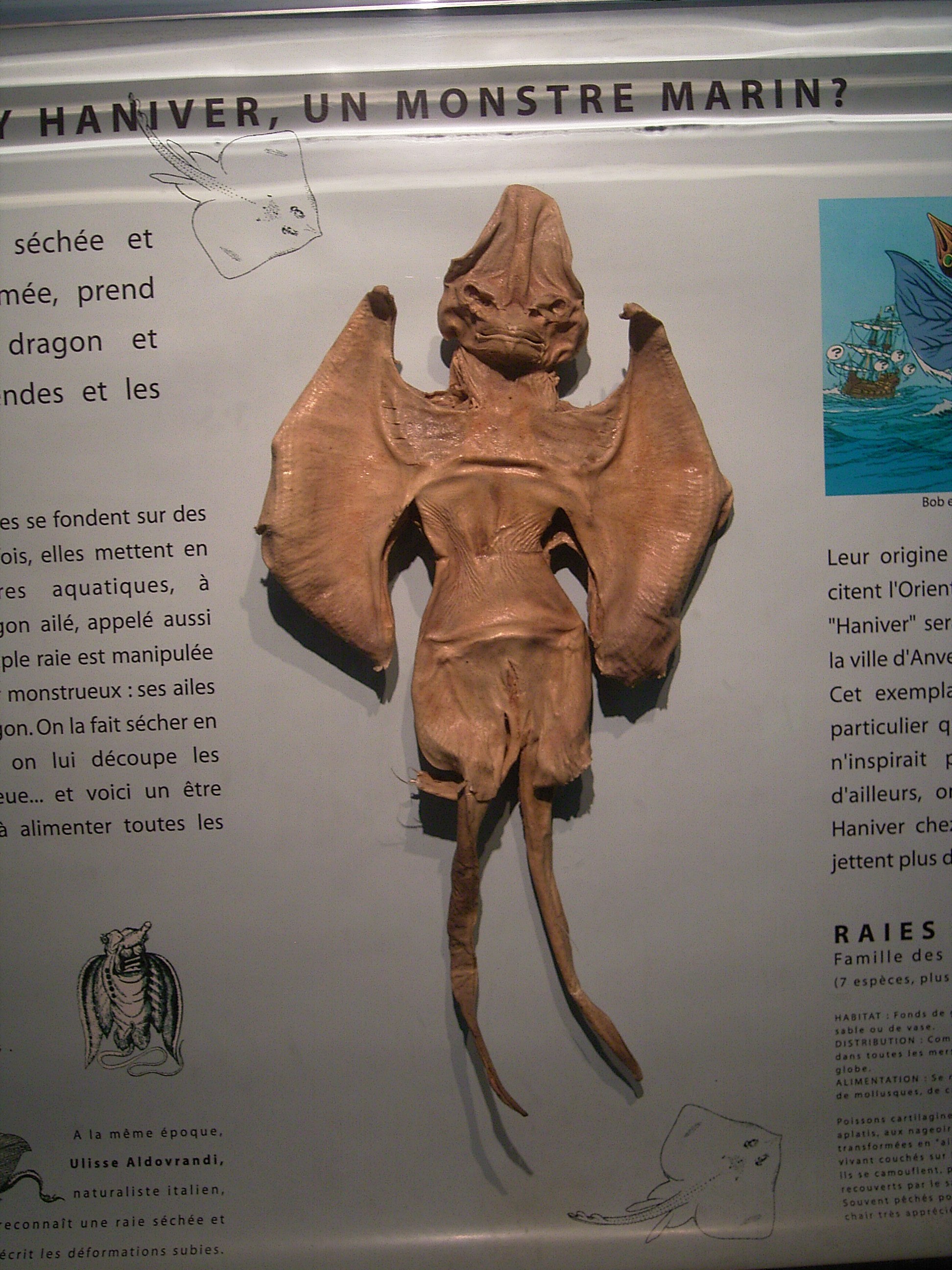
One can hardly discuss chimeras and fake animals/taxidermy hoaxes without getting into mermaids (no, I won’t discuss THAT recent TV debacle) and then into Jenny Hanivers; “devil fish”, seabishops or sea fairies. The hanivers go back to at least the 16th century, even being used by sailors to prove they’d had an exotic adventure after their voyages, or sold to supplement their meager salaries. There is plenty written on this phenomenon and how numerous people were skate punk’d (AHEM) by a simple dried fish. But then, skates (not to be confused with an altogether different, but related, kind of chimera) do look odd, and many people don’t know their anatomy or are just credulous, prone to self-deception and confirmation bias.

Stuart Pond was so kind as to send pics of a J.H. that he has in his shed (spinoff potential: What’s in Stu’s Shed???) for me to share— thanks again man! Note the apparent “legs” (probably organs used in mating’; claspers; but sometimes just snipped bits of the tail, which is also evident here):

Obviously the typical Jenny Haniver is a skate that has been messed with a bit to emphasize the humanoid features, but then there’s a sucker born every minute, and PT Barnum famously took advantage of that rhythmic nativity in the 1842 hoax he called the Fiji (Feejee) mermaid, which was a monkey’s head/torso with fish body and papier maché coating. Below, a wolpertinger-like “horn” is visible; this is the remnants of a nasal process of the chondrocranium of the ray; the flanges to either side of it are parts of the front of the head that have been cut apart to make the haniver’s head look more humanoid:
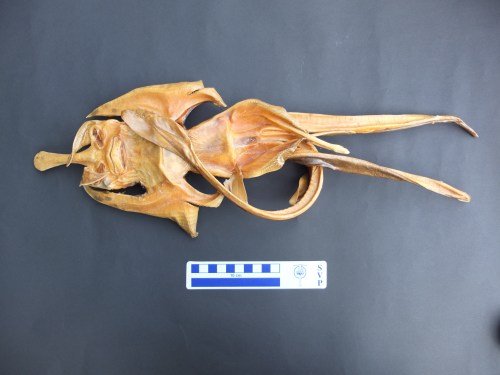
With a “face” only a mermother- or chondrichthyologist- could love– note that the “eyes” are actually nasal openings:

And thanks to Sven Sachs for some extra photos of a Jenny Haniver at the Zoological Museum Liege in Belgium– thanks Sven!:


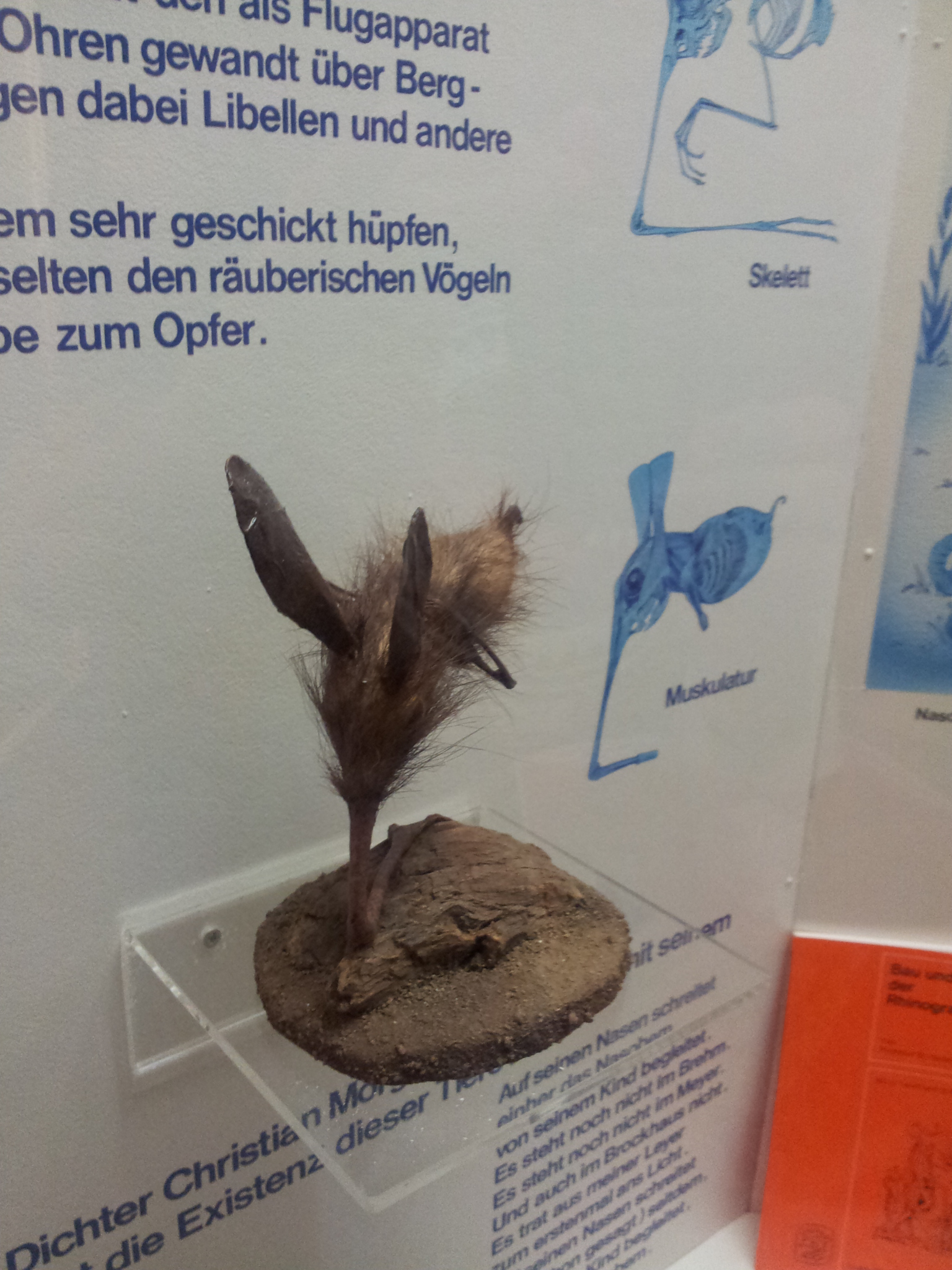
But, in the world of academic science, there is perhaps no greater you-fools-I-invented-a-fanciful-critter hoax/joke than the Rhinogradentia (snouters, or rhinogrades), rumoured in 1905 but first described in Gerolf Steiner/Harald Stümpke’s (latter= pseudonym; AKA Karl D.S. Geeste, Hararuto Shutyunpuke) wonderfully over-the-top, tongue-in-cheekish 1957 faux-scientific monographic book Bau und Leben der Rhinogradentia. Darren Naish‘s blog Tetrapod Zoology (along with others, in 4 parts) has done far better justice to the snouters than I could ever hope to, and others have contributed to the legend. But at least I can share some pics of the first reconstructed (or were they, hmm…?) rhinogrades I’ve ever seen in physical form (again from the Haus der Natur):
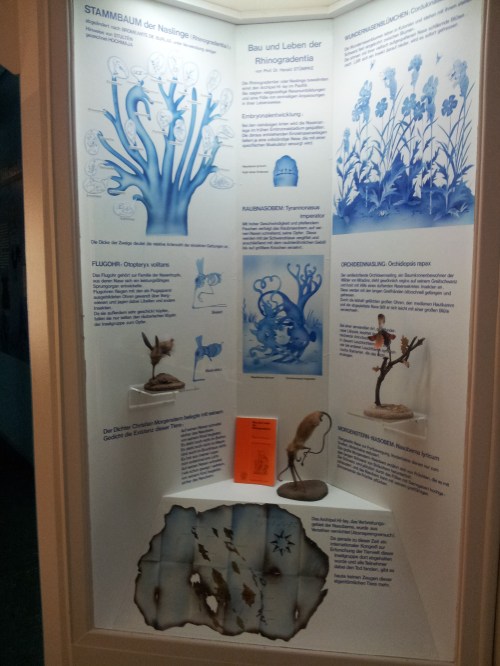
Here are the closeups; first Orchidiopsis rapax:
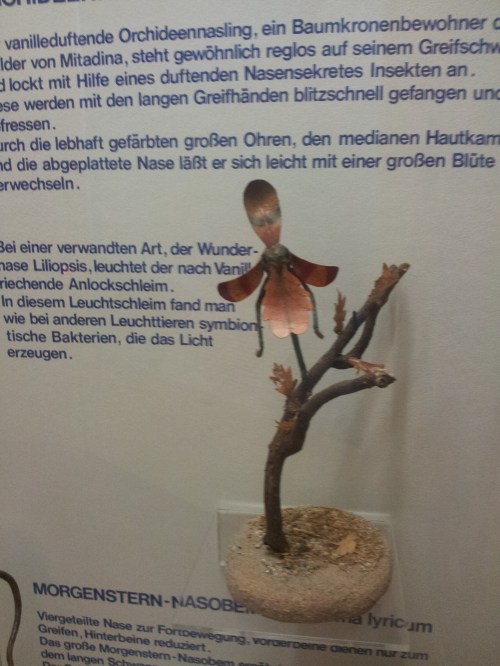
And next Otopteryx volitans:
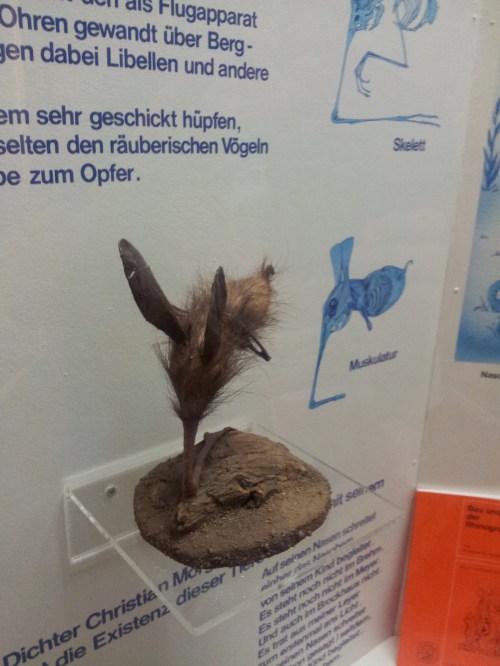
Last but not beast, an infamous nasobeme, Nasobema lyricum!

Whether this post was hit or myth, please contribute more thoughts, stories and pictures in the Comments below. What’s your favourite hoax story, conglomerated creature, misidentified monstrous mushwee little false beastie or taxidermy horror/beauty? Why do you enjoy fanciful creations like these?

And watch out- those chimeras can pack a whallop!

Read Full Post »
Welcome to another round of Mystery Dissection; no frills or miracles-required this time; tell me what you can about this specimen.

Difficulty: No-way-you-can-get-this-down-to-genus-level; blurry photo; scale unknown

Stomach-Churning Rating: 5 at worst, especially once you realize it’s in preservative; hence the odd colour.

Read Full Post »

The Olympics are over! Hooray for everybody! Here I’m taking a different spin on the blog’s Mystery Dissection series: a mysterious method– what is going on here and why? I know someone will get this, but experts might want to hold back and let non-specialists have their moment in the sun first…

Stomach-churning rating: 6/10. (but probably too late!) Be glad this image does not include an olfactory component.

The scene is from ~2005 and took place in our old lab- note the filthy floor. It rarely got much cleaner than that. Before we moved in, this was an abattoir at some point. We used to have experiments going on in this hangar-like area of our small office building, right next to our office rooms. The smell and noise was… unpleasant. Luckily, now we have a separate office building (renovated from this old structure) and a wholly new, giant gait laboratory full of science toys.

Read Full Post »

« Newer Posts - Older Posts »