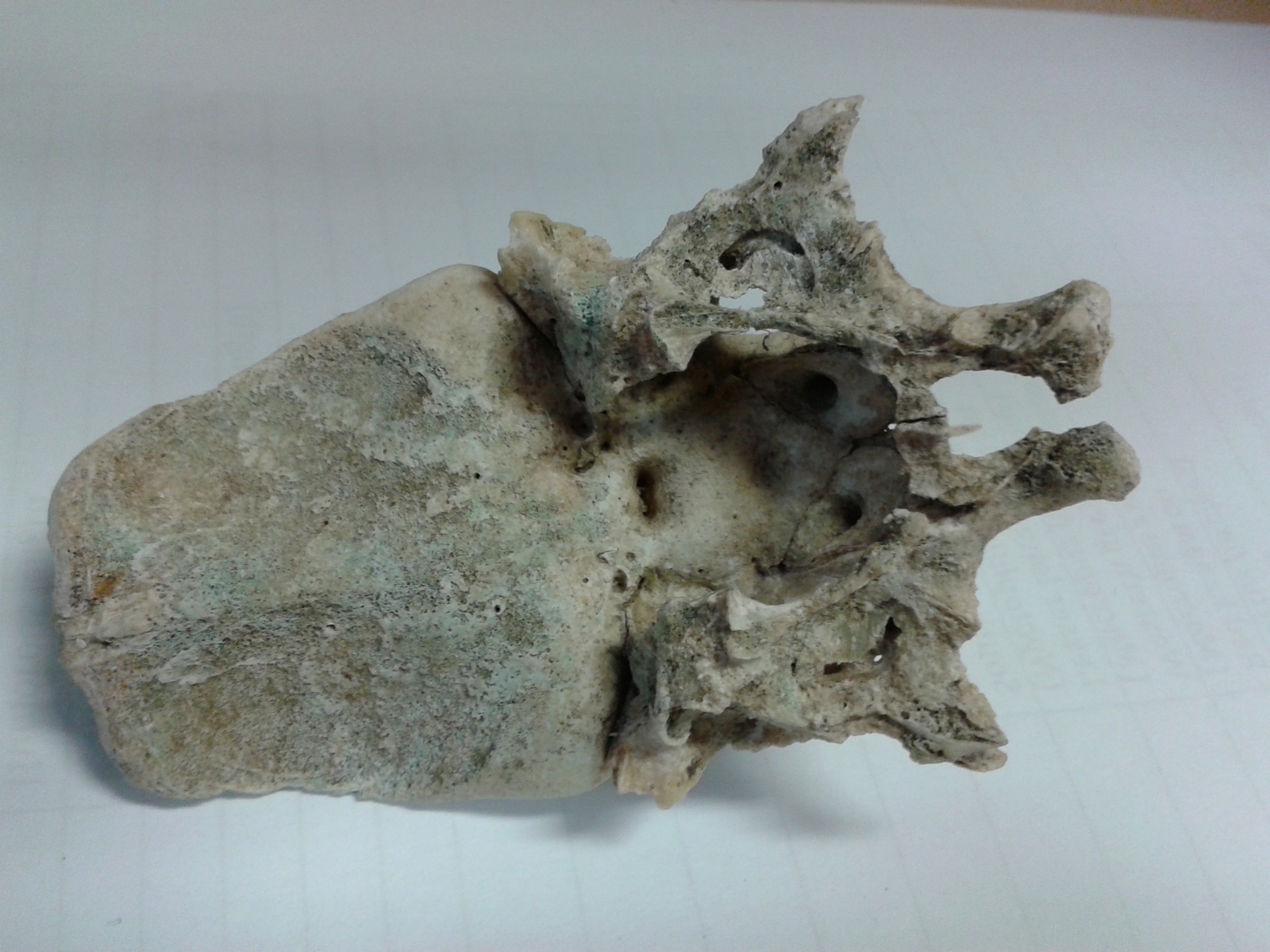
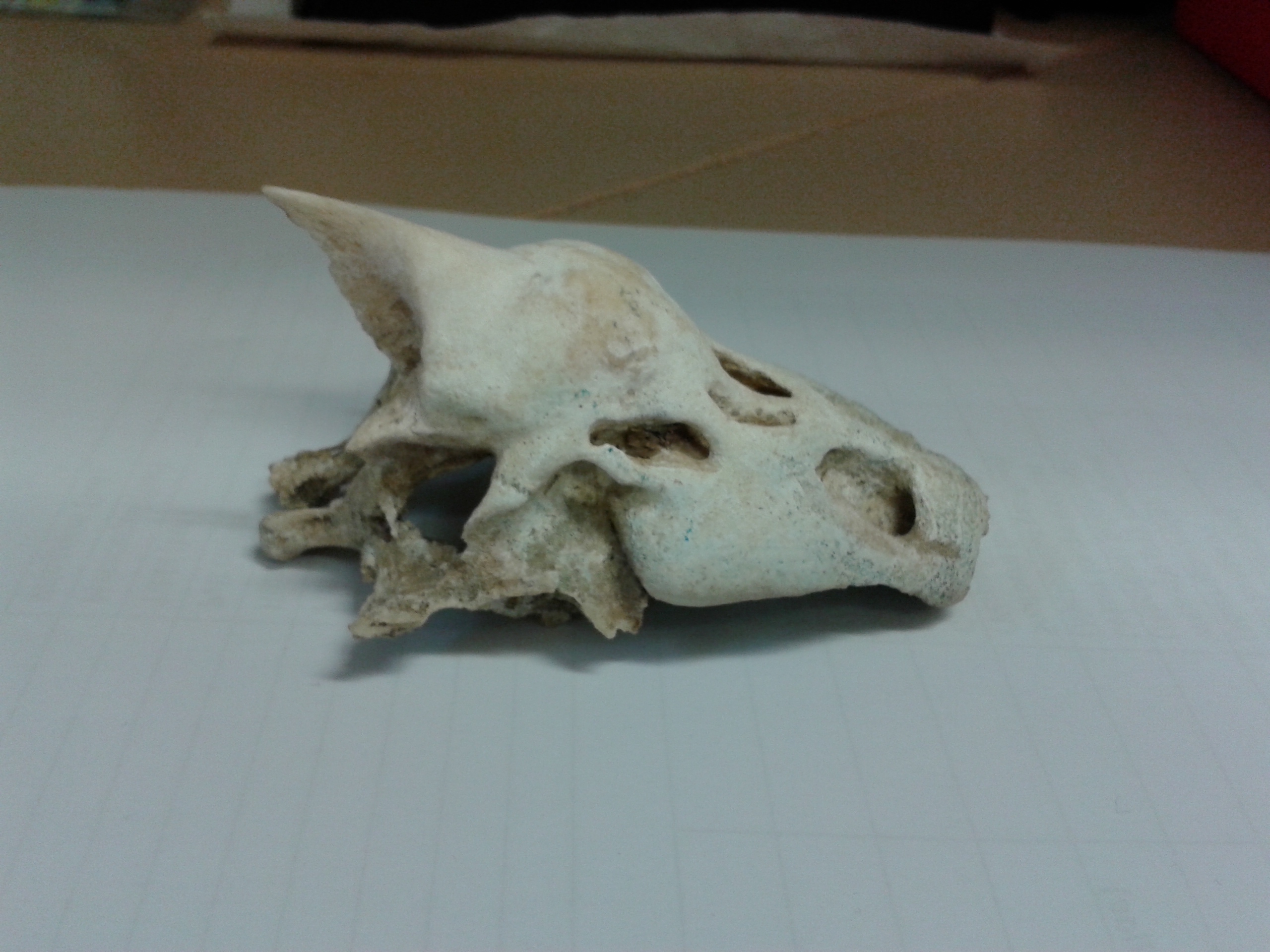
Hey, Christofer Clemente sent me these photos of a ~10cm long skull found by a student on a beach in Perth, Australia ( sent to Chris by Christine Cooper from ECU in Perth). What is it?
I figured I’d feed it to our mystery anatomy gurus for some fun, and see what comes up. You must justify your answer to get points. Convincing us with links to other photos/images will help. I have my ideas what it is, but they kind of suck, because I suck at skull anatomy.
Bonus points for incorporating Australian slang into your answer or beachy imagery/jokes.
No rhyming, unless the rhyming is using silly Australian-ish lingo like adding “-idoo” to the end of a word, or making up Dr-Seussian Oz-ish words.
I love doing sciencey road trips with my team when I can. Last week, we got a treat: four of us got a behind-the-scenes tour of the fairly new Crocodiles of the World facility near Oxford; just over 90 minutes west of our lab, nestled in the pictureseque Cotswolds region. We were not disappointed, so you get to share in the joy! In photo-blog format. Pics can be clicked to emcrocken.
In the midst of an unpreposessing industrial estate lies: AWESOME!
If you want to bone up on your croc species, go here and here. I won’t go into details. This is an eye candy post!
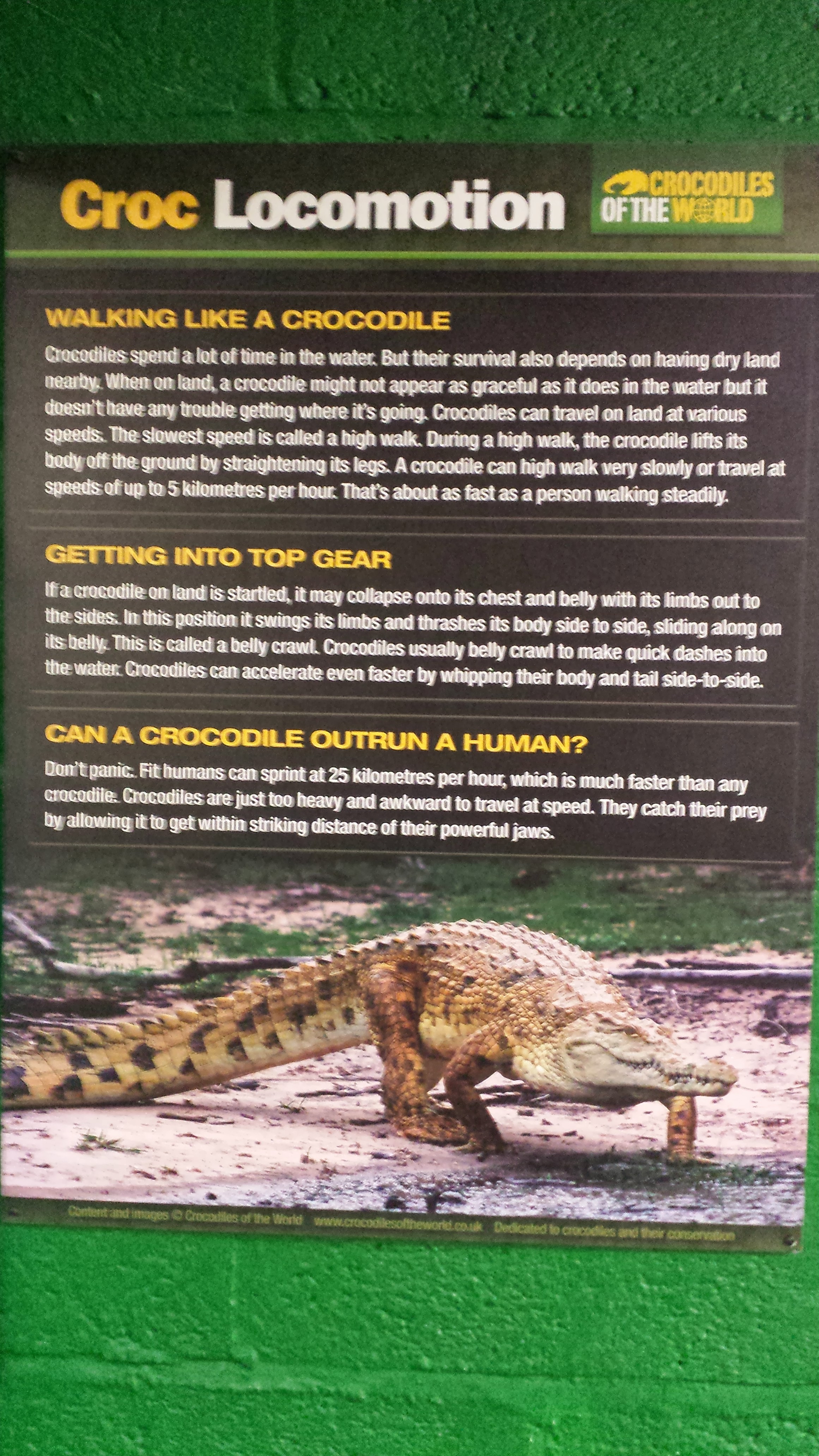
Reasonably accurate description that caught my eye. My scientific interest in crocodiles starts here, and with their anatomy/relationship with dinosaurs, but I’ve loved crocs since I was an infant (one of my first words, as I may have written here before, was “dock-a-dile”, for my favourite stuffed animal at the time [R.I.P.]).
Siamese crocodiles. The large male is “Hugo.” They were apart when we entered, then got snuggly later, as I’ve often seen this species do. Heavily endangered (<300 in the wild?), so any breeding is a good thing!
The above photo brings me to one of my general points. Crocodiles of the World seems genuinely to be a centre that is breeding crocodiles for conservation purposes (and for education, entertainment and other zoo-like stuff). Essentially every crocodile enclosure had a mated pair, and several were breeding. Such as…
Yes, that is a Dwarf African crocodile, Osteolaemus, and indeed it is a female on her nest-mound. Which means…
Eggs of said Osteolaemus.
And babies of said Osteolaemus! As if the adults aren’t cute enough with their short snouts and doglike size/appearance! These guys have striking yellow colouration, too. I’d never seen it in person before.
That’s not all!
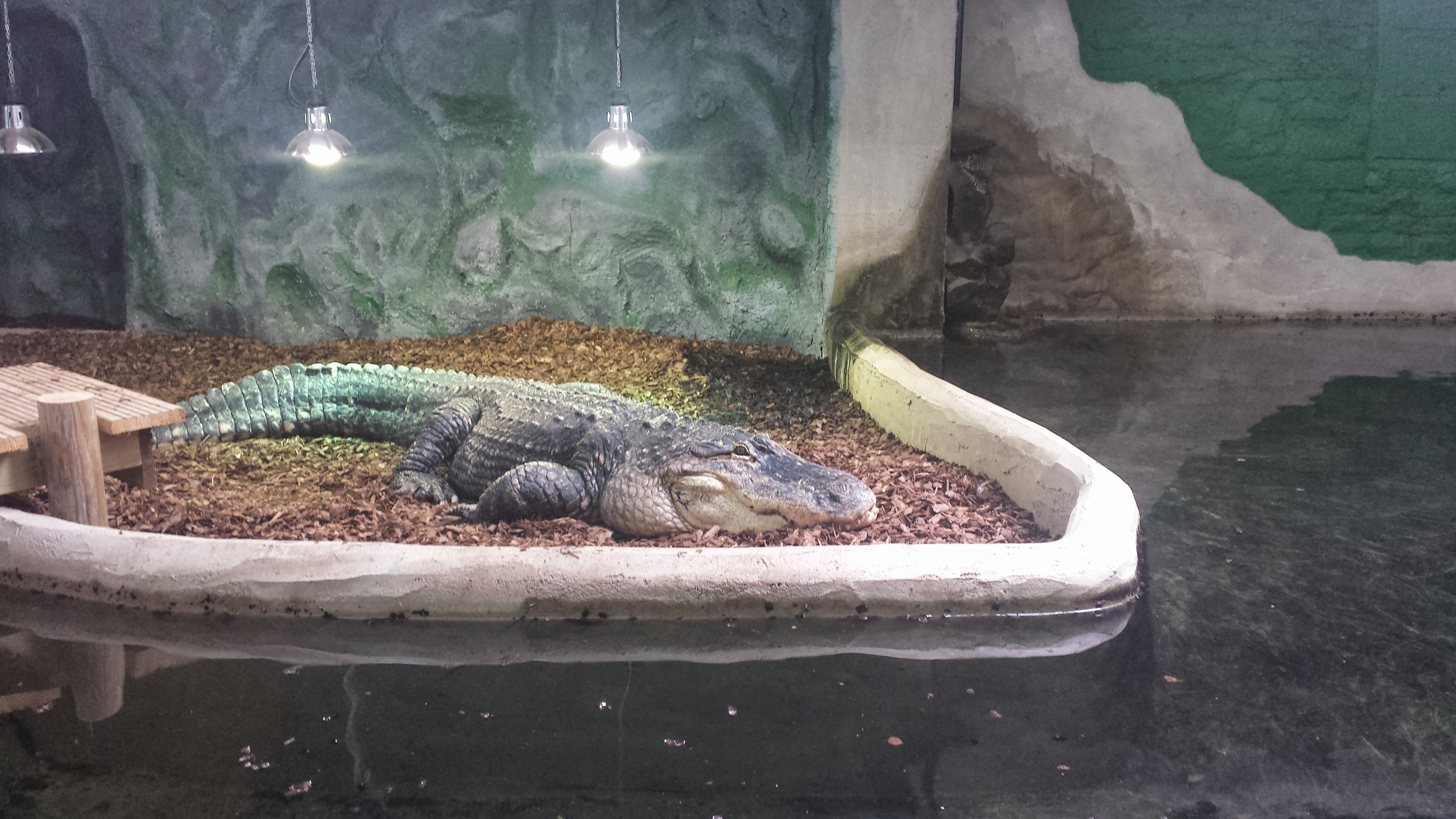
Male American Alligator “Albert” warming up. Smaller female partner “Daisy” lives in same enclosure. Plenty of babies from these guys, too! Daisy comes when called by name, and Albert is learning to do so.
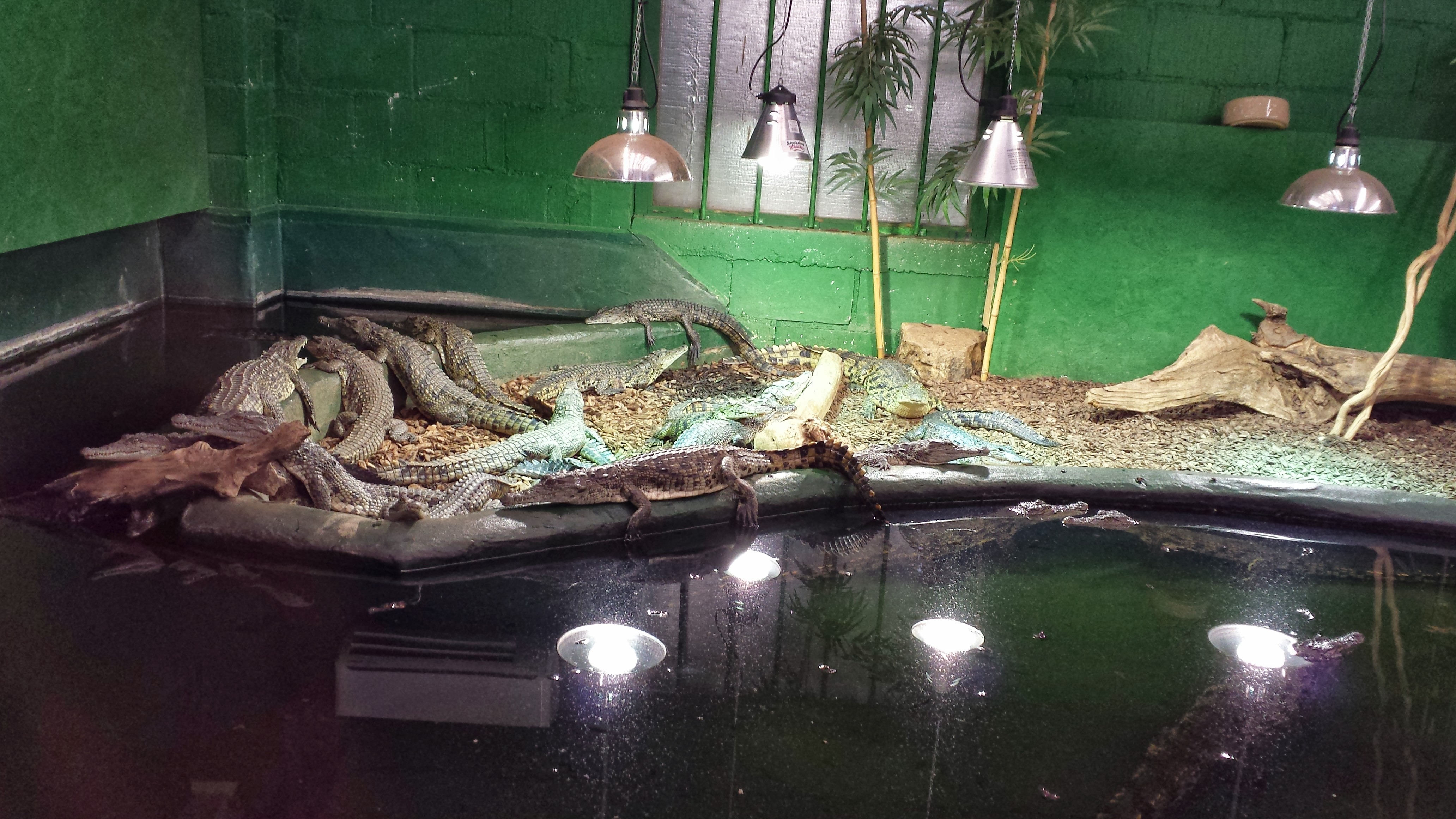
~1 meter long juvenile Nile crocodiles, bred at the facility.
But then crocodile morphological diversity (colours, textures) and behaviour is just too cool not to focus on a bit, so here are some highlights from our visit!
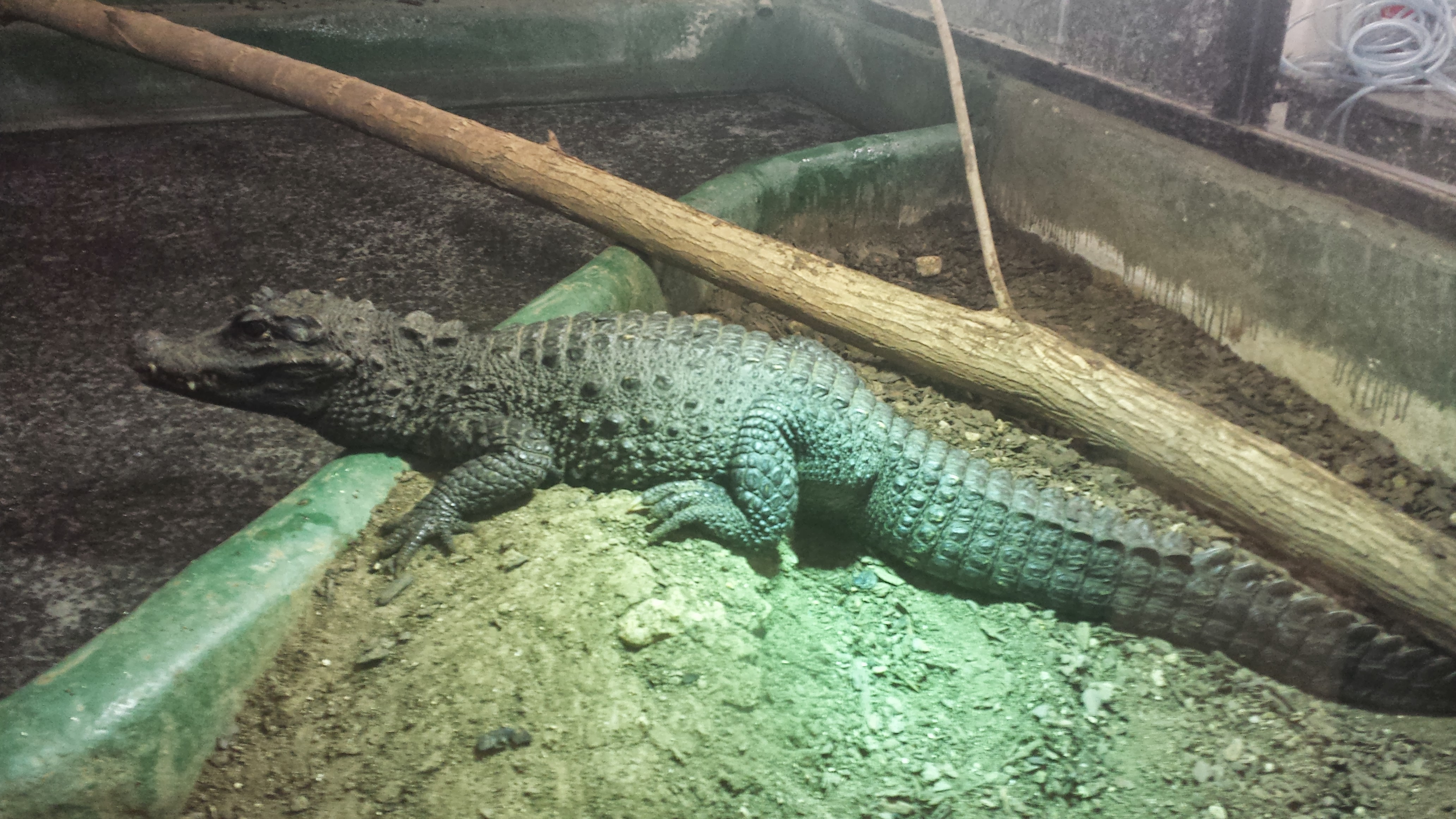
Endearing shot of a crocodylian I seldom get to see anywhere: Paleosuchus trigonatus, the Schneider’s Dwarf Caiman. Spiny armoured hide and quite terrestrial; poorly known in many ways. Some more info is here (note its tortured taxonomy)
Black caiman, Melanosuchusniger, showing some interest in us.
Cuban crocodiles (Crocodylus rhombifer; pound for pound the most badass croc in my experience; badassitude that this photo captures nicely) cooling off by exposing the well-vascularized soft tissues of the mouth region.
But it’s not just crocs there, either, and some of the highlights were non-croc surprises and memorable encounters:
A surprisingly friendly and tame Water monitor (14 yrs old; does kids parties). Note person for scale. Was about 2 meters long, 20 kg or so.
Business end of nice Water monitor, with tongue engaged.
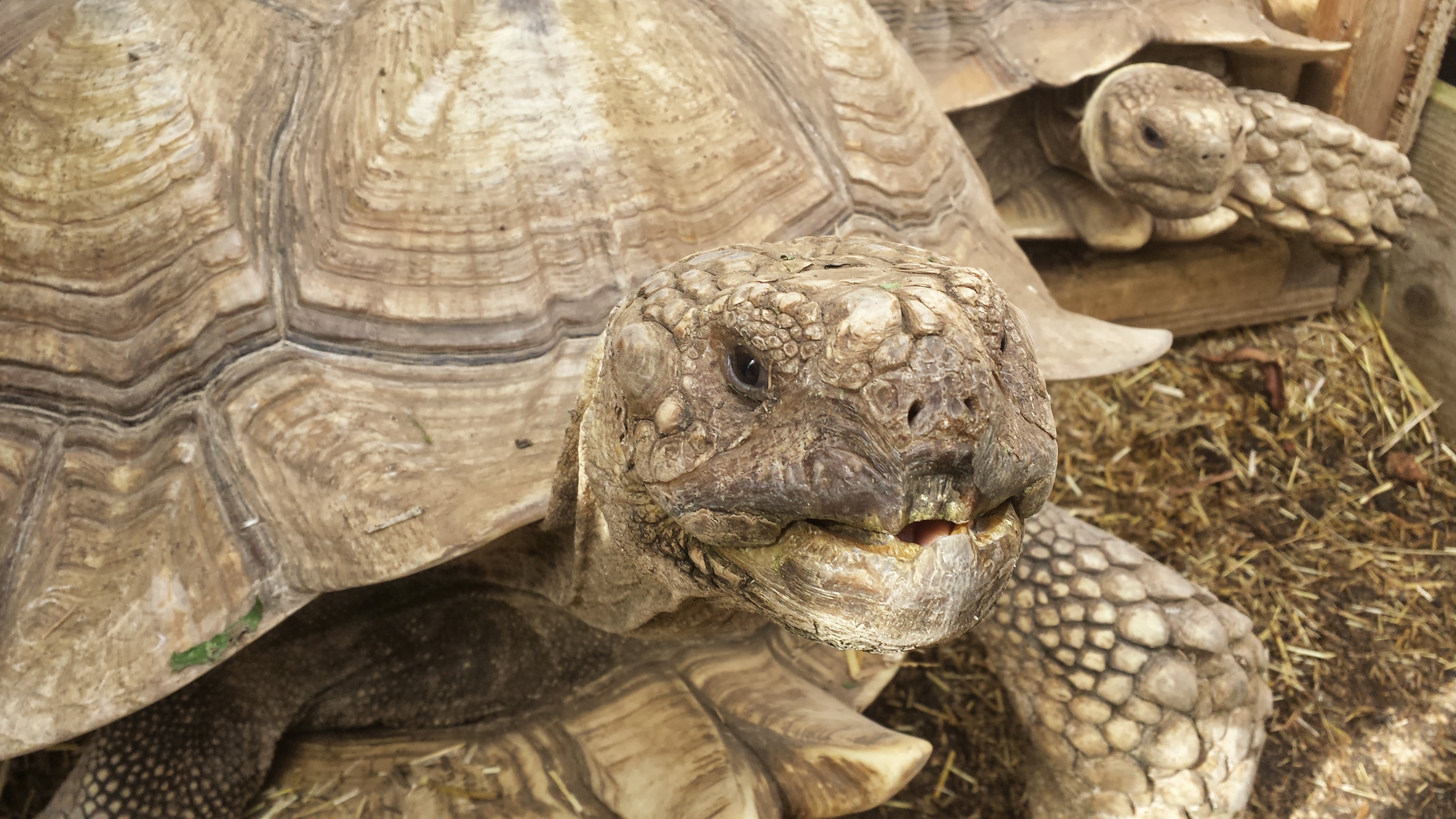
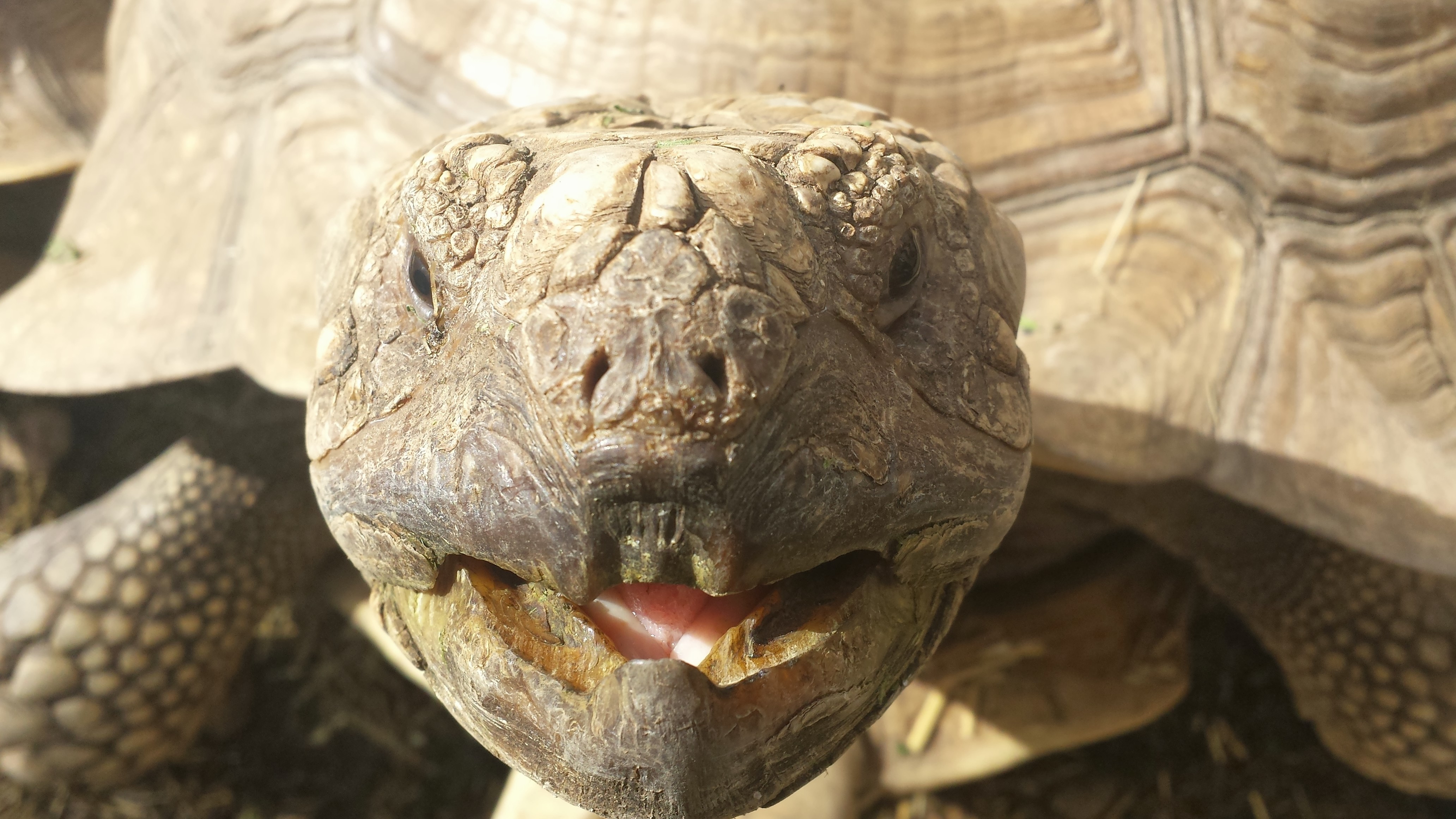
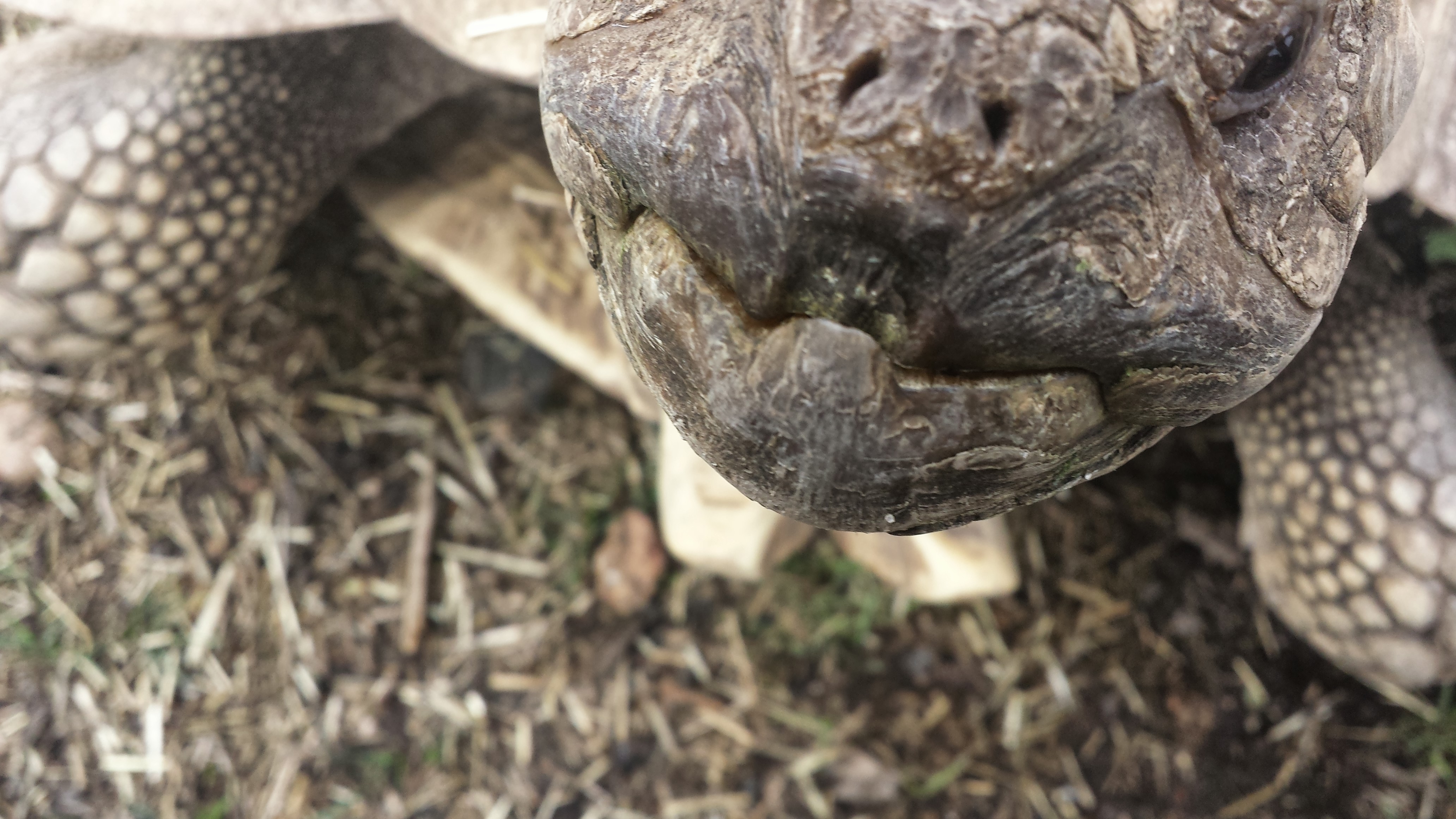
And we got a nice farewell from an African spur-thigh tortoise (Geochelone sulcata) with an oral fixation (action sequence thereof):
Chowmp!
If someone visits this facility and leaves without being converted to a croc-lover, they must be from a different planet than me. It is a celebration of crocodiles; the owner, Shaun Foggett, is the real deal. He sold his home and quit his job as a carpenter to care for crocodiles, and it seems to be a great success– about to get greater, as they have plans to move to a new, bigger, proper site! They are seeking funding, so if you can contribute go here.
Right then… UK residents and visitors: you need to go here! Badly! Get off the blog and go now. If it is a Saturday/Sunday (the cramped industrial estate location only allows the public then).
Otherwise just stew and imagine how much fun you could be having checking out crocodiles. I cruelly posted this on a Tuesday to ensure thorough marination of any croc-geeks.
My team had a new technician arrive, Kyle Chadwick from Uni. Virginia, and NSF Postdoctoral Research Fellow, Dr. Ashley Heers (see here for an example of new stuff she’s starting here at the RVC!), started working with me at the RVC, and then these guys showed up…
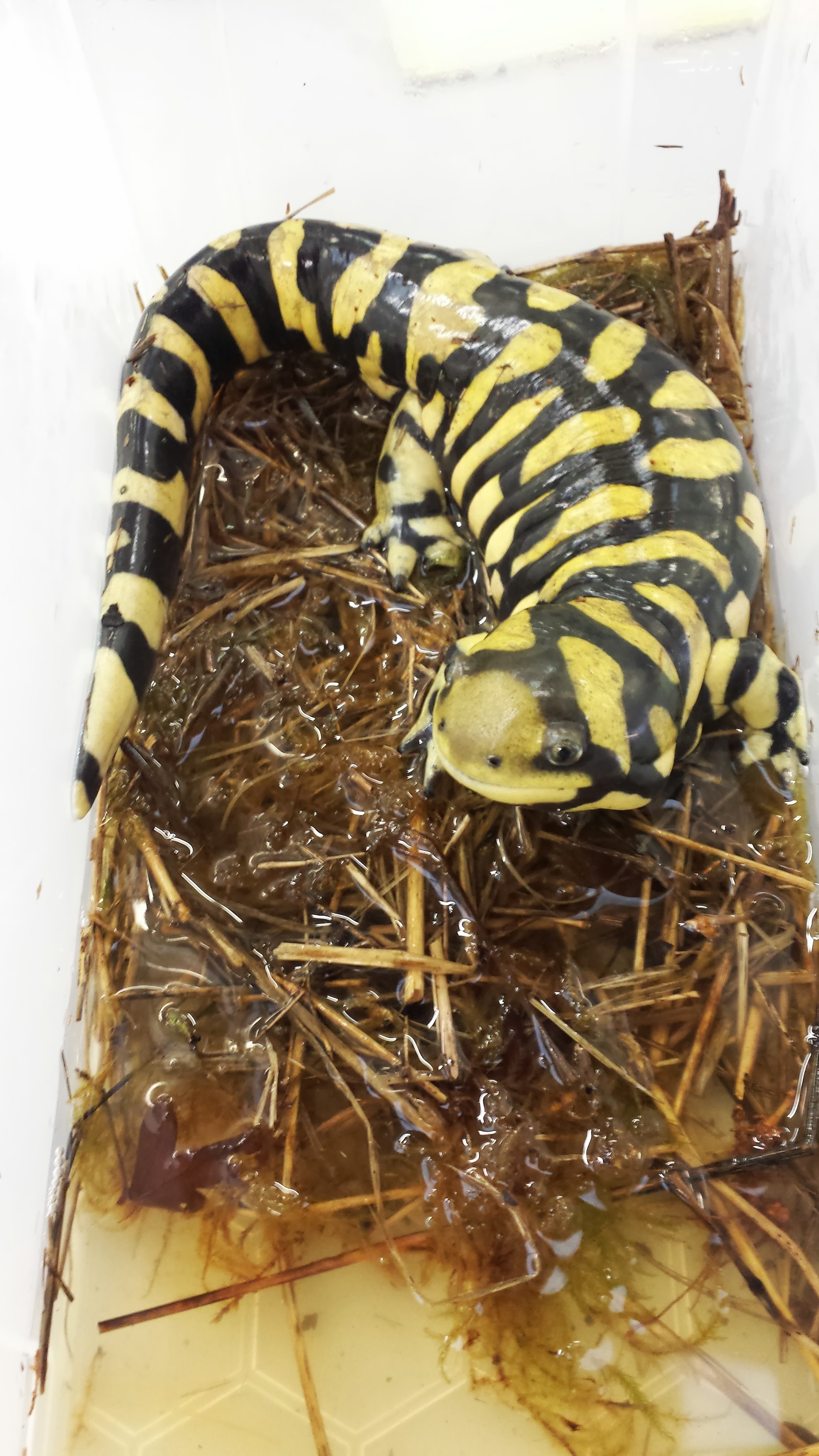
First a tiger salamander (Ambystoma) paid a visit, for filming an episode of the Windfall Films/PBS documentary “Your Inner Fish” (a la the famous book):
So cute! Tiger salamander, soon to be a TV celebrity.
And that gorgeous salamander was a star performer in strutting his stuff for the camera to demonstrate the locomotion of modern tetrapods, including some lovely slo-mo footage from our lab cameras:
(if that’s too slow for you, try the normal-speed footage. I’ll admit, salamanders don’t really need slo-mo video for normal walking, but I like it)
So cool!
But then we got a special package… with three frozen fire salamanders (Salamandra salamandra) from colleagues in Germany!
Three new occupants of the freezers, for planning our studies of salamander locomotion
This marks the start of an exciting new period in my team’s work in the lab. I’ve always liked salamanders and newts, and we’ve scanned and modelled plenty (e.g. this old post), but now we’re going to work with live fire salamanders (a first for me)! We are using the dead ones to plan the new studies with the live ones– these new studies will involve lots of high speed videos and force platform analysis (as shown above), in conjunction with XROMM (biplanar fluoroscopy/3D skeletal motion analysis) and other techniques including computer simulations. We got initial approval this week to work with these salamanders, and found a reputable source this week too, so it was definitely Salamander Week in my group!
This research all will feed into our upcoming studies of extinct tetrapods: we’re using salamanders to figure out how salamanders move and what limits their speed and gait, and then we’re using the same sorts of computer tools to try to estimate how extinct tetrapods may have moved and how locomotion evolved, in much more specific detail than our prior work had done, which was mainly about using 3D reconstructions of anatomy to show what those animals could not do. More about the project here.
Watch this space for more scampering salamanders!
UPDATE: And here’s one! Not quite scampering, but…
Setting up our two fluoroscopes for a test run of our gait studies– but with one of the deceased salamanders. Gotta get good images before any live animal work begins!
An example of the kind of footage we’re aiming for (single 2D fluoroscope view from Nadja Schilling’s team’s research; see XROMM website for more details on the methodology)
UPDATE 2:
I did a CT scan with a normal medical grade CT scanner at the highest resolution we can manage (0.625 mm slices). Check out the results below, which amuse me:
Looks like a toy; too crude resolution. But we can see major structures, and we can very nicely see the “microchip” (which looks HUGE) that was placed in this animal’s back when in captivity, and then another structure is visible near the pelvis which might be another chip or else remains of some food, pathology, or a really odd pelvis– I am not totally sure!
So this is why we tend to use microCT, which can go down to as low as ~5 micron resolution, to get 3D anatomy of animals this small. It’s no surprise to me, but it is fun to see how far we could push our normal CT machine. The results aren’t horrid but wouldn’t have much scientific value for us. They did confirm for us that this specimen is heavily ossified, so the faint images of bone that we are getting in our x-ray fluoroscopes (above) are due to something going wrong with our camera system, not the animal’s immature skeleton. Stay tuned for more updates as the science happens!
UPDATE 3:
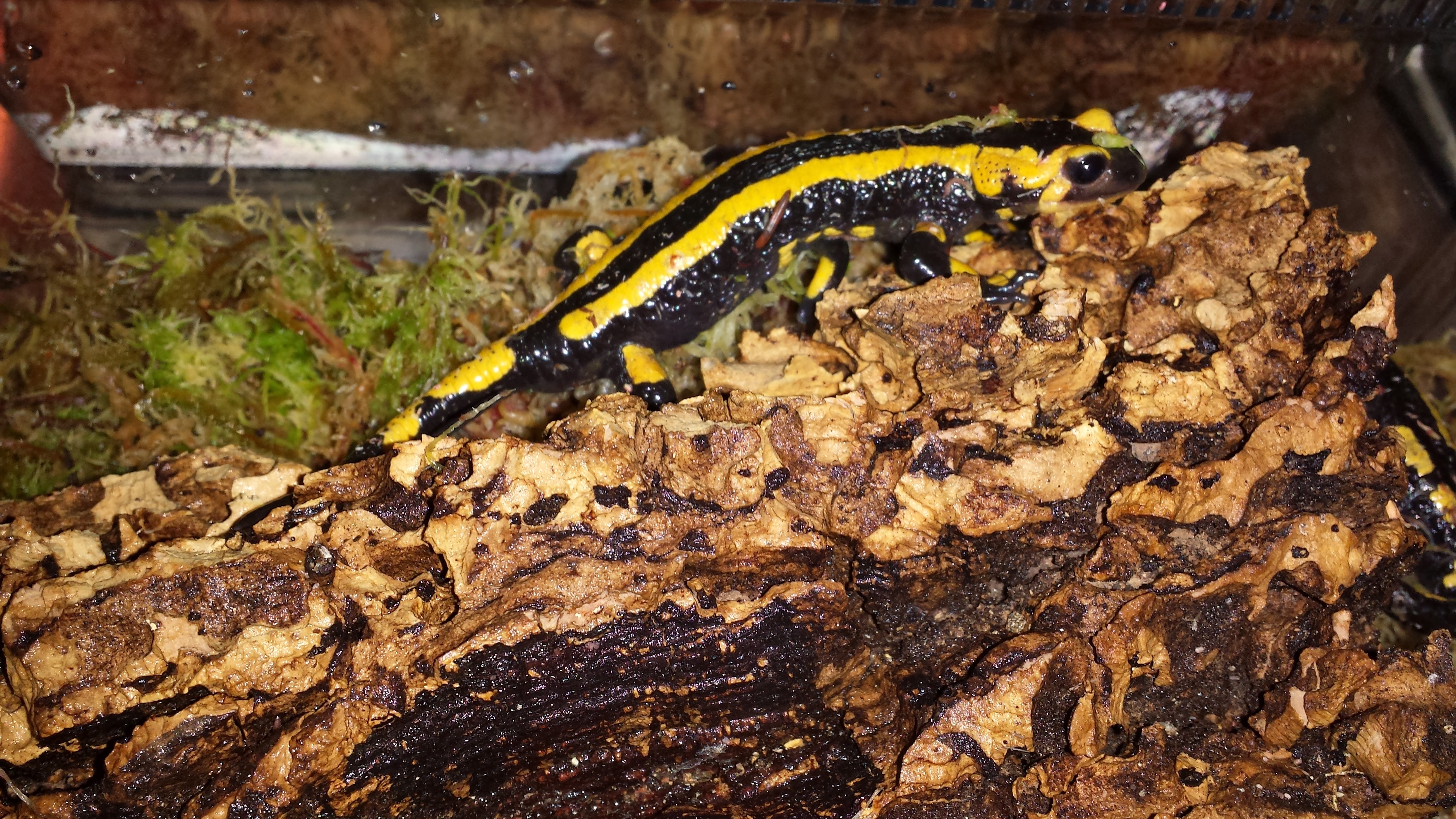
20 wonderful adult Fire Salamanders have joined our team and are relaxing over the coming week before we start taking them for walks. Here is one exploring its new home:
UPDATE 4:
August 11-15, 2014 we are in Jena, Germany using their fancy biplanar radiography system (“x-ray video”) to study our salamanders, at last! Follow the tweets starting here, for more information as it happened! https://twitter.com/JohnRHutchinson/status/500187568416518144
and this video of “Jabba” the corpulent salamander walking-
Greetings, freezerinos! WIJF has been on hiatus this summer because my life has been freaking insane! ICVM conference with 3 talks (See earlier post), then grant deadlines, camping trip, packing and moving house, hiring new staff and inducting them into my team, breathing, and other activities (ranging from essential to trivial and/or infuriating) in addition to Actually Doing Some Science have been to blame. But WIJF is coming back like a bad rash! It cannot be defeated by bureaucracy, by my current lack of home internet connection, or even by the end of the universe! I have grand plans, muhahaha… This is just a teaser to give me some blog-writing momentum so I can finish some of those bigger posts sooner or later.
Stomach-Churning Rating: 3/10 — unless you are the goldfish in question, whose stomach has already been duly churned.
So I mentioned house-moving above, and we’ve finished that over the previous week. I had two ponds at my old home, full of >200 fish and (during breeding season; tweeted under #FrogCount) >200 frogs and toads, among other critters, documented on occasion in my Flickr photostream/set. Our new abode just has one pond, but a decent one at that, and we inherited some new fish that I am getting to know. Here is a peculiar goldfish, whose unusual anatomy inspired me to catch it, take a photo, and blog about it. Consider this:
The fish in question. Not your standard sleek, hydrodynamic specimen of Carassius auratus auratus!
I’ve done some Googling and confirmed my suspicions that this is not a pregnant goldfish but is some other condition that we could loosely term as pathological. It has been feeding reasonably well and seems not too perturbed– as much as a fish’s degree of perturbation can be read from its behaviour– by its rotund morphology. It has some problems controlling its inertia in rolling and pitching, which makes for some amusing viewing as well as easy capture.
But what’s up with this fish? It does not have dropsy, a nasty condition fish get that leaves the scales in a “pinecone” sort of extruded orientation. It may have a gut infection or other air sac problem. I’m certainly not a vet and don’t know and fishy vets. But I wanted to share the photo to stimulate discussion of fishy fish physiognomy. What’s your diagnosis, doctor internet?
Also, if this fish takes a turn for the worse, it very well may end up in my freezer and thence into an internal anatomy WIJF post (“What’s In John’s Goldfish?”). We shall see. But I’ve grown fond of this unnamed fish (soliciting suggestions for names below in the Comments), so I’ll see how long I can keep it out of that situation.













 What's In John's Freezer?