Feeds:
Posts
Comments

Archive for December, 2014

I hinted at another post in last round, and here I deliver. (The “amazeballs” in the title is a running joke with our Xmas guests here in England, but it applies to the subject of these images, too… which will be the subject of a future blog post involving a dissection of the subject!)

This will end the 2014 round of Mystery Anatomy. What 2015 will bring, I am not sure, but here we have 15 images for my 15th mystery CT post and 2015 around the corner.

I do have a new, fun regular anatomy post idea planned for 2015 but I’ll explain that later.

Stomach-Churning Rating: 2/10; digital images; the cadaver is gutted but I am chuffed.

Mystery Anatomy 2014same rules as before.

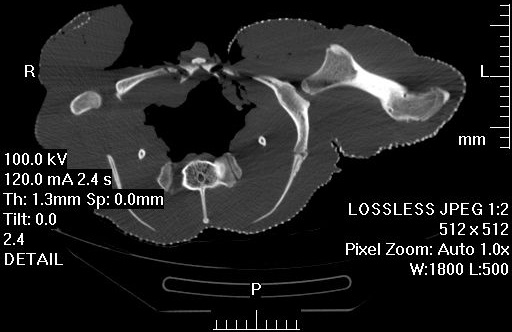
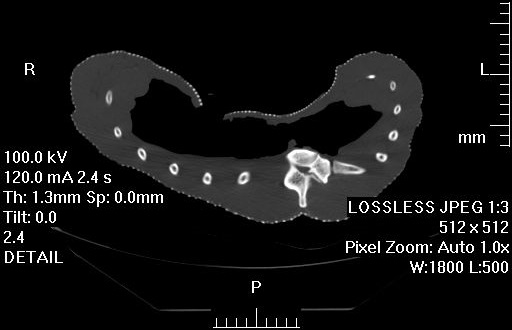
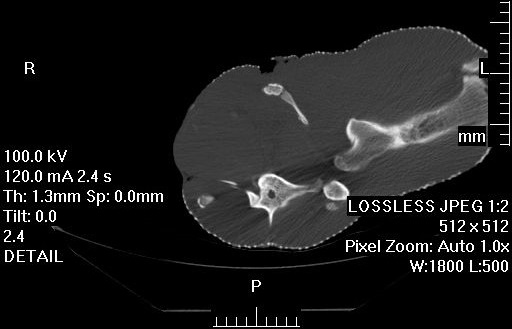
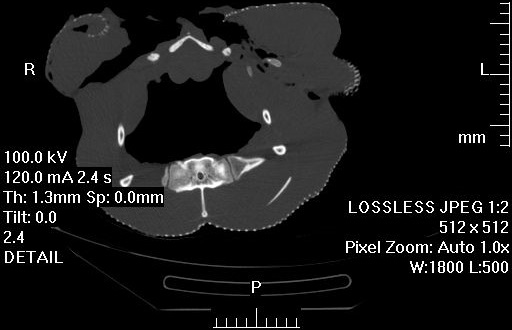
Identify (1) the animal shown in the 15 slices, to species level (max. 5 pts), and then the major features (anatomical regions) evident in as many of the 15 slices as you can; details help (max. 5 pts for thoroughness and accuracy). 

Difficulty: No scale, sort of. Otherwise, pretty easy.

Answers will come on New Year’s Day, to ease your hangovers (or encourage vomiting).

1

1

2

2

3

3

4

4

5

5

6

6

7

7

8

8

9

9

10

10

11

11

12

12

13

13

14

14

MysteryCT15(15)

15

Onward!

Read Full Post »

Deck the ‘Nets With PeerJ Papers— please sing along!

♬Deck the ‘nets with PeerJ papers,
Fa la la la la, la la la la.
‘Tis the day to show our labours,
Fa la la la la, la la la la.

Downloads free; CC-BY license,
Fa la la, la la la, la la la.
Read the extant ratite science,
Fa la la la la, la la la la.

See the emu legs before you
Fa la la la la, la la la la.
Muscles allometric’ly grew.
Fa la la la la, la la la la.

Follow the evolvin’ kneecaps
Fa la la la la, la la la la.
While we dish out ratite recaps 
Fa la la la la, la la la la.

Soon ostrich patellar printing
Fa la la la la, la la la la.
Hail anat’my, don’t be squinting
Fa la la la la, la la la la.

Dissections done all together
Fa la la la la, la la la la.
Heedless of the flying feathers,
Fa la la la la, la la la la♪

(alternate rockin’ instrumental version)

Stomach-Churning Rating: 5/10: cheesy songs vs. fatty chunks of tissue; there are no better Crimbo treats!

Today is a special day for palaeognath publications, principally pertaining to the plethora of published PeerJ papers (well, three of them anyway) released today, featuring my team’s research! An early Crimbo comes this year in the form of three related studies of hind limb anatomy, development, evolution and biomechanics in those flightless feathered freaks of evolutionary whimsy, the ratites! And since the papers are all published online in PeerJ (gold open access), they are free for anyone with internet access to download and use with due credit. These papers include some stunning images of morphology and histology, evolutionary diagrams, and a special treat to be revealed below. Here I’ll summarize the papers we have written together (with thanks to Leverhulme Trust funding!):

1) Lamas, L., Main, R.P., Hutchinson, J.R. 2014. Ontogenetic scaling patterns and functional anatomy of the pelvic limb musculature in emus (Dromaius novaehollandiae). PeerJ 2:e716 http://dx.doi.org/10.7717/peerj.716 

My final year PhD student and “emu whisperer” Luis Lamas has published his first paper with co-supervisor Russ Main and I. Our paper beautifully illustrates the gross anatomy of the leg muscles of emus, and then uses exhaustive measurements (about 6524 of them, all done manually!) of muscle architecture (masses, lengths, etc.) to show how each of the 34 muscles and their tendons grew across a more than tenfold range of body mass (from 6 weeks to 18 months of age). We learned that these muscles get relatively, not just absolutely, larger as emus grow, and their force-generating ability increases almost as strongly, whereas their tendons tend to grow less quickly. As a result, baby emus have only about 22% of their body mass as leg muscles, vs. about 30% in adults. However, baby emus still are extremely athletic, more so than adults and perhaps even “overbuilt” in some ways.

This pattern of rapidly growing, enlarged leg muscles seems to be a general, ancestral pattern for living bird species, reflecting the precocial (more independent, less nest-bound), cursorial (long-legged, running-adapted) natural history and anatomy, considering other studies of ostriches, rheas, chickens and other species close to the root of the avian family tree. But because emus, like other ratites, invest more of their body mass into leg muscles, they can carry out this precocial growth strategy to a greater extreme than flying birds, trading flight prowess away for enhanced running ability. This paper adds another important dataset to the oft-neglected area of “ontogenetic scaling” of the musculoskeletal system, or how the locomotor apparatus adapts to size-/age-related functional/developmental demands as it grows. Luis did a huge amount of work for this paper, leading arduous dissections and analysis of a complex dataset.

Superficial layer of leg muscles in an emu, in right side view.

Superficial layer of leg muscles in an emu, in right side view. Click any image here to emu-biggen. The ILPO and IC are like human rectus femoris (“quads”); ILFB like our biceps femoris (“hams”); FL, GM and GL much like our fibularis longus and gastrocnemius (calf) muscles, but much much bigger! Or, perhaps FL stands for fa la la la la?
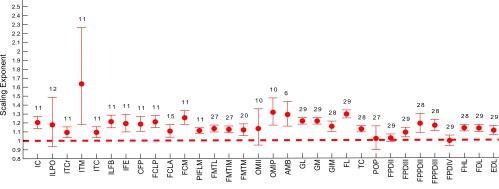
Data for an extra set of emus studied by coauthor Russ Main in the USA, which grew their muscles similarly to our UK group. The exponents (y-axis) show how much more strongly the muscles grown than isometry (maintaining the same relative size), which is the dotted line at 1.0.

Data for an extra set of emus studied by coauthor Russ Main in the USA, which grew their muscles similarly to our UK group. The exponents (y-axis) show how much more strongly the muscles grew than isometry (maintaining the same relative size), which is the dotted line at 1. The numbers above each data point are the # of individuals measured. Muscle names are partly above; the rest are in the paper. If you want to know them, we might have been separated at birth!

2) Regnault, S., Pitsillides, A.A., Hutchinson, J.R. 2014. Structure, ontogeny and evolution of the patellar tendon in emus (Dromaius novaehollandiae) and other palaeognath birds. PeerJ 2:e711 http://dx.doi.org/10.7717/peerj.711

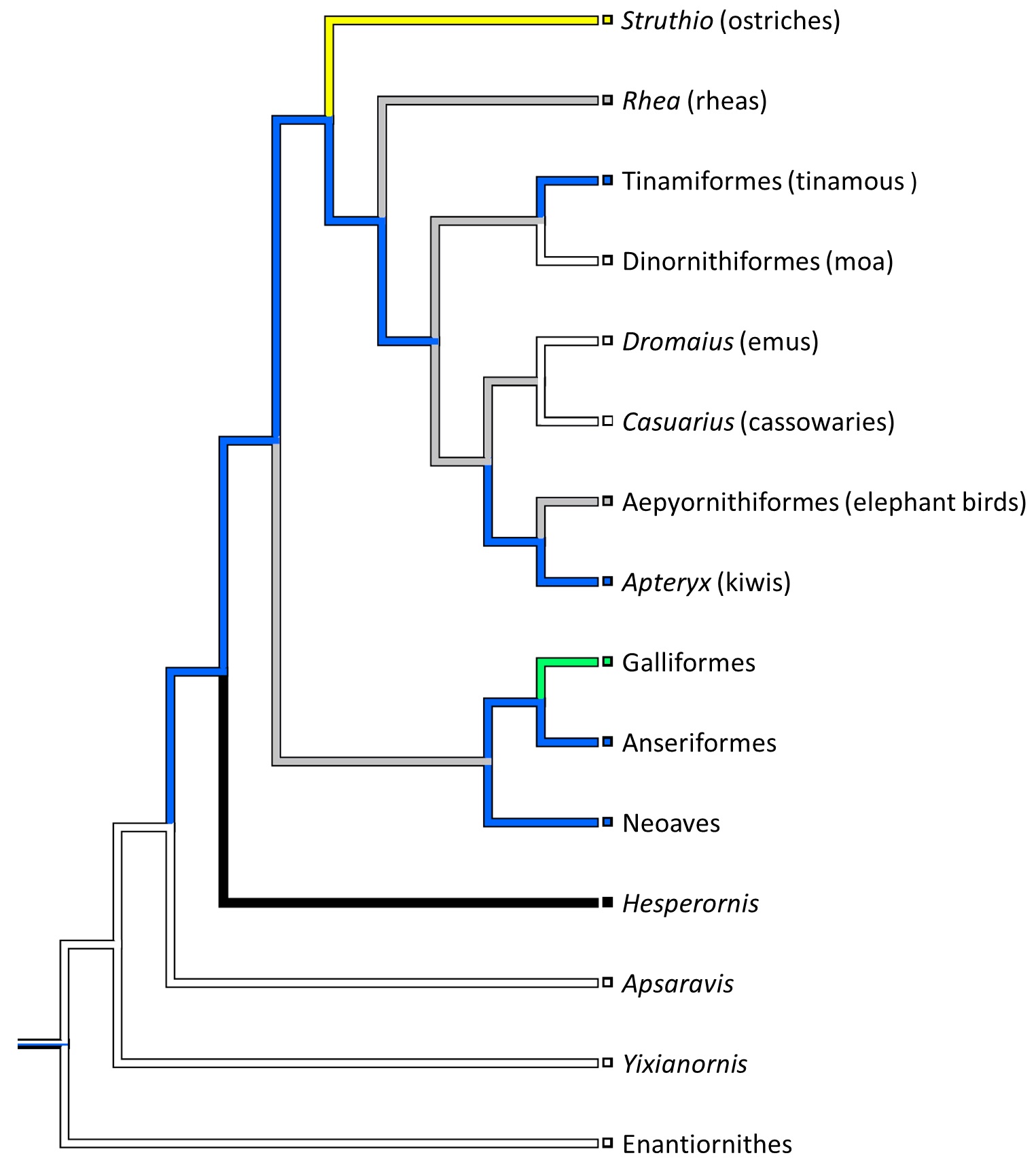
My second year PhD student Sophie Regnault (guest-blogger here before with her rhino feet post) has released her first PhD paper, on the evolution of kneecaps (patellae) in birds, with a focus on the strangeness of the region that should contain the patella in emus. This is a great new collaboration combining her expertise in all aspects of the research with coauthor Prof. Andy Pitsillides‘s on tissue histology and mine on evolution and morphology. This work stems from my own research fellowship on the evolution of the patella in birds, but Sophie has taken it in a bold new direction. First, we realized that emus don’t have a patella– they just keep that region of the knee extensor (~human quadriceps muscle) tendon as a fatty, fibrous tissue throughout growth, showing no signs of forming a bony patella like other birds do. This still blows my mind! Why they do this, we can only speculate meekly about so far. Then, we surveyed other ratites and related birds to see just how unusual the condition in emus was. We discovered, by mapping the form of the patella across an avian family tree, that this fatty tendon seems to be a thing that some ratites (emus, cassowaries and probably the extinct giant moas) do, whereas ostriches go the opposite direction and develop a giant double-boned kneecap in each knee (see below), whereas some other relatives like tinamous and kiwis develop a more “normal”, simple flake-like bit of bone, which is likely the state that the most recent common ancestor of all living birds had.

There’s a lot in this paper for anatomists, biomechanists, palaeontologists, ornithologists, evo-devo folks and more… plenty of food for thought. The paper hearkens back to my 2002 study of the evolution of leg tendons in tetrapods on the lineage that led to birds. In that study I sort of punted on the question of how a patella evolved in birds, because I didn’t quite understand that wonderful little sesamoid bone. And now, 12 years later, we do understand it, at least within the deepest branches of living birds. What happened further up the tree, in later branches, remains a big open subject. It’s clear there were some remarkable changes, such as enormous patellae in diving birds (which the Cretaceous Hesperornis did to an extreme) or losses in other birds (e.g., by some accounts, puffins… I am skeptical)– but curiously, patellae that are not lost in some other birds that you might expect (e.g., the very non-leggy hummingbirds).

Fatty knee extensor tendon of emus, lacking a patella. The fatty tissue is split into superficial (Sup) and deep regions, with a pad corresponding to the fat pad in other birds continuous with it and the knee joint meniscus (cushioning pad). The triceps femoris (knee extensor) muscle group inserts right into the fatty tendon, continuing over it. A is a schematic; B is a dissection.

Fatty knee extensor tendon of an emu, showing the absence of a patella. The fatty tissue is split into superficial (Sup) and deep regions, with a pad corresponding to the fat pad in other birds continuous with it and the knee joint meniscus (cushioning pad). The triceps femoris (knee extensor) muscle group inserts right into the fatty tendon, continuing on over it. A is a schematic; B is a dissection.

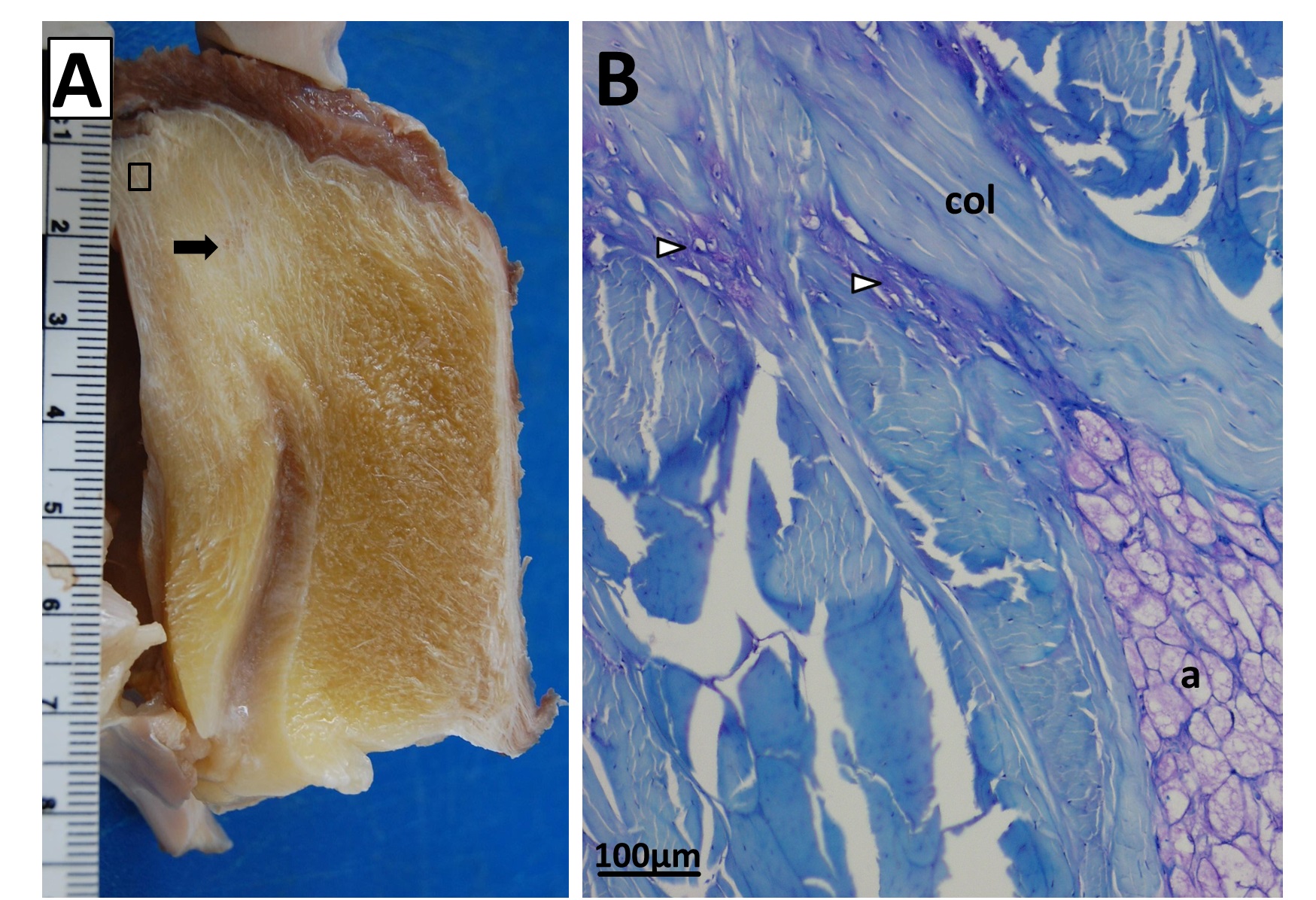
Sectioning of a Southern Cassowary's knee extensor tendon, showing: A Similar section  as in the emu image above. revealing similar regions and fibrous tissue (arrow), with no patella, just fat; and B, with collagen fibre bundles (col), fat cells (a), and cartilage-like tissue (open arrows) labelled.

Sectioning of a Southern Cassowary’s knee extensor tendon, showing: A, Similar section as in the emu image above. revealing similar regions and fibrous tissue (arrow), with no patella, just fat; and B, With collagen fibre bundles (col), fat cells (a), and cartilage-like tissue (open arrows) labelled.

Evolution of patellar form in birds. White branches indicate no patella, blue is a small flake of bone for a patella, green is something bigger, yellow is a double-patella in ostriches, and grey is uncertain. Note the uncertainty and convergent evolution of the patella in ratite birds, which is remarkable but fits well with their likely convergent evolution of flightlessness and running adaptations.

Evolution of patellar form in birds. White branches indicate no patella, blue is a small flake of bone for a patella, green is something bigger, yellow is a double-patella in ostriches, black is a gigantic spar of bone in extinct Hesperornis and relatives, and grey is uncertain. Note the uncertainty and convergent evolution of the patella in ratite birds (Struthio down to Apteryx), which is remarkable but fits well with their likely convergent evolution of flightlessness and running adaptations.

3) Chadwick, K.P., Regnault, S., Allen, V., Hutchinson, J.R. 2014. Three-dimensional anatomy of the ostrich (Struthio camelus) knee joint. PeerJ 2:e706 http://dx.doi.org/10.7717/peerj.706

Finally, Kyle Chadwick came from the USA to do a technician post and also part-time Masters degree with me on our sesamoid grant, and proved himself so apt at research that he published a paper just ~3 months into that work! Vivian Allen (now a postdoc on our sesamoid bone grant) joined us in this work, along with Sophie Regnault. We conceived of this paper as fulfilling a need to explain how the major tissues of the knee joint in ostriches, which surround the double-patella noted above, all relate to each other and especially to the patellae. We CT and MRI scanned several ostrich knees and Kyle made a 3D model of a representative subject’s anatomy, which agrees well with the scattered reports of ostrich knee/patellar morphology in the literature but clarifies the complex relationships of all the key organs for the first time.

This ostrich knee model also takes Kyle on an important first step in his Masters research, which is analyzing how this morphology would interact with the potential loads on the patellae. Sesamoid bones like the patella are famously responsive to mechanical loads, so by studying this interaction in ostrich knees, along with other studies of various species with and without patellae, we hope to use to understand why some species evolved patellae (some birds, mammals and lizards; multiple times) and why some never did (most other species, including amphibians, turtles, crocodiles and dinosaurs). And, excitingly for those of you paying attention, this paper includes links to STL format 3D graphics so you can print your own ostrich knees, and a 3D pdf so you can interactively inspect the anatomy yourself!

(A) X-ray of an ostrich knee in side view, and (B) labelled schematic of the same.

Ostrich knee in side view: A, X-ray, and (B) labelled schematic.

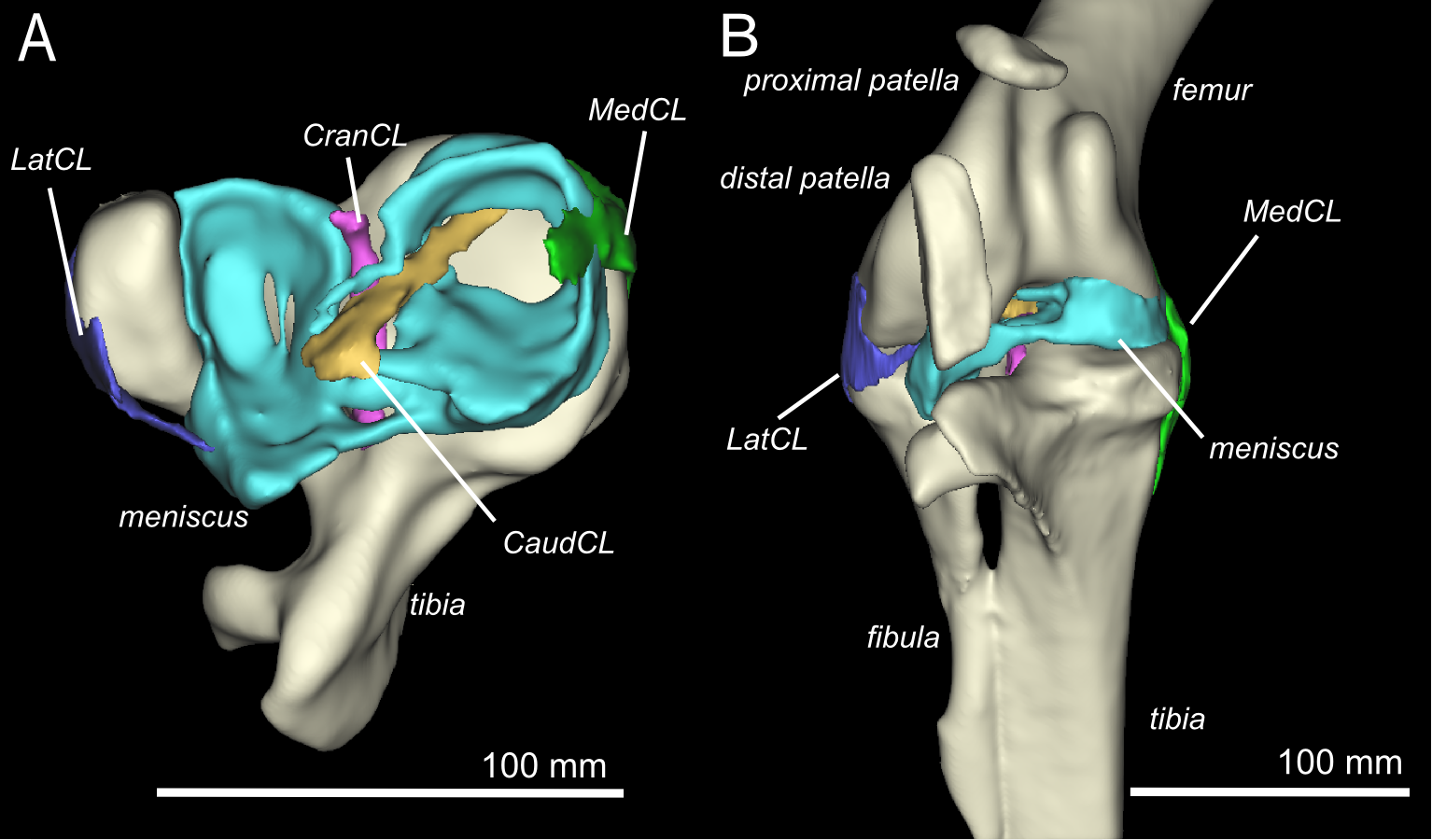
3D model of an ostrich knee, showing: A, view looking down onto the top of the tibia (shank), with the major collateral ligaments (CL), and B, view looking straight at the front of the knee joint, with major organs of interest near the patella, sans muscles.

3D model of an ostrich knee, showing: A, View looking down onto the top of the tibia (shank), with the major collateral ligaments (CL), and B, View looking straight at the front of the knee joint, with major organs of interest near the patella, sans muscles.

You can view all the peer review history of the papers if you want, and that prompts me to comment that, as usual at PeerJ (full disclosure: I’m an associate editor but that brings me £0 conflict of interest), the peer review quality was as rigorous at a typical specialist journal, and faster reviewing+editing+production than any other journal I’ve experienced. Publishing there truly is fun!

Merry Christmas and Happy Holidays — and good Ratite-tidings to all!

And stay tuned- the New Year will bring at least three more papers from us on this subject of ratite locomotion and musculoskeletal anatomy!

♬Should auld palaeognathans be forgot, 
And never brought for scans? 
Should publications be soon sought, 
For auld ratite fans!♪

Read Full Post »

How do I manage my team of 10+ researchers without losing my mind <ahem> or otherwise having things fall apart? I’m often asked this, as I was today (10 December; I ruminated before posting this as I worried it was too boring). Whether those undesirable things have truly not transpired is perhaps debatable, but I’m still here and so is my team and their funding, so I take that as a good sign overall. But I usually give a lame answer to that question of how I do it all, like “I have no secrets, I just do it.” Which is superficially true, but…

Today was that time of year at the RVC when I conduct appraisals of the performance and development of my research staff, which is a procedure I once found horridly awkward and overly bureaucratic. But now that it focuses more on being helpful by learning from past missteps and plotting future steps in a (ideally) realistic fashion than on box-ticking or intimidation, I find the appraisals useful. The appraisals are useful at least for documenting progress and ensuring that teammates continue to develop their careers, not just crank out data and papers. By dissecting the year’s events, one comes to understand what happened, and what needs to happen in the next year.

The whole process crystalizes my own thoughts, by the end of a day of ~1 hour chats, on things like where there needs to be different coordination of team members in the coming year, or where I need to give more guidance, or where potential problems might arise. It especially helps us to sort out a timeline for the year… which inevitably still seems to go pear-shaped due to unexpected challenges, but we adapt and I think I am getting better myself at guessing how long research steps might take (pick an initial date that seems reasonable, move it back, then move it further back, then keep an eye on it).

Anyway, today the appraisals reminded me that I don’t have a good story for how I manage my team other than by doing these appraisals, which as an annual event are far from sufficient management but have become necessary. And so here I am with a post that goes through my approaches. Maybe you will find it useful or it will stimulate discussion. There are myriad styles of management. I am outlining here what facets of my style I can think of. There are parallels between this post and my earlier one on “success”, but I’ve tried to eliminate overlap.

Stomach-Churning Rating: 0/10 but no photos, long-read, bullet points AND top 10 list. A different kind of gore.

Successfully managing a large (for my field) research team leaves one with fewer choices than in a smaller team– in the latter case, you can be almost anywhere on the spectrum of hands-off vs. hands-on management and things may still go fine (or not). In the case of a large (and interdisciplinary) team, there’s no possibility to be heavily hands-on, especially with so many external collaborations piled on top of it all. So a balance has to be struck somewhere. As a result, inevitably I am forced into a managerial role where, over the years, I’ve become less directly in touch with the core methods we use, in terms of many nitty-gritty details. I’ve had to adapt to being comfortable with (1) emphasizing a big picture view that keeps the concepts at the forefront, (2) taking the constraints (e.g. time, technology and methods, which I do still therefore have to keep tabs on) into account in planning, (3) cultivating a level of trust in each team member that they will do a good job (also see “loyalty” below), and (4) maintaining the right level of overall expertise within the group (including external collaborators) that enables us to get research done to our standard. To do these things, I’ve had to learn to do these other things, which happen to form a top 10 list but are in no order:

  1. Communicate regularly– I’m an obsessive, well-organized emailer, in particular. E-mail is how I manage most of my collaborations within and outside my team, and how I keep track of much of the details. (Indeed, collaborators that aren’t so consistent with email are difficult for me) We do regular weekly team meetings in which we go around the table and review what we’re up to, and I do in-person chats or G+/Skype sessions fairly frequently to keep the ball rolling and everyone in synch. I now keep a notebook, or “memory cane” as I call it, to document meetings and to-do lists. Old school, but it works for me whereas my mental notebook started not to at times.
  2. Treat each person individually- everyone responds best to different management styles, so within my range of capabilities I vary my approach from more to less hands-off, or gentler vs. firmer. If people can handle robust criticism, or even if they can’t but they need to hear it, I can modulate to deliver that, or try to avoid crushing them. While I have high expectations of myself and those I work with, I also know that I have to be flexible because everyone is different.
  3. Value loyalty AND autonomy– Loyalty and trust matter hugely to me as a manager/collaborator. I believe in paying people back (e.g. expending a lot of effort in helping them move their career forward) for their dedicated work on my team, but also keeping in mind that I may need to make “sacrifices” (e.g. give them time off for side-projects I’m not involved in) to help them develop their career. I seek to avoid the extremes: fawningly helpless yes-men (rare, actually) or ~100% selfish what’s-in-it-for-me’s (not as rare but uncommon). Any good outcome can benefit a research manager even if they’re not a part of it, but also on a big team it’s about more than what benefits the 1st author or the senior author, but everyone, which is a tricky balance to attain.
  4. Prioritize endlessly– for me this means trying to keep myself from being the rate-limiting step in research. And I try to say “no” to new priorities if they don’t seem right for me. Sometimes it means getting little things done first to clear my desk (and mind) for bigger tasks; sometimes it means focusing on big tasks to the exclusion of smaller ones. Often it depends on my whims and energy level, but I try to keep those from harming others’ research. I make prioritized to-do lists and revisit them regularly.
  5. Allow chaos and failure/imperfection– This is the hardest for me. My mind does not work like a stereotypical accountant’s- I like a bit of disorder, as my seemingly messy office attests to. Oddly within that disorder, I find order, as my brain is still usually good at keeping things organized. I do like a certain level of involvement in research, and I get nervous when I feel that sliding down toward “uninvolved”– loss of control in research can be scary. Some degree of detachment, stepping aside and allowing for time to pass and people to self-organize or come ask for help to avoid disaster (or celebrate success), is necessary, though, because I cannot be everywhere at once and nothing can be perfect. And of course, I myself fail sometimes, but with alertness comes recognition and learning. Furthermore, too much control is micromanagement, which hurts morale, and “disorder” allows the flexibility that can bring serendipitous results (or disaster). And speaking of disaster, one has to be mentally prepared for it, and able to take a deep breath and react in the right way when it comes. Which leads to…
  6. Think brutally clearly – Despite all the swirling chaos of a large research team and many other responsibilities of an academic and father and all that, I have taught myself a skill that I point to as a vital one. I can stop what I’m doing and focus very intensely on a problem when I need to. If it’s within my expertise to solve it, by clearing my head (past experience with kendo, yoga and karate has helped me to do this), I usually can do it if I enter this intensely logical, calm, objective quasi-zen-state. I set my emotions aside (especially if it is a stressful situation) and figure out what’s possible, what’s impossible, and what needs to be done, and find what I think is the best course of action quite quickly, then act on that decisively (but without dogmatic inflexibility). In such moments, I find myself thinking “What is the right thing to do here?” and I almost instinctively know when I can see that right thing. At that moment I get a charge of adrenaline to act upon it, which helps me to move on quickly. From little but hard decisions to major crises, this ability serves me very well in my whole life. I maintain a duality between that singleminded focus and juggling/anarchy, often able to quickly switch between those modes as I need to.
  7. Work hardest when I work best (e.g. good sleep and caffeination level, mornings)- and let myself slack off when I’m not in prime working condition. I shrug aside guilt if I am “slacking”– I can’t do everything and some things must fall by the wayside if I can’t realistically resolve them in whatever state of mind I’m in. The slacking helps me recharge and refresh– by playing a quick video game or checking social media or cranking up some classic Iron Maiden/modern Menzingers, I can return to my work with new gusto, or even inspiration, because…
  8. Spend a lot of time thinking while I “slack off”, in little bursts (e.g. while checking Twitter). I let my brain process things that are going on, let go of them when I’m not getting anywhere with them, and return to them later. This is harder than it sounds as I still stubbornly or anxiously get stuck on things if they are stressing me out or exciting me a lot. But I am progressively improving at this staccato-thinking skill.
  9. Points 7+8 relate to my view that there is no “work-life balance” for me—it is all my life, and there’s still a lot of time to enjoy the non-work parts, but it’s all a blend that lets me be who I am. I don’t draw lines in the sand. Those just tend to make one feel bad, one way or another.
  10. Be human– try to avoid acting like a distant, emotionless robotic manager and cultivate more of a family-like team. Being labelled with the word “boss” can turn my stomach. “Mentor” and “collaborator” are more like what I aim for. Being open about my own flaws, failures, and life helps.

Long post, yeah! 1 hour on a train commute lets the thoughts flow. I hope that if you made it this far you found it interesting.

What do you do if you manage a team, what works for you or what stories do you have of research management? Celebrations and post-mortems are equally welcome.


Read Full Post »

It has been a long time since we had some Mystery Anatomy fun here, so I am cutting loose with a double-barrelled blast of images– dive for cover!

I’m also giving out a Crimbo present as a bigger post, on a special day coming soon, count on that. This is just an advent snack.

Stomach-Churning Rating: 2/10 and 7/10: digital body and glistening, snotty.

Mystery Anatomy 2014same rules as before; remember that the scoreboard has been reset.

Identify (1) the animal shown in the four-panel top images (CT scan/reconstruction), and (2) the DIFFERENT animal (and/or the main central, pink structure) shown in the big, gooey bottom image (Dissection). No special rules. Potential for double points!

And someone will get these, I am sure. This might be the final round of 2014’s Mystery Anatomy game.

Difficulty: Plenty.

Mystery CT 14

Mystery CT 14

Mystery Anatomy 15

Mystery Anatomy 15

Go forth!

Read Full Post »